
Share This Story
As healthcare providers face mounting pressure to expand access, reduce costs, and improve the patient experience, adaptive reuse of vacant retail spaces has emerged as a strategic solution.
Transforming underutilized big-box stores and strip malls into high-performing healthcare environments offers a compelling alternative to new construction—one that is faster, more cost-effective, and increasingly aligned with sustainability and community goals.
Why Retail Spaces Work for Healthcare
The shift toward community-based care has driven health systems to expand their ambulatory networks and bring services closer to where people live, work and shop. Vacant retail properties—often located near major transit routes with ample parking—offer prime real estate. With large, open floor plates, these spaces are ideal for flexible healthcare planning and accommodating a wide range of services from primary care to specialty clinics and outpatient surgery centers.
Unlike traditional office buildings, which may be constrained by smaller, stacked floorplates and limited mechanical capacity, retail spaces provide the spatial and structural flexibility needed for modern healthcare delivery. This adaptability supports modular care models and allows for future growth without the need for extensive structural overhauls.
Prime Location
Vacant big-box retail sites are typically located along major transit corridors and near residential neighborhoods, making them highly accessible to the surrounding community and ideal for outpatient healthcare services.
Ample Parking
Originally designed to accommodate high volumes of shoppers, big-box retail sites offer abundant surface parking, eliminating the need for costly parking structure construction and ensuring convenient patient and staff access.
Large, Flexible Interiors
With expansive, column-free floor plates, big-box retail spaces provide a blank canvas for flexible healthcare planning, easily supporting a variety of clinical services and modular care models without the constraints of stacked, multi-story layouts.
Accelerating Project Delivery Through Adaptive Reuse
When thoughtfully executed, adaptive reuse can dramatically accelerate project delivery. Converting a single-level retail space into a healthcare facility often occurs within a 12-month timeline, assuming minimal structural upgrades and streamlined regulatory approvals. The single-floor configuration simplifies both design and construction logistics, minimizing costs associated with vertical circulation and mechanical retrofits.
However, not all retail properties are created equal. A thorough pre-project investigation is essential to assess zoning, ADA compliance, life safety codes, and infrastructure capacity.
Our team recommends a multidisciplinary due diligence process to evaluate multiple sites and identify those best suited for healthcare conversion. This includes assessing floor-to-floor heights, electrical and plumbing capacity, and potential structural limitations that could impact clinical functionality.
Designing for Patients and Communities
Beyond technical feasibility, adaptive reuse projects must deliver a patient-centered experience. By locating care in familiar, accessible community settings, health systems can demystify the healthcare experience, easing the anxiety often associated with hospital visits.
Through thoughtful design—incorporating intuitive wayfinding, natural light and calming materials—these spaces can feel welcoming, approachable and integrated within the community.
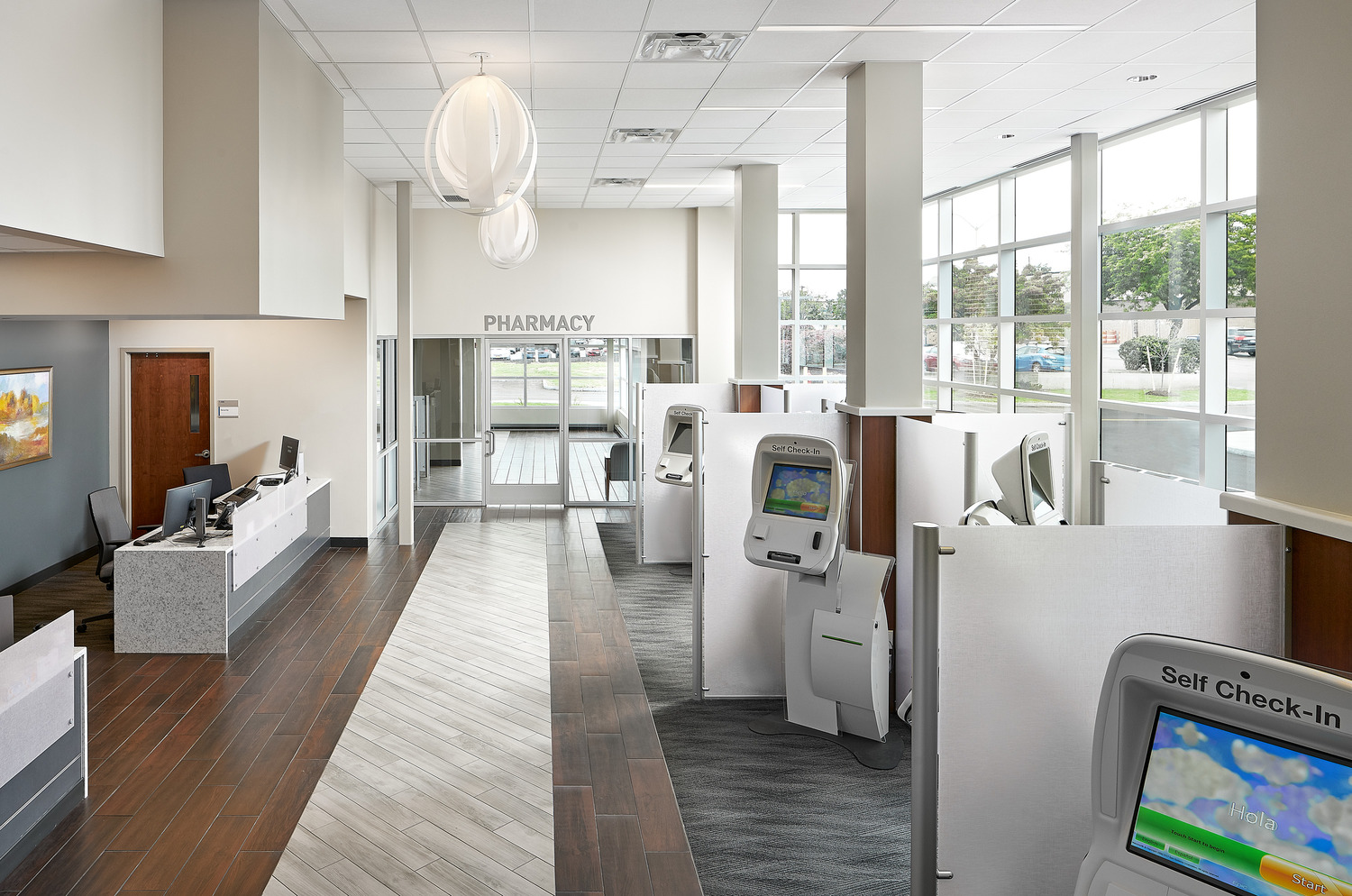
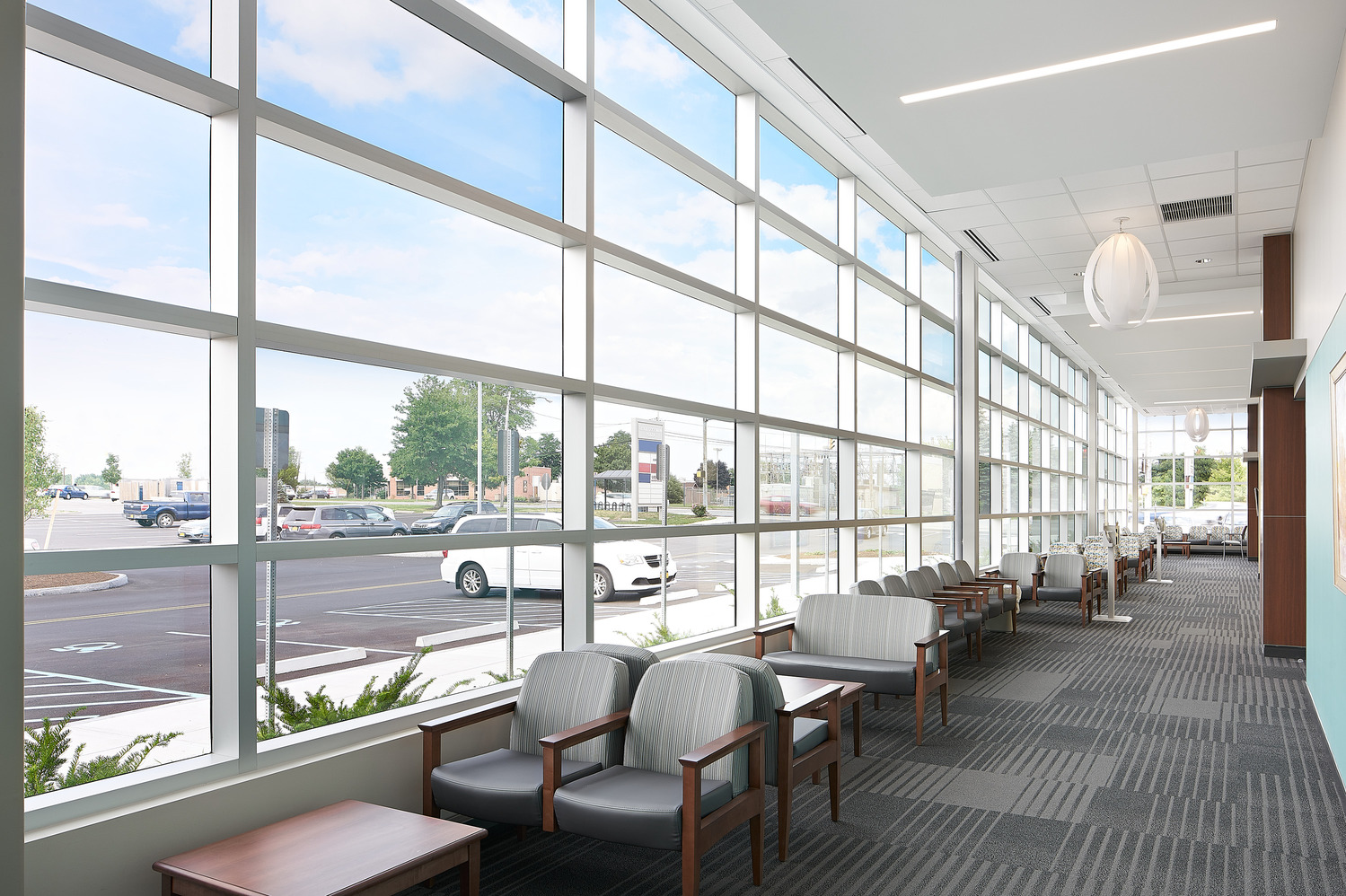
Additionally, our integrated design approach ensures that each project aligns with the client’s mission and long-term operational goals. From infection control and MEP systems to wayfinding and aesthetics, every element is tailored to support clinical excellence and patient comfort.
Sustainability and Community Revitalization
Adaptive reuse is not only a smart business decision—it’s a sustainable one.
Repurposing existing buildings reduces construction waste, lowers carbon emissions and supports ESG goals. It also revitalizes underperforming properties, turning vacant spaces into vibrant community assets.
By investing in adaptive reuse, healthcare organizations can demonstrate environmental stewardship while meeting the growing demand for accessible, high-quality care.
Case Studies in Action
Projects like Rochester Regional Health’s Riedman Health Center and Cleveland Clinic’s Middleburg Heights Family Health Center exemplify the success of adaptive reuse in action. These conversions have delivered measurable outcomes in terms of patient volume, cost savings, and time-to-market—while enhancing the overall care experience.
The Riedman Health Center, once a decommissioned grocery store, has been transformed into a vibrant, 76,000 sq. ft. healthcare hub serving the Rochester community. This facility offers a broad spectrum of essential services—including pediatrics, primary care, dental, ophthalmology, radiology and pharmacy—all conveniently located under one roof.
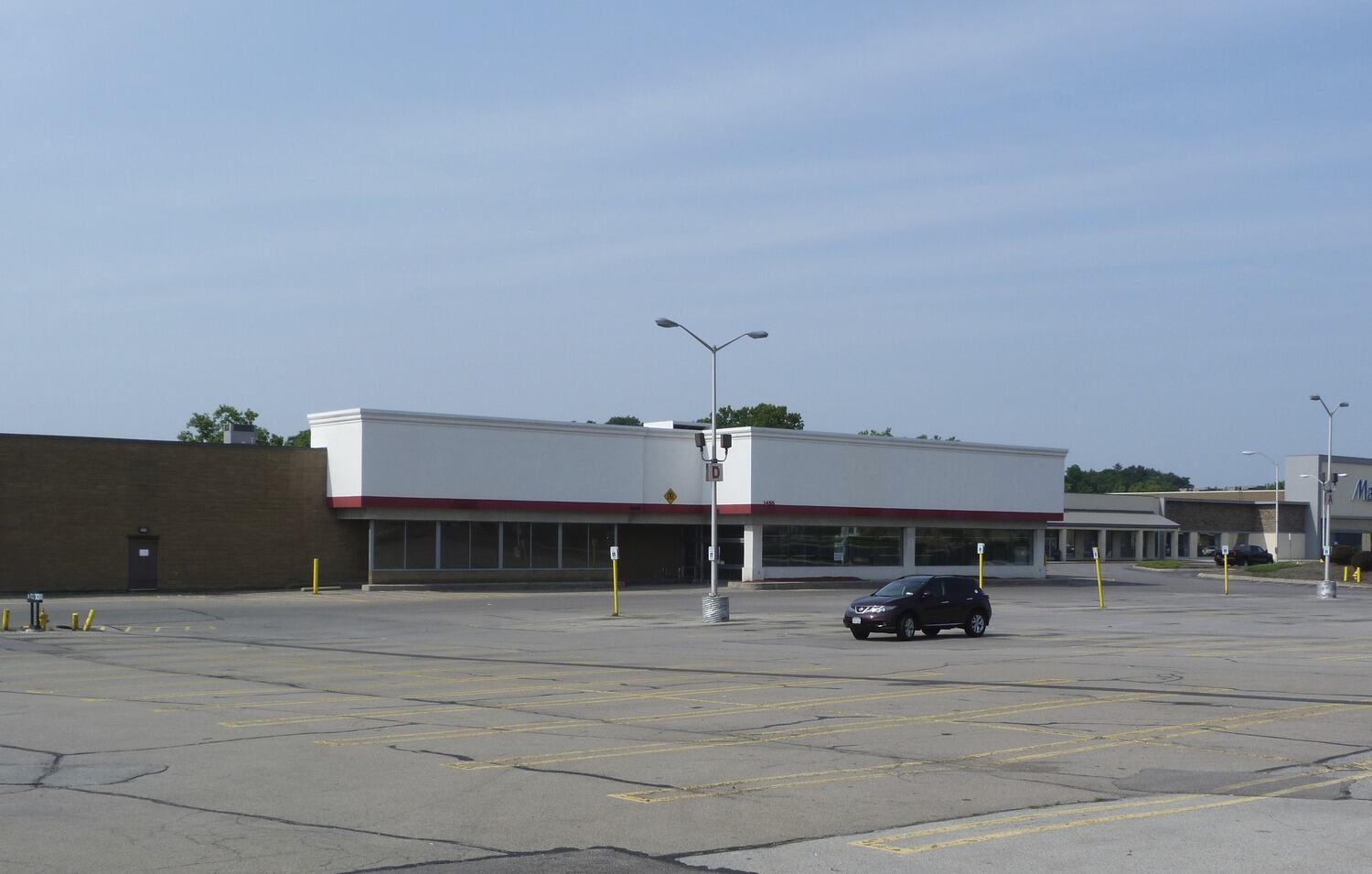
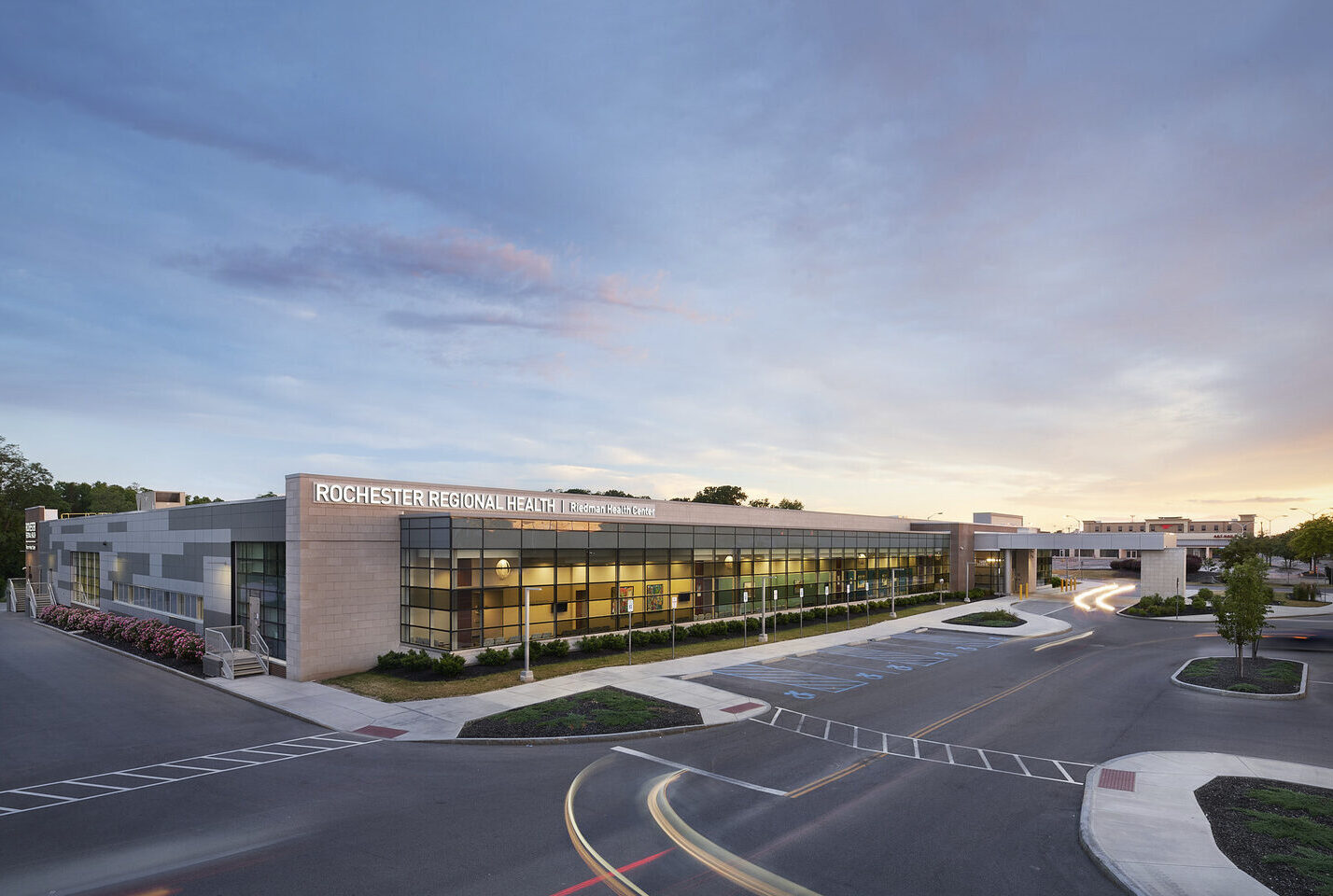
Designed with both sustainability and patient experience in mind, the LEED Silver-certified center features calming interiors, abundant natural light and intuitive wayfinding. This adaptive reuse project not only revitalized a vacant retail space but also redefined how accessible, community-based care can look and feel.
In Southwest Ohio, CPL also converted a former Kmart into a 93,000 sq. ft. family health center for the Cleveland Clinic. Completed in under a year, the facility includes 168 exam rooms, 12 treatment rooms, and offers a comprehensive range of services—from primary care and imaging to urgent care and the Clinic’s first drive-through pharmacy.
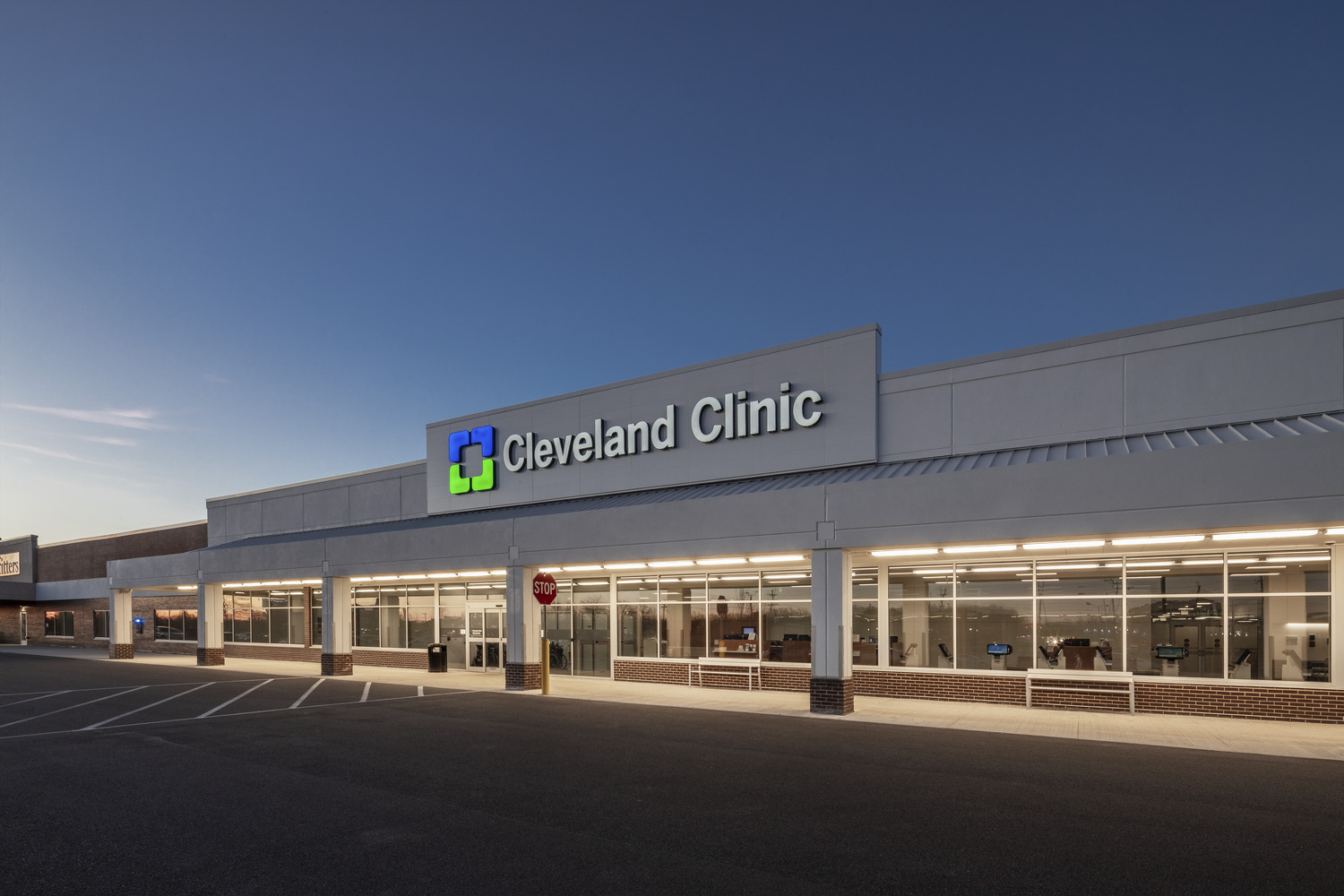
Thoughtful interior design elements, such as natural wood finishes and clear wayfinding, contribute to both an enhanced patient experience and improved operational efficiency. This project demonstrates how advanced, sustainable design can successfully bring healthcare closer to communities.
A Strategic Model for Healthcare Growth
The success of adaptive reuse efforts lies in early engagement with design teams, rigorous site selection, and clear alignment between business planning and facility programming. Flexibility is essential, as changes in scope or tenant mix can significantly impact budget and schedule.
This model represents a powerful opportunity for healthcare leaders to expand strategically, operate efficiently and design with purpose. By transforming yesterday’s retail spaces into tomorrow’s care environments, providers can meet patients where they are—literally and figuratively—while building a more resilient, sustainable future for healthcare.
About the Author: Bin Weng

