
As the urgency for sustainable practices continues to grow, Buncombe County, located in Asheville, North Carolina, has emerged as a leader in environmental responsibility. The County has adopted a Leadership in Energy and Environmental Design (LEED Gold)–equivalent mandate for all new facilities over 10,000 square feet, underscoring its commitment to reducing greenhouse gas emissions. Buncombe County is one of several counties in North Carolina working toward 100% renewable energy for internal operations by 2030.
Completed
2025
Services
Planning, Design, Life Cycle Cost Analysis, Construction Administration, Commissioning

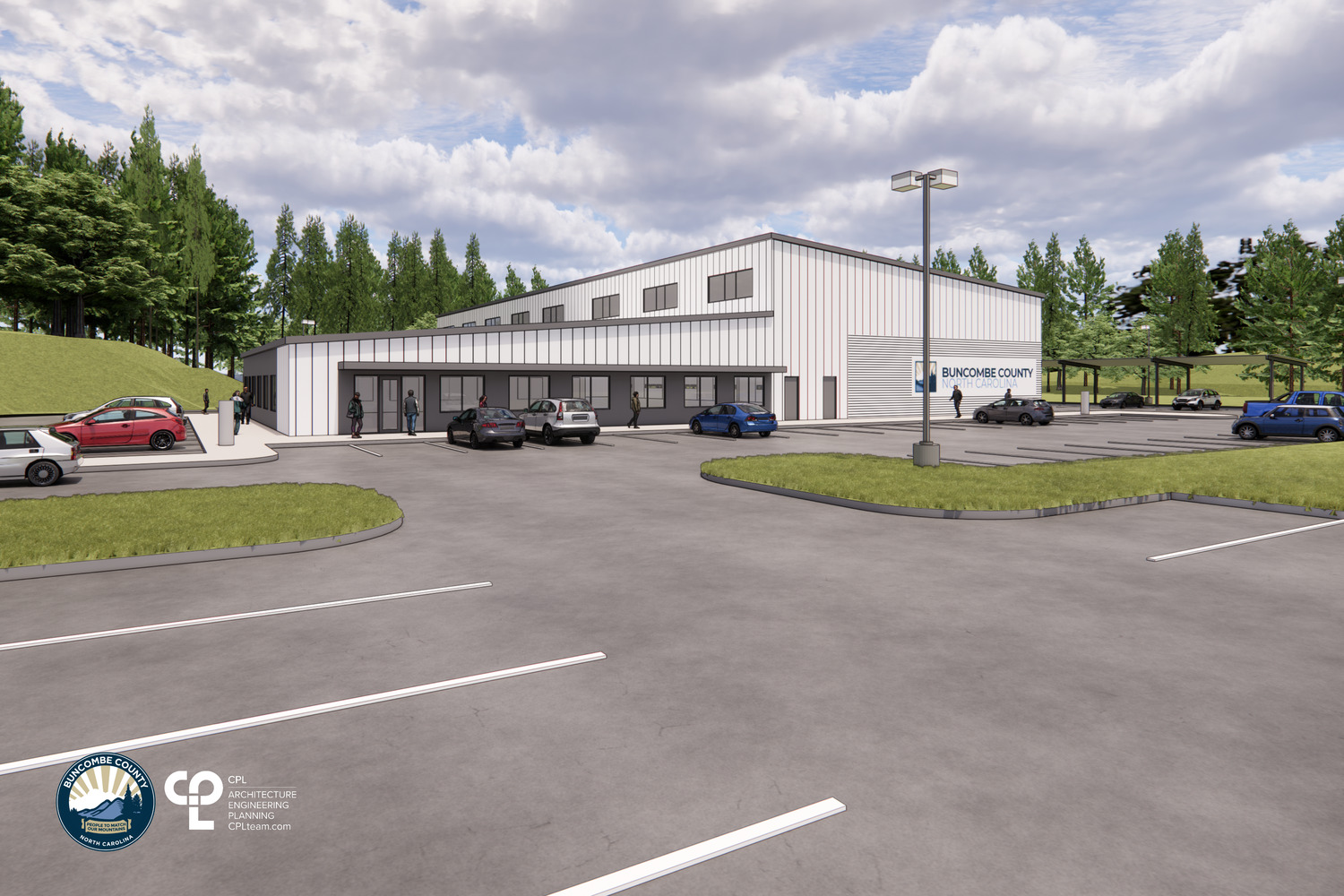
CPL has partnered with Buncombe County for more than fifteen years, delivering high performing solutions to its facilities. As the first project to be constructed following the sustainability mandate, the Buncombe County Fleet Services Complex represents a major milestone. CPL’s Community and Culture Practice team led the design and construction of this inaugural facility.
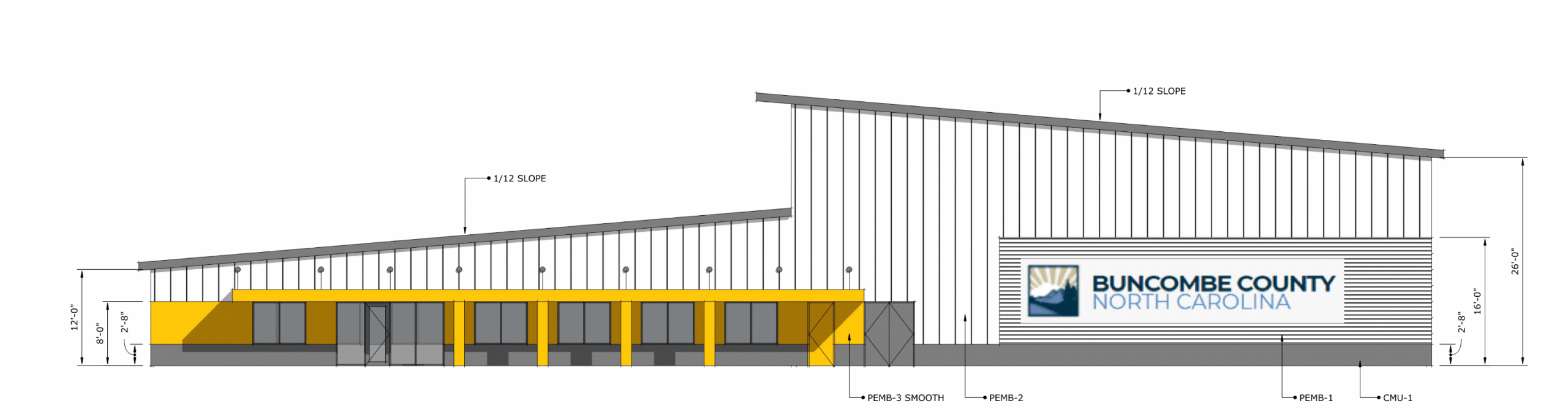
The new five-acre Fleet Services Complex is a 22,000-square-foot, two-story, fully electrified facility featuring solar panels. The complex co-locates the County’s Fleet, General Services, and Grounds departments—previously dispersed across multiple sites—streamlining transportation, maintenance, and service workflows.
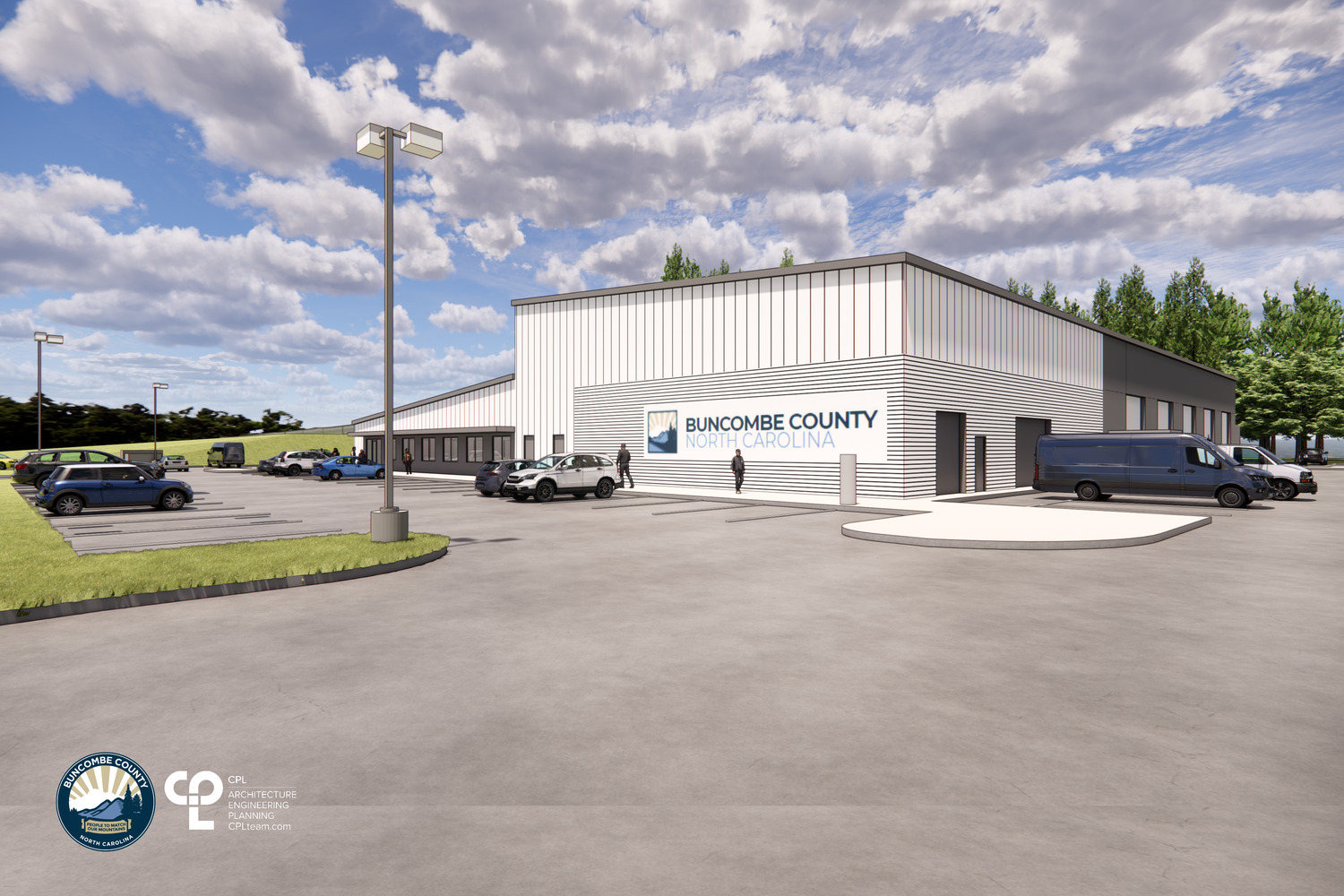
Program spaces include vehicle garages and charging stations, service bays, conference rooms, training and parts storage areas, offices, support and tool rooms, temperature-controlled bulk and equipment storage, touchdown spaces, and interior and exterior wash and detailing areas.
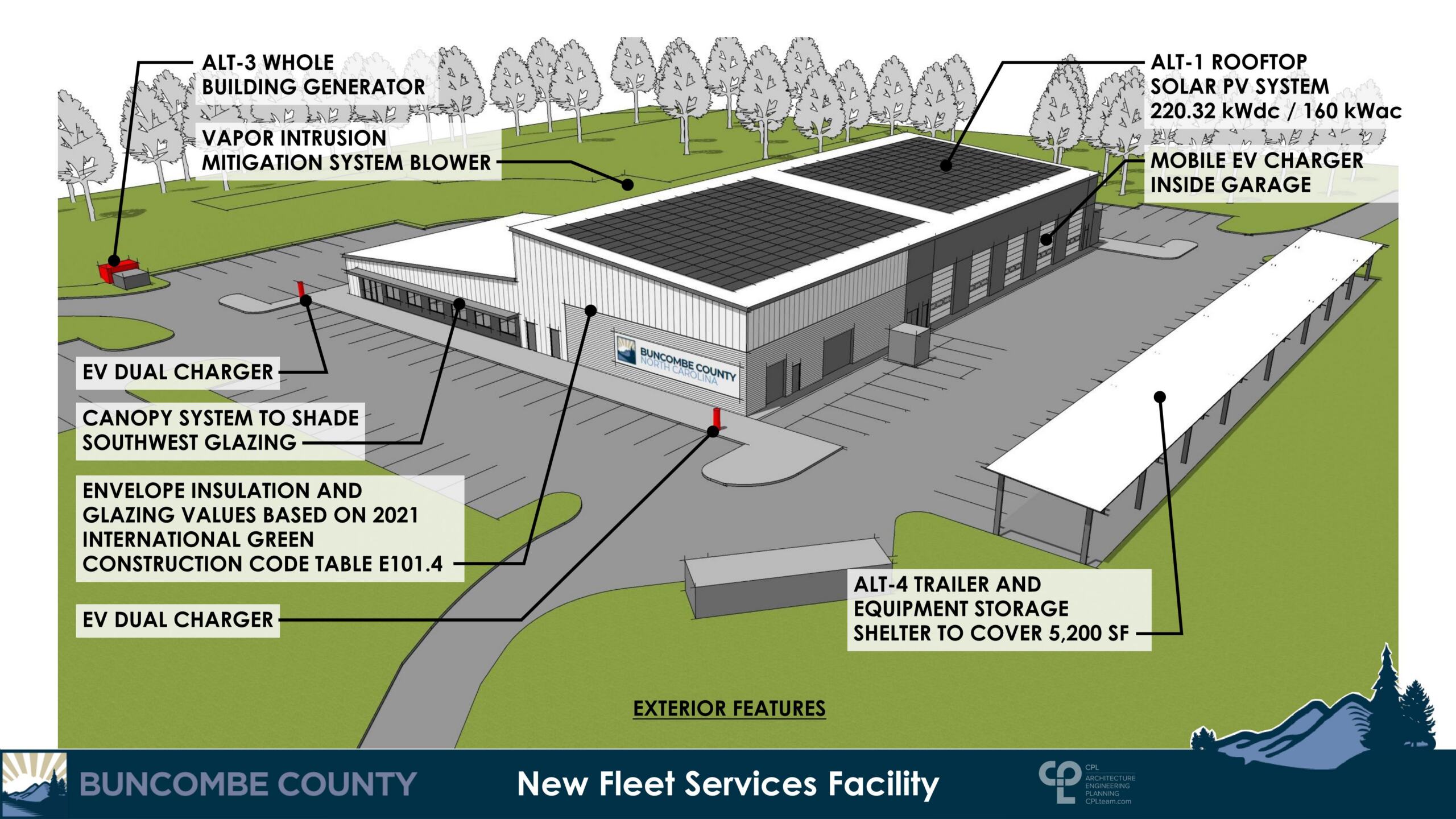
As the first facility designed under Buncombe County’s sustainability mandate, the Fleet Services Complex meets the County’s environmental goals with a strong emphasis on energy performance and indoor environmental quality. The project achieves near net zero energy and sets a new benchmark for future County development. Designed in alignment with the LEED rating system, the facility reflects Buncombe County’s long-term commitment to sustainable building practices and will be fully completed this year.
 Erie County Energy Performance Contract Phase 2