
Share This Story
Across the country, public agencies are approaching a defining moment for their energy systems. Aging infrastructure, rising electrification demands, new policy requirements, and unprecedented funding opportunities are converging at once—creating pressures that municipalities can no longer address with incremental improvements. Decisions that once unfolded over decades now need to be made in a matter of years, and the stakes have never been higher for community resilience, operational costs, and long‑term sustainability.
For many local leaders, the urgency is clear. The challenge lies in determining where to begin, how to prioritize investments, and how to plan for a future that is changing faster than traditional capital‑planning cycles were ever designed to accommodate.
At CPL, we view this moment not as a barrier, but as a rare chance for transformation. With the right planning, data‑driven analysis, and strategic investment, municipalities can build energy systems that are cleaner, smarter, more adaptable, and far more reliable than those in place today.

The Convergence: Why Energy Infrastructure Is at an Inflection Point
Local governments have always managed energy within constraints: budgets, regulations, and existing systems. But today’s alignment of drivers is unprecedented:
- 1
Mandates and policy pressures are accelerating action. States across the U.S. are setting zero‑emission targets for buildings, fleets, and public facilities. Some, like New York, have mandates for zero‑emission school buses, forcing districts to rethink fleet management, charging infrastructure, and energy supply. These mandates carry real deadlines, and municipalities must prepare for them now.
- 2
Federal funding windows won’t last forever. Incentives—often the strongest driver of municipal decision‑making—are creating urgency to plan and launch energy projects before current programs expire. Once these windows close, municipalities that delay action may face significantly higher costs for the same improvements.
- 3
Grid instability is becoming a national concern. AI data centers, electrified fleets, increased cooling loads, and extreme weather are placing unprecedented pressure on an aging U.S. grid. Energy resilience is now a necessity—for public safety, continuity of operations, and community trust.
- 4
Demand is shifting from centralized supply to distributed systems. Communities are exploring microgrids, onsite generation, distributed storage, and new models for local power management. Increasingly, agencies view the future grid not as a single monolith but as a network of smaller, independent microgrids that offer greater resilience and flexibility.
Battery Energy Storage: The Backbone of a Flexible, Resilient Future
As these pressures intensify, communities are turning to technologies that can immediately strengthen resilience and offer greater control over energy use. One foundational tool in this transition is battery energy storage.
Battery energy storage systems (BESS) are no longer optional; they have become central to municipal energy strategy. The rise of electrified transportation illustrates this urgency. School districts planning for electric buses quickly realize the existing grid cannot always support midday charging, making BESS essential to bridge the gap. By charging during off‑peak hours when electricity is cheaper and discharging during high‑cost or high‑demand periods, BESS helps reduce operational costs, maintain fleet uptime, and lessen stress on local distribution networks.

Beyond transportation, storage enables capabilities that once felt out of reach for municipalities: shaving peak demand charges; participating in demand‑response programs that compensate agencies for returning power to the grid during emergencies; ensuring critical facilities remain powered during outages; and optimizing time‑of‑use schedules to leverage lower overnight rates. In dense urban environments, storage unlocks further opportunity through emerging "vehicle‑to‑grid" and "everything‑to‑grid" models that use fleets, batteries, and even buildings to support grid stability.
BESS becomes even more powerful when paired with thermal energy systems, which balance heating and cooling loads and reduce mechanical strain. Together, these technologies enable a holistic strategy that aligns electrical and thermal needs, smooths demand curves, and accelerates progress toward net‑zero goals.
Small Modular Reactors (SMRs): Scalable Nuclear Innovation on the Horizon
While storage is becoming essential in the near term, municipalities are also watching longer‑horizon innovations that could redefine reliable, low‑carbon baseload power. Small modular reactors are among the most closely monitored of these emerging solutions.
Although SMRs in the U.S. remain in pilot phases and are not yet deployed at scale, they are increasingly viewed as a promising option for reliable, low‑carbon baseload generation. Their appeal stems from several factors: unlike traditional nuclear plants, SMRs are compact and modular; many designs incorporate inherently safer operating characteristics; nuclear provides consistent generation not subject to the intermittency of solar or wind; and once built, SMRs can deliver decades of stable output at relatively predictable long‑term cost.
Widespread adoption, however, will require strong public support, clear federal regulatory guidance, robust funding mechanisms, and demonstrated safety performance. For now, municipalities should track SMR development—especially early utility‑led pilots—as viability may meaningfully increase within five years and become potentially transformative within the decade.
Designing for Energy Resilience from Day One
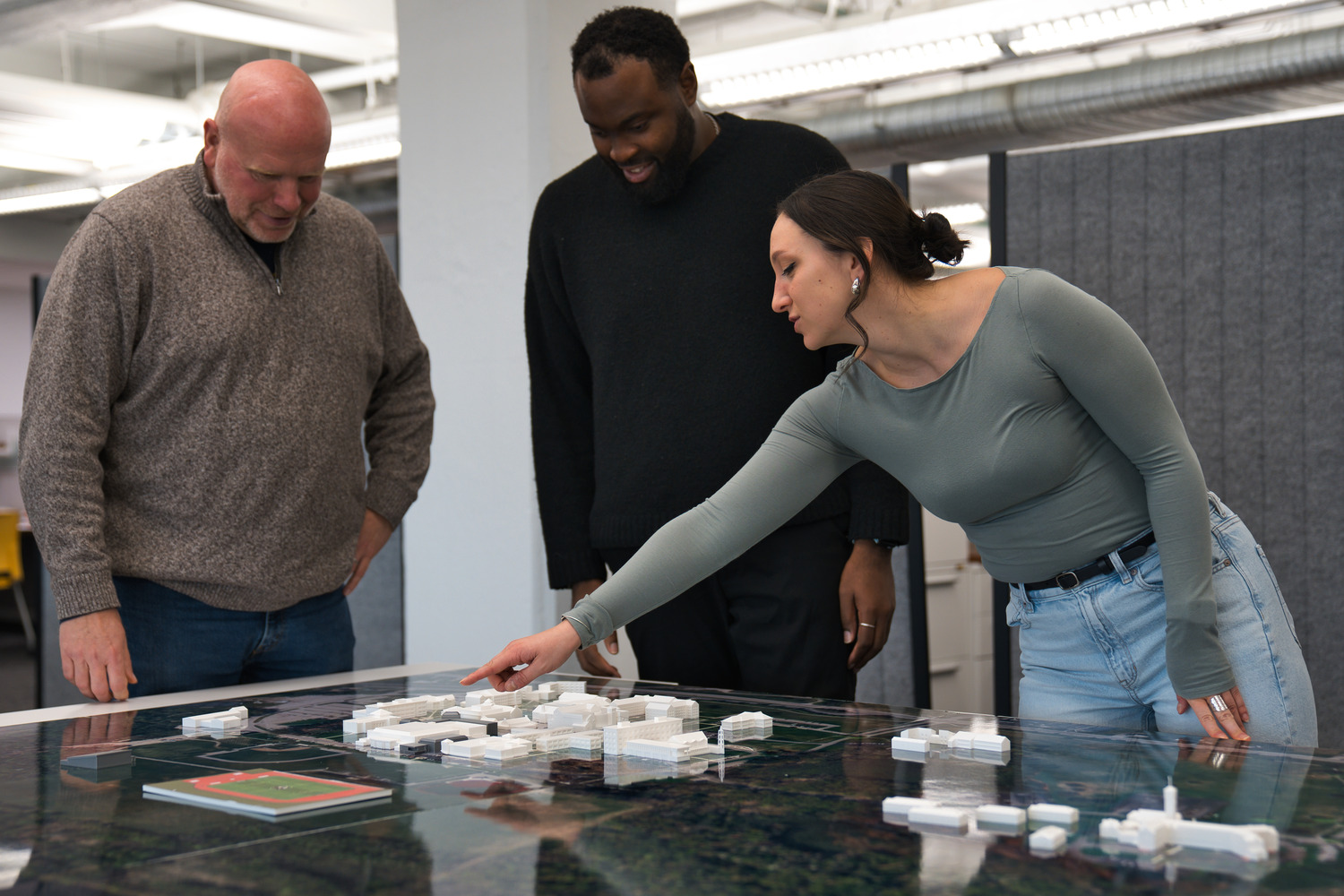
Technologies alone are not enough. This convergence also reframes how communities approach resilience—not as an add‑on, but as a core design principle that must be built into infrastructure from day one.
Retrofitting resilience late in the process is both costly and disruptive. Factors such as building‑automation systems, equipment lifespan, structural limitations, and occupant needs make bolt‑on solutions inefficient once facilities are occupied.
Designing for resilience from the outset means:
- Considering electrification, distributed storage, backup power, and smart‑control strategies at the concept phase.
- Selecting modular systems that can adapt as technologies change.
- Planning for equipment replacement cycles that occur every 10–15 years.
- Integrating resilience into emergency preparedness, ensuring critical facilities—from city halls and public‑safety buildings to community shelters—remain operational during grid disruptions.
Communities that have endured prolonged outages after major weather events increasingly recognize energy resilience as essential, not discretionary.
Integrated Net‑Zero Planning: Moving Beyond Project‑by‑Project Thinking
To fully realize the benefits of both established and emerging solutions, municipalities need a unified planning approach that connects buildings, fleets, infrastructure, and long‑term sustainability goals.
Integrated net‑zero planning coordinates buildings, fleets, district energy, and grid interactions under a single roadmap. It reframes the conversation from discrete projects to interconnected systems: How do facilities and fleets interact? Where do inefficiencies compound across a campus or neighborhood? Which combinations of technologies deliver net‑positive, net‑negative, or net‑zero outcomes? And how should capital planning evolve to reflect long‑term emissions and resilience goals?
Using advanced simulation tools, CPL evaluates dozens of scenarios—renewables, BESS, thermal systems, electrification pathways, mechanical upgrades, and campus‑wide infrastructure options—to develop pathways that balance cost, impact, and future readiness. While some solutions require higher upfront investment, many deliver lower operating expenses and faster returns while keeping agencies ahead of regulatory requirements.
When planning is fragmented, communities risk locking themselves into decades of inefficiencies. When planning is integrated, every investment works harder, systems reinforce one another, and agencies gain the flexibility to evolve with future technologies and policies.
Funding Reality: Navigating Incentives and Constraints
Designing more resilient, efficient systems is only half the equation; securing the funding to bring these plans to life is equally critical.
Many municipalities ask the same question: How do we pay for this? The answer starts with timing. Current federal and state opportunities are uniquely aligned with upgrades that improve resilience, accelerate electrification, and reduce emissions—but application windows are finite.
Agencies that succeed prepare early with:
- Pre‑development work (scenario modeling, feasibility studies, and long‑term roadmaps).
- Clear ROI analyses tied to resilience, cost control, and compliance.
- Strong applications that demonstrate eligibility and align stakeholders behind shared priorities.
In short, proactive planning unlocks the funding that makes progress possible—and prevents agencies from missing windows that may not reopen soon.
Where Should Municipalities Focus in the Next Five Years?
Based on market trends, policy drivers, and conversations with public‑sector leaders, municipalities can concentrate their efforts in five practical areas:
- Adopt battery energy storage as a central component of resilience and cost control.
- Accelerate fleet and facility electrification.
- Implement integrated net‑zero planning across districts and campuses.
- Evaluate emerging technologies such as SMRs for future baseload reliability.
- Pursue grants and incentives aggressively while federal and state programs are at peak availability.
Agencies that focus on these priorities will be better positioned to manage rising energy costs, meet regulatory expectations, and embed long‑term resilience into capital‑planning processes.
CPL's Role: A Partner in Energy Strategy, Not Just Project Delivery
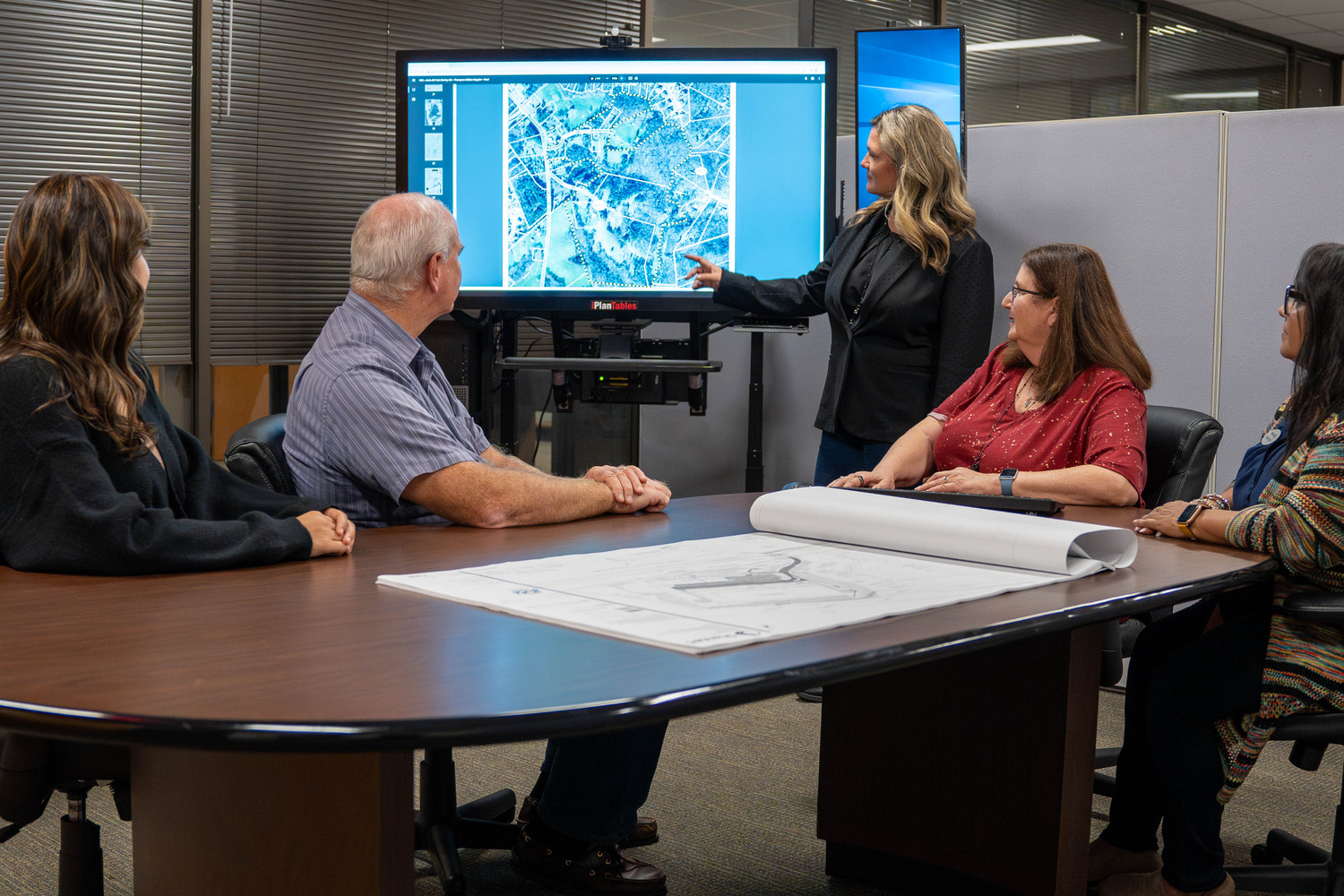
Navigating this complexity requires more than technical upgrades—it demands experienced partners who can translate ambition into action.
CPL takes a holistic approach to public‑sector energy planning, beginning with the broader context: goals, constraints, regulatory requirements, funding opportunities, and long‑term community vision. Cross‑disciplinary teams in design, engineering, and planning collaborate to deliver integrated strategies that grow with municipal needs.
We help clients ask better questions: Which investments deliver the strongest ROI? How can communities prepare for mandates already on the horizon? Which approaches reduce both cost and carbon? How can flexibility be embedded into systems from day one? For CPL, energy innovation is not just about technology; it's about strategy, communication, stakeholder alignment, and timing—ensuring municipalities can navigate complexity and build infrastructure that endures.
Plan for What’s Next
Energy systems are evolving quickly, and municipalities are being asked to make complex decisions on tighter timelines. From electrification and storage to funding strategy and long-term resilience, the path forward requires thoughtful coordination across systems and stakeholders.
Our team works alongside public agencies to turn big-picture goals into actionable, phased plans that align infrastructure, funding, and future readiness. Connect with us to start building a strategy that positions your community for what’s ahead.
About the Author: Greg Royer

