
Share This Story
The work, users and commitments behind a research initiative should determine its facility scope.
A new faculty recruit, a grant funding opportunity, a growing program, or a prospective industry partner can put the need for additional research space on a university’s priority agenda. Each can create pressure to move quickly, but an opportunity alone does not define what an institution is prepared to support in terms of facility investment.
Before translating an opportunity into a facility plan, the university’s academic, research, facilities, and finance leaders need to agree on the research the space will support, who will conduct the research, what equipment and building systems will be required, and which partners and funding sources are expected to contribute to the planning and the cost. This will give planners a basis for identifying the space and infrastructure the project requires.
Planning may begin well before all funding and potential partnership decisions are defined. If a grant is still under review, an industry partner has not committed, or a state funding match is only proposed, institutional leaders must determine whether, or to what extent, the project can proceed without the additional funding support. This process will determine the institution’s immediate research needs separate from project elements that depend on outside commitments.
PLAN THE SPACE AROUND HOW THE RESEARCH IS CONDUCTED
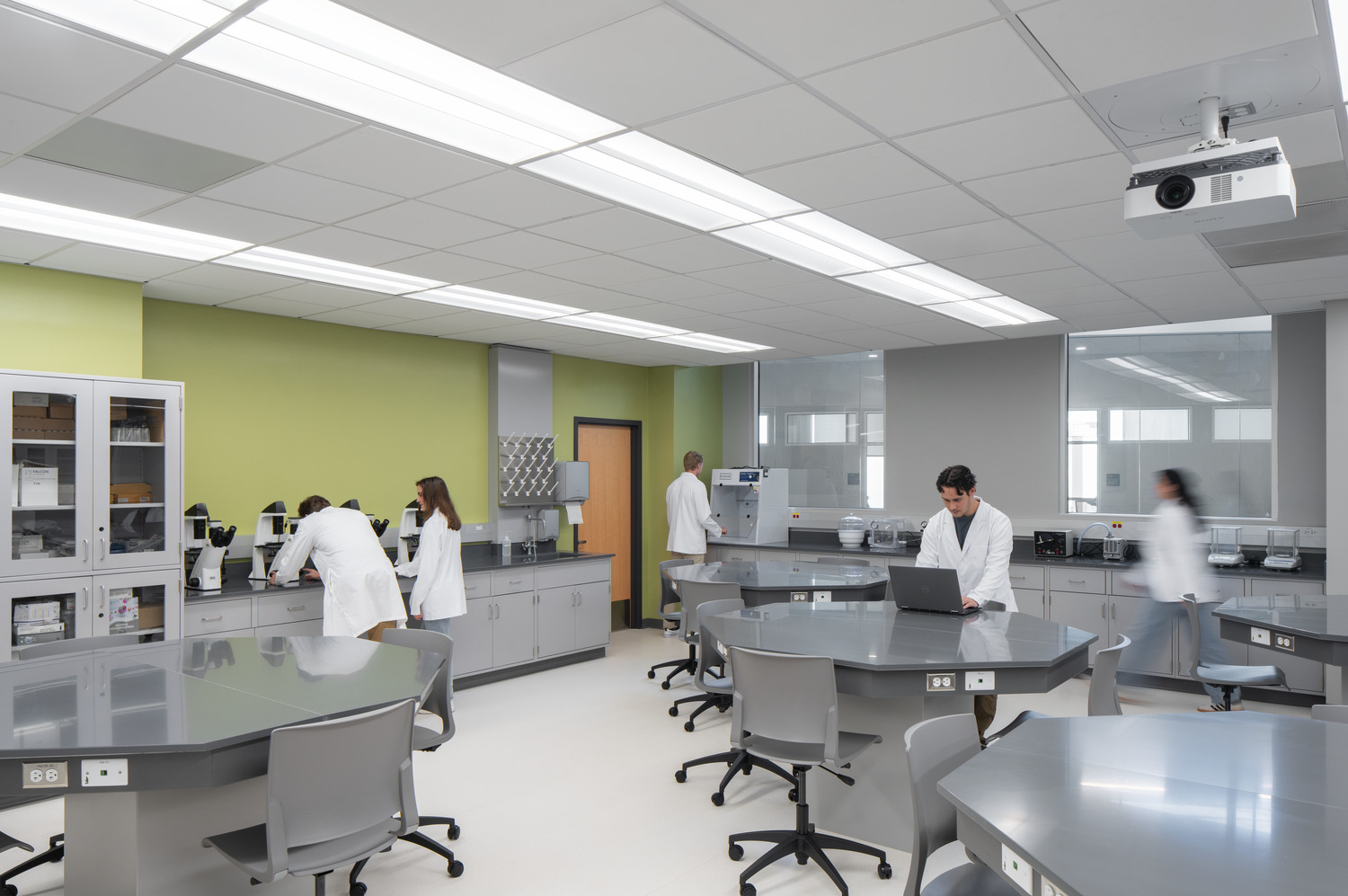
Researchers define the questions and methods; planners need to understand what carrying out the work requires. Teaching and research labs, for example, serve different types of users and workflows. At the University of South Florida, CPL’s biomedical teaching labs use group tables and an instructor station at the front of the room to support team-based learning. Research labs, however, require a different planning strategy, shaped by investigators’ workflows, equipment and bench needs.
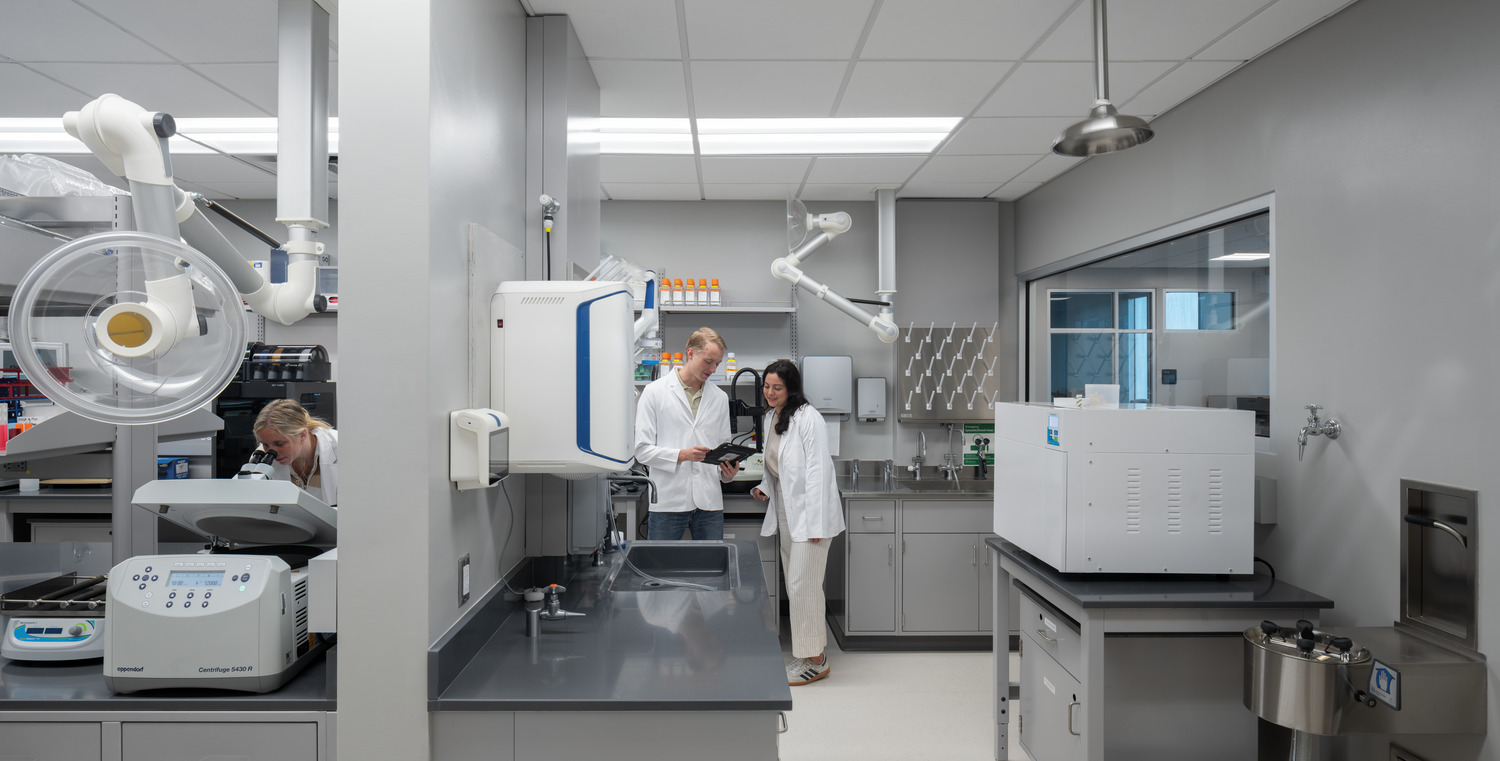
Those details help laboratory planners determine which activities and equipment require dedicated rooms and support infrastructure, and which resources can be shared among researchers. A “wet” lab for instance may require fixed casework with specialized plumbing and piping for laboratory gases and fume hoods, while “dry” labs may require reconfigurable casework, specialized power sources, and snorkel exhausts to support changing types of research and equipment. Large instruments and equipment may require specialized power sources, structural support, and clearances to provide for service and maintenance.
Once those needs are understood, the university can plan who will use each area, what work they will conduct, what rooms and equipment they will need, and determine appropriate adjacencies. The plan should distinguish established requirements from needs to accommodate future faculty hires, potential industry partners, or research methods still in development.
This understanding requires practical flexibility. If a lab will serve successive investigators, modular, movable casework may accommodate a variety of bench layouts and configurations. It cannot, however, make up for insufficient ceiling clearance or floor-to floor height to accommodate the necessary equipment and building systems, or a column grid that doesn’t follow standard, workable laboratory modules. The laboratory planning process should identify which uses the space can accommodate under current planned and funded research and provide sufficient flexibility for future changes.
PREPARE FOR INDUSTRY PARTICIPATION
At a local R1 university, CPL is completing a confidential study for a proposed research environment. The university plans to use the study to pursue state funding support and potential industry partners; neither commitment is secured.
This study will give the university a basis for those conversations, while any partner’s role remains prospective. Before planning around industry participation, university leaders should identify what they want a company to contribute — expertise, equipment, funding, or operational support — and what research the institution is capable of and prepared to support. If an industry partner’s role or level of participation changes, that distinction helps leaders determine what remains an institutional priority, and what may need to change moving forward.
TIE FUNDING TO THE OPERATING PLAN
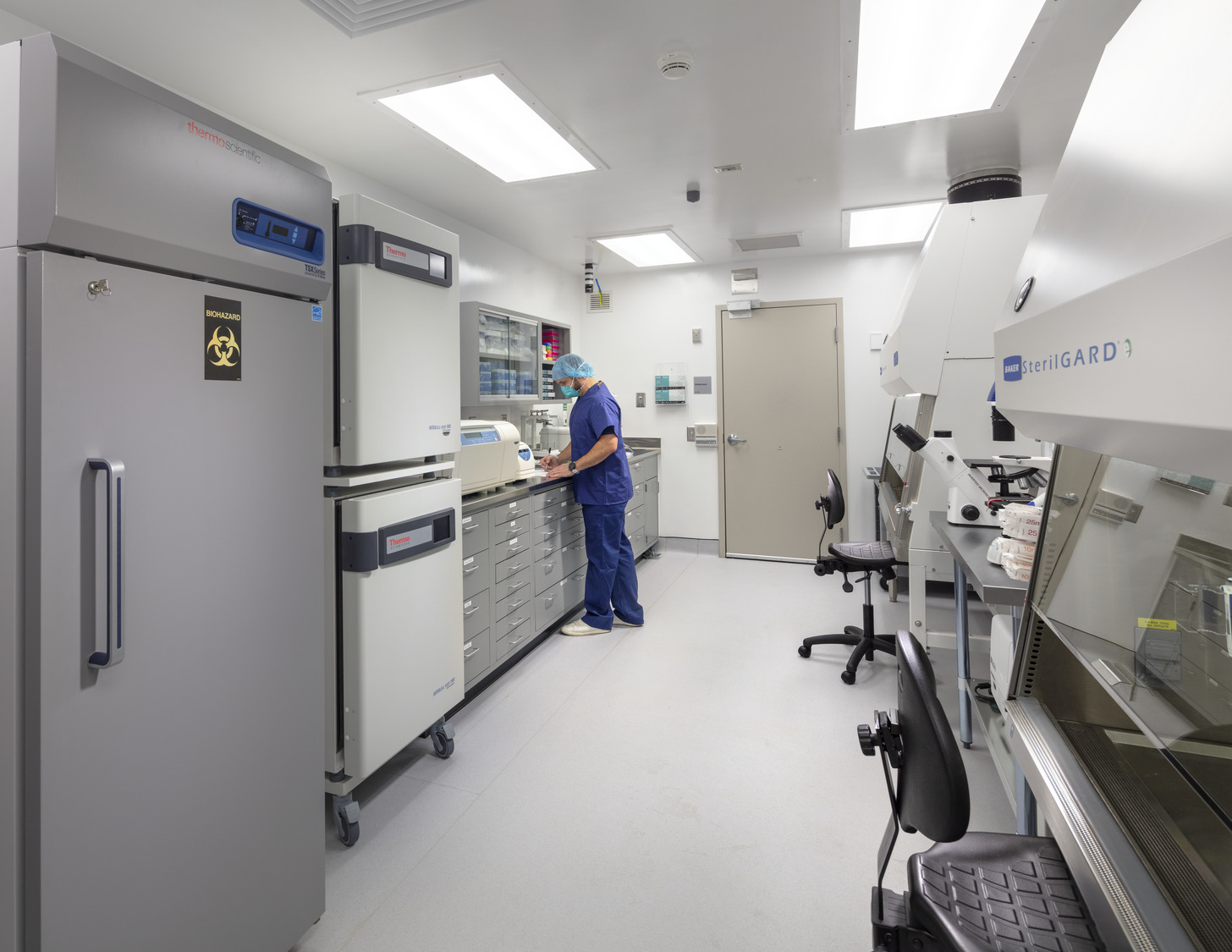
At Wake Forest School of Medicine, CPL supported a National Institutes of Health (NIH) grant application for a facility for translational imaging research. That grant funding continued through project delivery and post-occupancy. NIH support and contributions from several research areas helped fund the project.
For any project funded by several sources and research areas, the funding plan is only part of the work. Leaders also must decide whether and which groups will share equipment and services, occupy separate research spaces, or both. Responsibility and costs must be assigned for access control, technical support, utilities, and equipment maintenance and replacement. Those decisions will have an important affect the space and ongoing costs, so they must be determined during the planning process while the design can still be adapted to respond.
Decide what IS READY FOR DESIGN
Before design begins, the provost, research office, facilities team, and finance leaders should agree on what research the project will support, who will use it, what infrastructure it requires, and ultimately where the funding and partnership commitments will come from.
Some decisions may ultimately remain unresolved during the planning and design process pending input from outside funding sources. However, it is important to proceed with the planning process with the anticipation that flexibility is the key to satisfying the potential future needs. If a line of research, grant award, or industry partnership changes, the university should be able to determine which prior planning decisions will adequately serve changing needs, and what decisions may need to be revisited.
Before space and layout drive the conversation, university leaders must be able to state what research they are willing to support based on current commitments, how an industry partner or grant award could affect the facility planning, and how the decisions they make may change the facility planning if anticipated funding support does not arrive. That is the decision the design should serve.
Ready to Invest in Research Space?
Before committing to a facility, university leaders need a clear understanding of the research to be supported, the resources required, and the funding and partnerships that will make it possible. CPL’s Higher Education team can help align these considerations, evaluate current and future needs, and plan for the decisions that will shape the facility investment.
About the Author: H. Michael Smith

