
Share This Story
K–12 schools shape how students picture life after graduation long before they ever pack a dorm bag or step foot on a college quad. Today’s most future‑focused districts are taking a playful cue from hospitality, an industry rooted in making people feel welcomed, cared for, and comfortable at every stage of their experience, and bringing that spirit onto their campuses. By blending warmth, clarity, and a touch of “you belong here” charm, these schools are creating environments that spark curiosity now while gently preparing students for the independence and experiences they will encounter in college settings down the road.
Why K-12 is Looking to Hospitality (and Higher Ed) Now
Parents and students are now evaluating schools far more than academics; they are seeking environments that feel safe, connected, and inspiring. Districts that invest in these types of improvements often become “destination districts,” drawing in families who want engaging, future‑ready learning environments and attracting top‑tier teaching talent who are eager to work in well‑designed, supportive settings. This combination expands student opportunities and elevates the overall quality of educational impact. In higher education and hospitality, these guest‑first design principles have already reshaped expectations. Hotels are creating highly personalized, wellness‑focused, and flexible spaces that adjust to user needs throughout the day, and colleges are transforming traditional lobbies into learning commons and dining halls into social hubs that double as collaboration spaces. These same shifts are now influencing what K–12 communities expect from their school environments.
K–12 facility leaders must also plan for long‑term needs such as safety, sustainability, and adaptability, which closely mirror the operational priorities of hospitality. Current best‑practice guidance for school design highlights flexible floor plates, technology‑ready infrastructure, universal design, and resilient systems that can evolve without expensive overhauls. These principles align with how hotels prepare their properties for changes in guest behavior. In New York, where many districts are experiencing declining enrollment and potential reorganizations, these investments become even more significant. Communities that approve thoughtful, future‑ready improvements often position themselves to remain strong through consolidation discussions and are more likely to maintain stability during periods of change.
Eight Hospitality‑Inspired Shifts K‑12 Can Implement Now
1) Personalization at Scale → Purpose‑Built Learning Zones
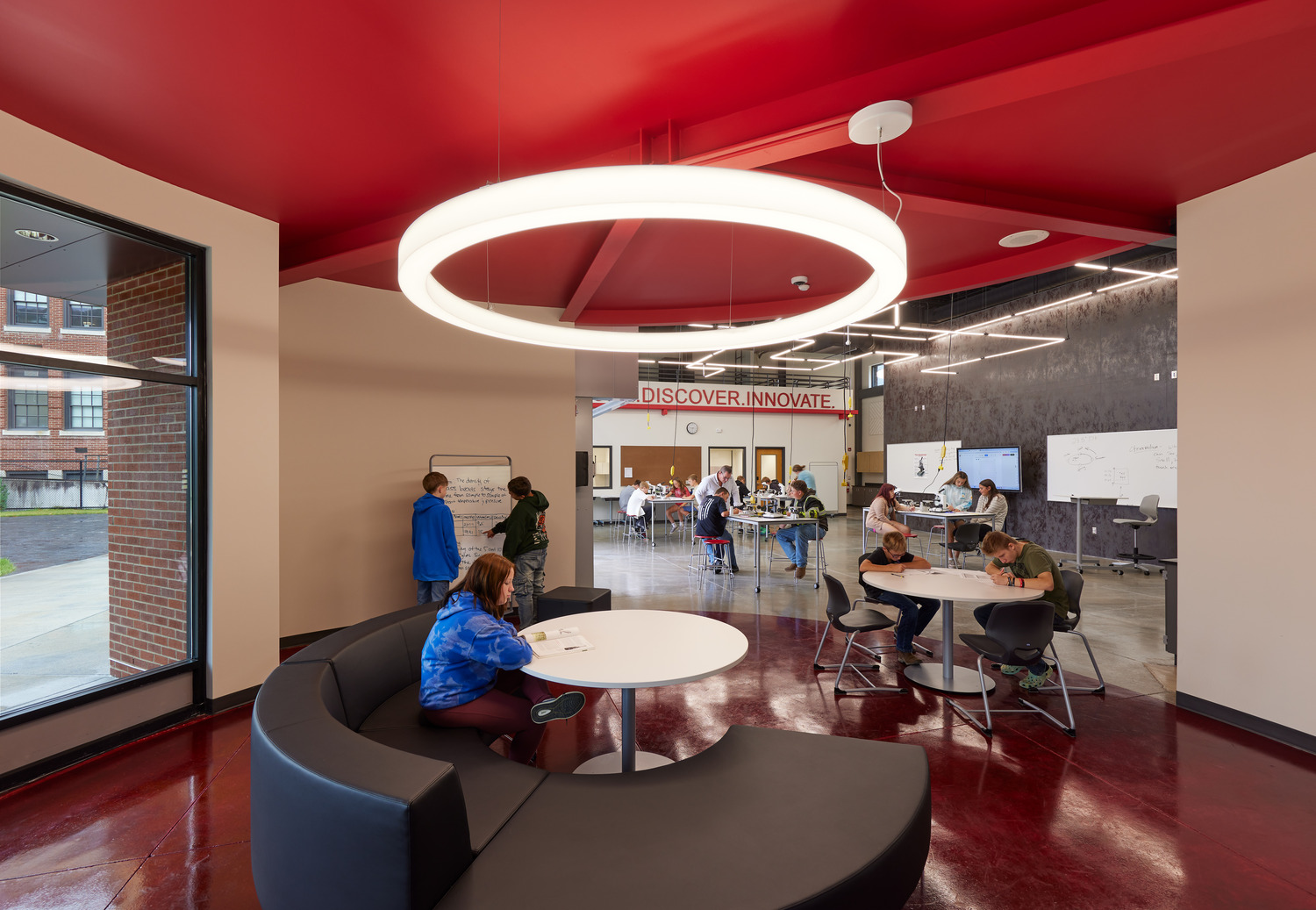
Hospitality design treats personalization as a foundational expectation, where lighting, climate, and amenities intuitively adapt to individual needs. K‑12 environments can translate this approach into zoned learning spaces that reconfigure quickly for quiet study, small‑group collaboration, or presentations. This mirrors broader trends toward adaptable furniture, clustered classrooms with breakout areas, media‑rich hubs, and flexible “four‑sided” teaching rooms that support multiple modalities throughout the day. Incorporating varied seating options, tunable lighting, zoned acoustics, and hotel‑inspired arrival cues, such as clear wayfinding and warm, branded entry experiences, helps create learning environments that feel intuitive, supportive, and future‑ready for all students.
2) Wellness is the New Luxury → Wellbeing as a Learning Prerequisite
Hospitality leaders increasingly connect guest loyalty to wellness through circadian lighting, movement studios, sleep‑supportive features, and restorative materials—principles schools can adapt to strengthen student mental health and focus through sensory‑friendly nooks, abundant daylight, biophilic finishes, and quiet rooms that help learners regulate and reset. Research shows that flexible, wellness‑oriented environments consistently outperform rigid layouts, and schools can enhance wellbeing and academic success by adding wellness lounges near counseling or nurse suites, incorporating low‑VOC biophilic materials, and designing active‑learning spaces with standing bars, perches, and open areas for movement. Equally important is connecting these indoor environments to outdoor opportunities—courtyards, learning gardens, flexible outdoor classrooms, and nature paths that extend the learning experience, infinitely expand the boundaries of the classroom, and inspire curiosity beyond school walls.
3) From Grand Lobbies to Learning Commons
Hotel lobbies have evolved into hybrid spaces that function both as social hubs and workspaces, and K‑12 districts are echoing this shift by incorporating learning stairs, open commons, and media bars that function as student study lounges during the day and transform into community gathering spaces after hours, reflecting the same emphasis on flexibility and multipurpose design seen in contemporary hospitality environments. Schools are increasingly integrating tiered learning stairs equipped with power access and projection capabilities, surrounding these hubs with soft seating clusters near “help desks” staffed by librarians, IT personnel, or peer tutors, and using operable partitions to quickly convert commons areas into town halls, performance venues, or family event spaces, creating spaces that adapt seamlessly to the rhythms of the school day and broader community use.
4) Inclusive by Default → Universal Design for Every Learner
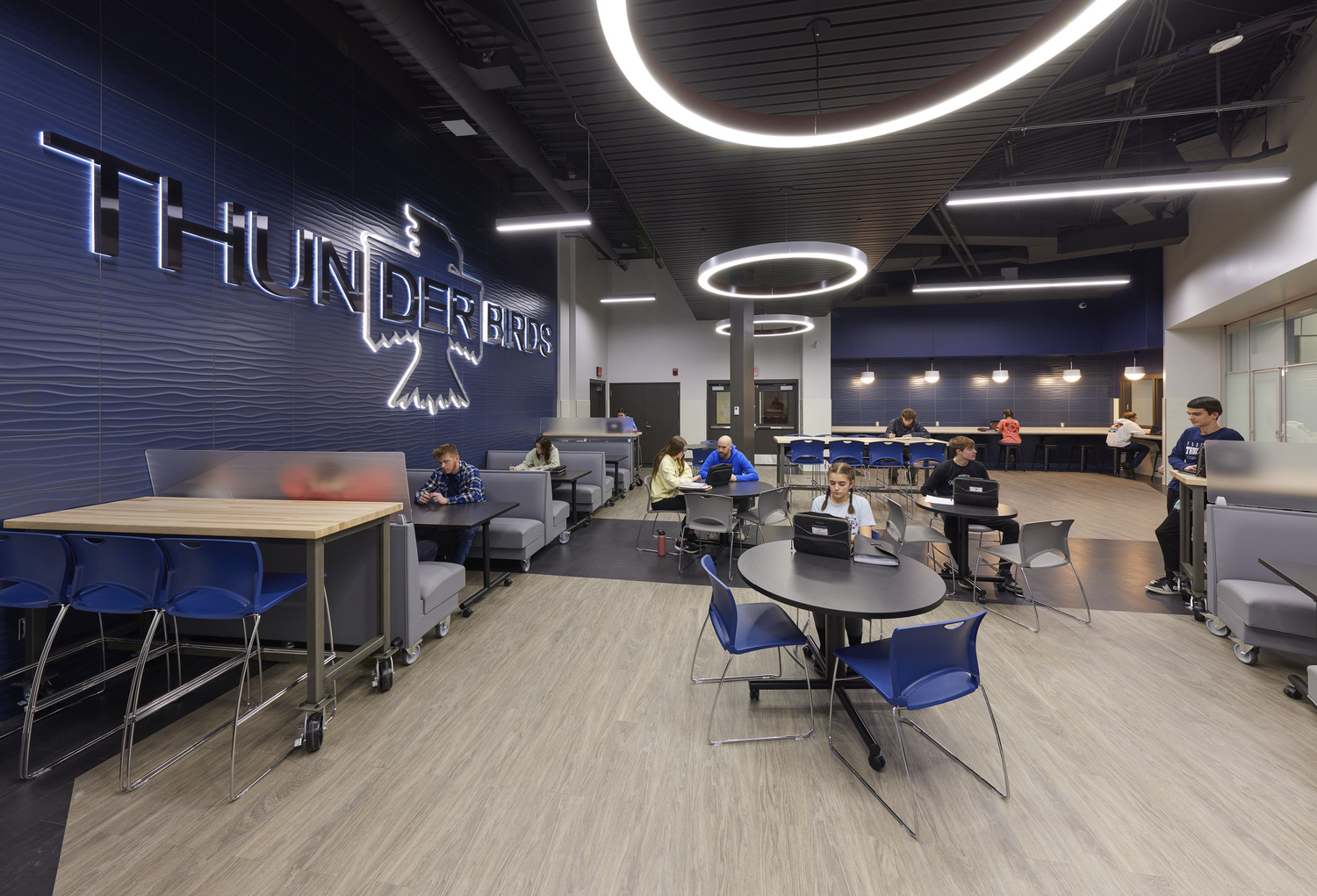
Hospitality’s push toward inclusive design, which prioritizes accessible layouts, sensory‑friendly experiences, and environments that honor individual needs, parallels K‑12 commitments to equity and universal access. Classrooms equipped with adjustable furniture, clear circulation paths, and integrated assistive technologies help remove barriers and promote dignity for every learner. By incorporating adjustable‑height desks and varied seating options, intuitive high‑contrast icon‑based wayfinding, and small, strategically distributed quiet rooms that reduce both travel time and stigma, schools can create learning environments that welcome diverse learners and ensure all students can fully participate in both academic and social experiences.
5) Sustainability as Strategy → Resilient, Flexible Campuses
Hospitality brands increasingly embed sustainability into their core identity, embracing circular materials, refill strategies, and energy‑efficient systems, and K‑12 districts can achieve similar environmental benefits and long‑term cost control by prioritizing durable, low‑carbon materials and infrastructure designed for seamless reconfiguration, ensuring that a STEM lab today can transition into an AI studio tomorrow without major demolition. Adopting “long‑life, loose‑fit” floor plates with minimal load‑bearing walls, positioning backbone utilities and technology risers for future tie‑ins, and selecting materials vetted for embodied carbon and indoor air quality enables schools to build adaptable, future‑ready campuses that remain resilient as programs and technologies evolve.
6) Frictionless Safety → Secure, Welcoming Arrival
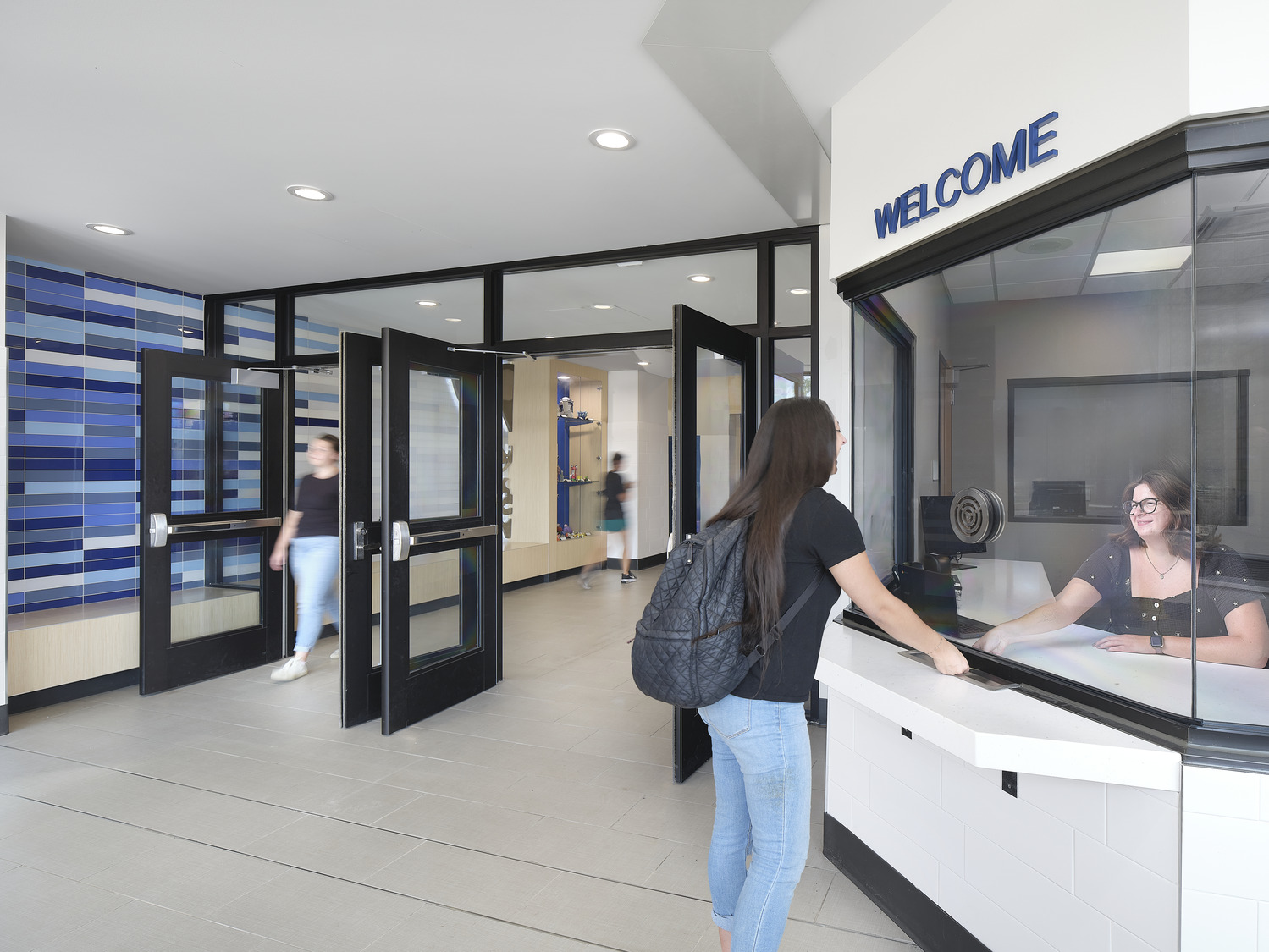
Hospitality places strong emphasis on seamless access control and guest‑friendly security, and K‑12 guidance adopts a similar approach by pairing hardened entry vestibules and smart access management with a warm, concierge‑style front‑of‑house that provides clear supervision without creating an institutional atmosphere. To achieve this balance, schools can implement consolidated visitor management systems with controlled vestibules and direct line‑of‑sight visibility, incorporate door‑monitoring and mass‑notification tools integrated into campus wayfinding and staff workflows, and use landscape elements and millwork to subtly guide circulation while maintaining an open, welcoming lobby experience.
7) Story-Rich Branding → Belonging and Pride
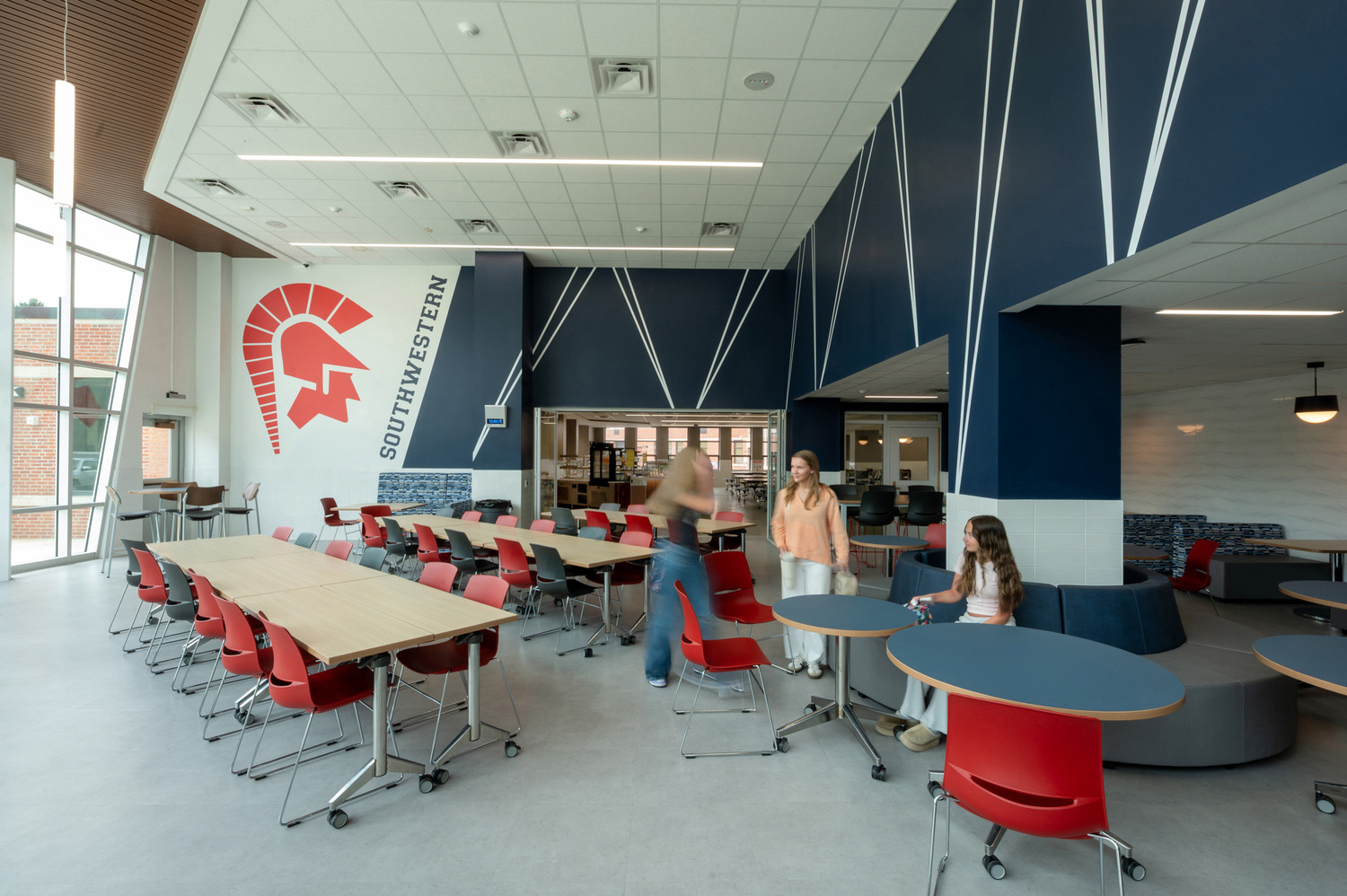
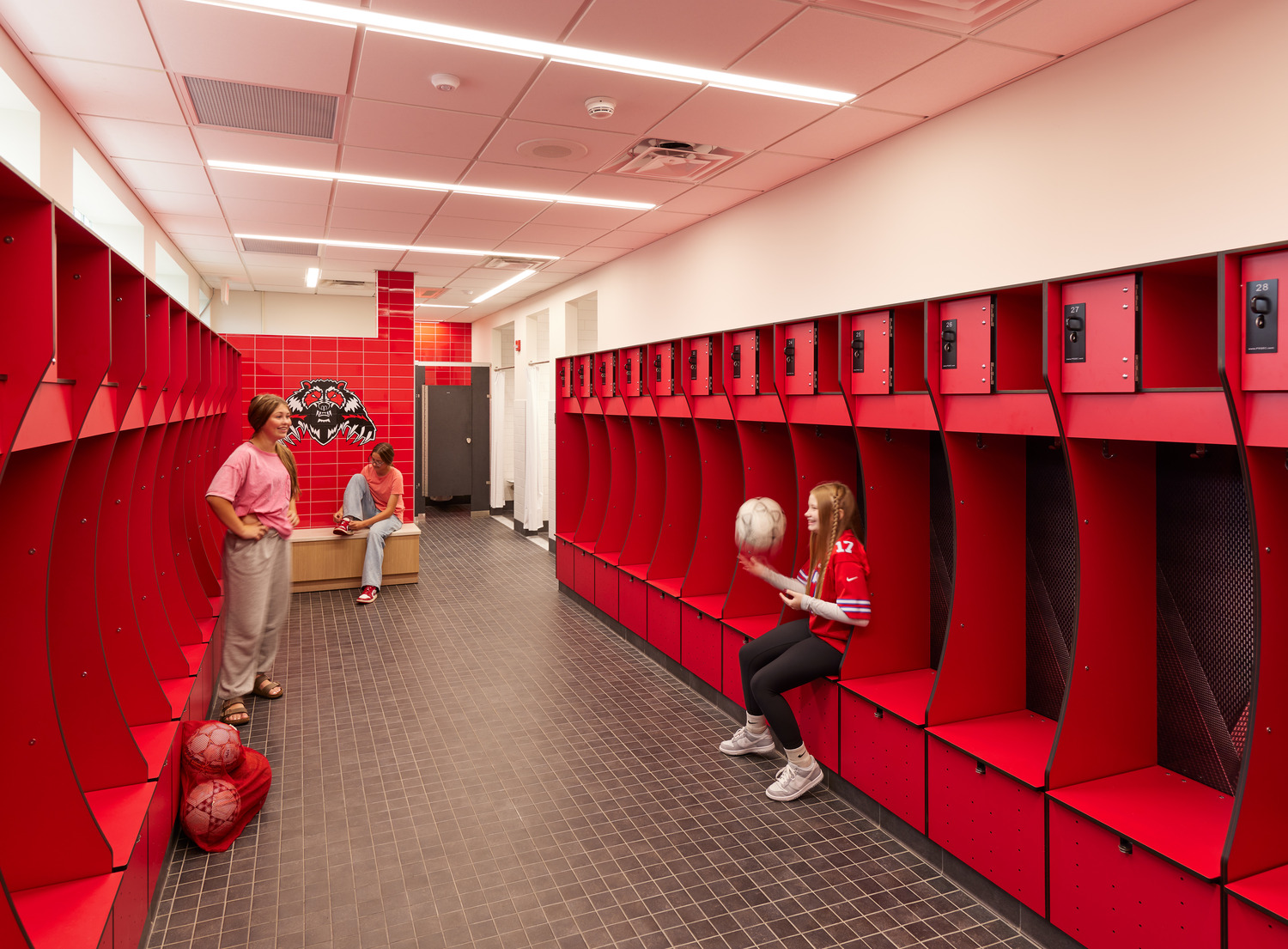
Hotels use evocative storytelling—through materials, color, scent, and other sensory cues—to create emotional connection, and K‑12 districts are finding similar success by implementing campus branding that highlights local culture, student work, and shared values throughout entries, corridors, and commons, helping schools build identity and strengthen community pride. This can be achieved through curated galleries and digital canvases that regularly showcase student projects, cohesive palettes and typographic standards that unify signage and environmental graphics, and intentional “sense of place” moments such as heritage walls, alumni stories, and community maps that anchor the school experience in its unique context.
8) Tech-Forward Hospitality → Connected Teaching & CTE
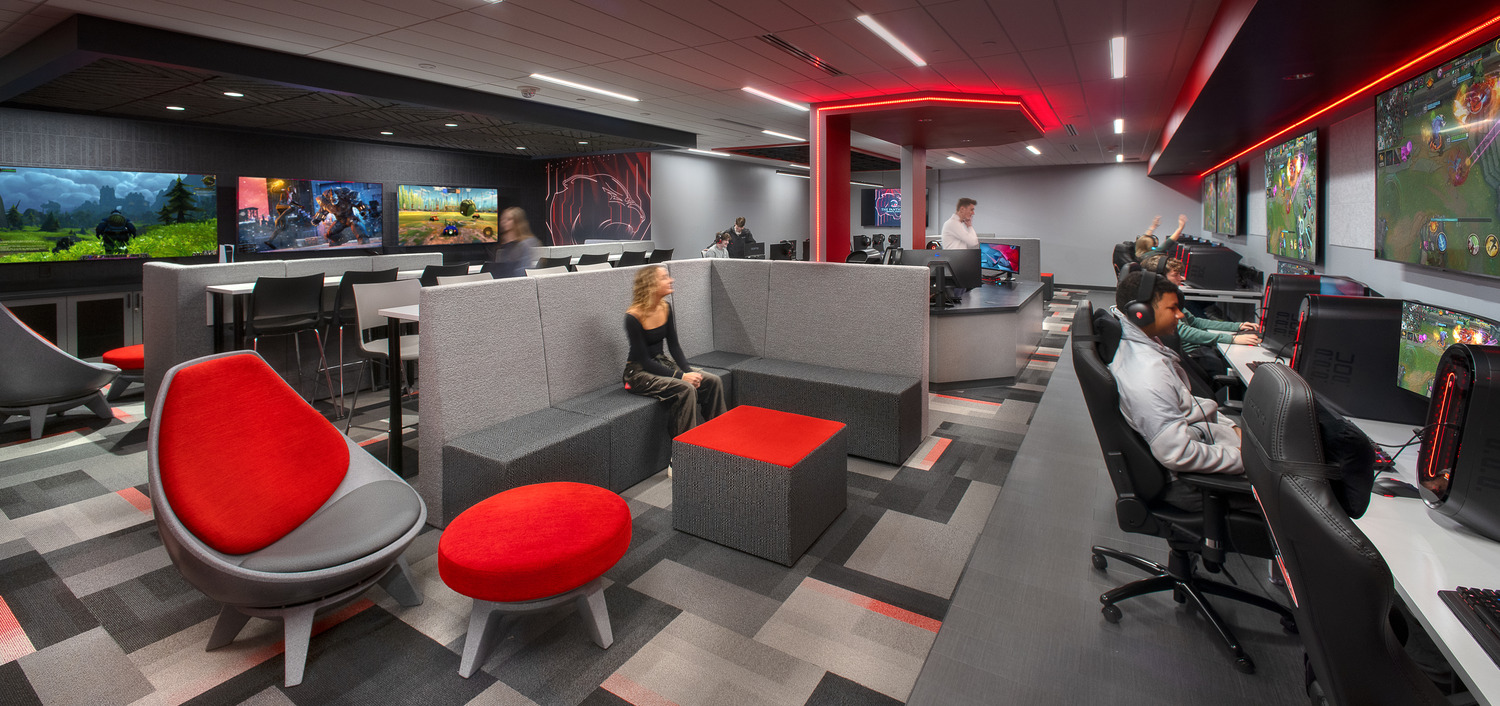
Investments in AI‑enabled personalization and smart rooms in hospitality have clear K‑12 parallels, including tech‑rich media centers, esports labs, maker spaces, and CTE suites that can adapt as programs evolve. Districts benefit from designing these environments for plug‑and‑play flexibility, ensuring power, data, ventilation, and acoustics can support broadcasting, content creation, robotics, and VR without requiring constant renovation.
Turning Trends Into a District Strategy: A Phased Playbook for Hospitality‑Inspired K-12 Campuses
Designing a college‑ready, hospitality‑inspired K‑12 campus requires a strategic, phased approach that aligns vision, operations, and long‑term adaptability. The following unified framework blends district‑level planning questions with an implementation roadmap, helping leaders move from “big ideas” to measurable impact.
PHASE 0: DISCOVERY & STORY: dEFINE THE VISION BEFORE YOU DESIGN
Before committing to design moves, districts must articulate what college‑ready truly means for their community. Key Questions:
- What does “college‑ready” mean beyond test scores? Consider the student experiences you want to normalize, such as self‑directed study, open‑door educator access, peer tutoring, and embedded wellness, and align future space types (commons, nooks, staff touchdown areas) to support those behaviors.
- What is our branding story? Identify how mission, values, and local identity should show up physically across the campus through environmental graphics, curated student work, and strong sense‑of‑place moments.
- Where will wellness live physically? Determine not just programs but actual rooms where students can decompress, spaces near counseling and the nurse’s office, plus smaller sensory‑smart retreats distributed throughout high‑traffic zones.
- During this stage, conduct stakeholder interviews and a cultural audit to understand how the campus should feel to a first‑time visitor.
PHASE 1: Prototype & Pilot: Test Before You Scale
Early pilots help validate assumptions, build trust, and reveal the true needs of students and staff. Key Questions:
- How adaptable is our current floor plate? Assess whether the building’s “bones” can support change through furniture swaps, demountable partitions, or infrastructure upgrades before considering new construction.
- Which programs need specialized support today, and five years from now? Focus pilot projects on high‑growth areas like esports, media labs, robotics, and CTE. Treat these as modular ecosystems with flexible acoustics, power, and ventilation that can evolve as programs shift.
PHASE 2: Scale with infrastructure: build the backbone for growth
As pilots prove effective, infrastructure should evolve to support long‑term adaptability. Key Questions:
- How do we design spaces that adapt as needs evolve? Prioritize flexible planning strategies that allow programs, technologies, and student services to shift over time without major renovations. Future‑ready layouts, modular elements, and infrastructure that anticipate change help ensure learning environments can grow and transform without tearing down walls every few years.
- How will specialized programs expand? Scale esports, media hubs, and CTE labs with durable finishes, broadcast‑quality acoustics, cable management, and reconfigurable layouts so they keep pace with technology cycles.
PHASE 3: Operationalize the Experience: Make the Building Work Like Hospitality
Experience is shaped not only by design, but by daily operations. Key Questions:
- How will we make security feel welcoming? Pair secure vestibules and access control with warm materials, natural light, and clear reception to avoid an institutional atmosphere.
- How do staff workflows support flexible spaces? Develop facilities playbooks that guide custodial, IT, and instructional teams in resetting spaces for assemblies, after‑school events, evening community use, and weekend programming.
PHASE 4: MEASURE WHAT MATTERS: EVALUATE IMPACT FOR CONTINUOUS IMPROVEMENT
Investments must translate into meaningful outcomes—academic, social, and operational. Key Questions:
- How will we measure student experience and success? Track attendance, disciplinary trends, counseling utilization (as a positive wellness indicator), and space‑use data.
- How will we capture community and staff feedback? Implement NPS‑style surveys for students and teachers to gauge comfort, belonging, and productivity, ensuring environments remain responsive and relevant.
Equity, Access, and the Path Forward
Ensuring equity and access means continuously evaluating whether new or renovated spaces truly level the playing field for all learners through universal design, welcoming study environments, and accessible technology, benchmarks of a genuinely college‑ready campus. As districts integrate hospitality‑inspired strategies into their facilities, the goal is not only to modernize buildings, but to create environments where every student experiences dignity, belonging, and opportunity.
By merging vision, pilots, infrastructure, operations, and ongoing evaluation, districts can systematically transform these trends into a cohesive, future‑ready campus strategy. This phased approach keeps decisions intentional, equitable, and adaptable resulting in schools that feel contemporary while fundamentally strengthening student experience, readiness, and community connection.
Looking ahead, many once‑differentiating features will become expected standards: wellness‑first design with biophilia, daylight, and quiet rooms; flexible, furniture‑led learning ecosystems replacing single‑purpose rooms; hospitality‑grade branding and wayfinding that anchor school identity and family engagement; discreet, low‑anxiety security shaping arrival and circulation; and sustainable, circular materials paired with adaptable infrastructure forming the backbone of capital planning.
Private and independent schools will continue serving as testing grounds for emerging programs—from eSports to AI and robotics—because they can implement and iterate quickly. Public districts can study these early adopters, scaling what works with inclusive programming and long‑term planning. The design takeaway is clear: build flexible, forward‑compatible shells that evolve with rapid shifts in technology, curriculum, and student interest
Ultimately, a college‑ready campus is far more than a collection of amenities; it is an experience strategy. By applying the best-of hospitality design, including personalization, wellness, multifunctional hubs, inclusive environments, sustainable systems, and seamless safety, districts create places students genuinely want to be and educators are proud to use. These daily experiences quietly build the independence, confidence, and navigational skills students will rely on from their first day of college to every day that follows.

Campuses That Prepare Students for What’s Next
If your district is exploring how learning environments can support student wellbeing, flexibility, and future-ready programs, thoughtful planning is the first step. CPL works alongside school leaders to evaluate facilities, identify opportunities, and shape campuses that support student success for years to come.
About the Author: Graham Boyd

