
Share This Story
Over the past five years, micro-hospitals have emerged as a strategic solution to one of the most pressing challenges in American healthcare: access.
As traditional hospitals in rural and underserved areas face closures or downsizing, micro-hospitals are stepping in to fill the void—offering essential services, stabilizing patients and connecting communities to broader health systems.
Why Micro-hospitals Matter
The concept of micro-hospitals is rooted in necessity. In many rural regions, patients face long ambulance rides to distant hospitals, increasing risk and delaying critical care. Micro-hospitals are designed to stabilize patients locally—often with trauma rooms, imaging equipment and experienced staff—before transferring them to larger facilities if needed. This model not only improves outcomes but also reduces the burden on emergency services.
Unlike traditional hospitals, micro-hospitals are smaller, more agile and easier to construct. Their modular design allows for scalability and adaptability, making them ideal for communities with fluctuating needs.
Architecturally, they often follow a universal grid system that supports future expansion and departmental integration. This flexibility ensures that micro-hospitals can evolve alongside the communities they serve.
Case Study: Lockport Memorial Hospital
Lockport Memorial Hospital in Niagara County, NY exemplifies the transformative potential of micro-hospitals.
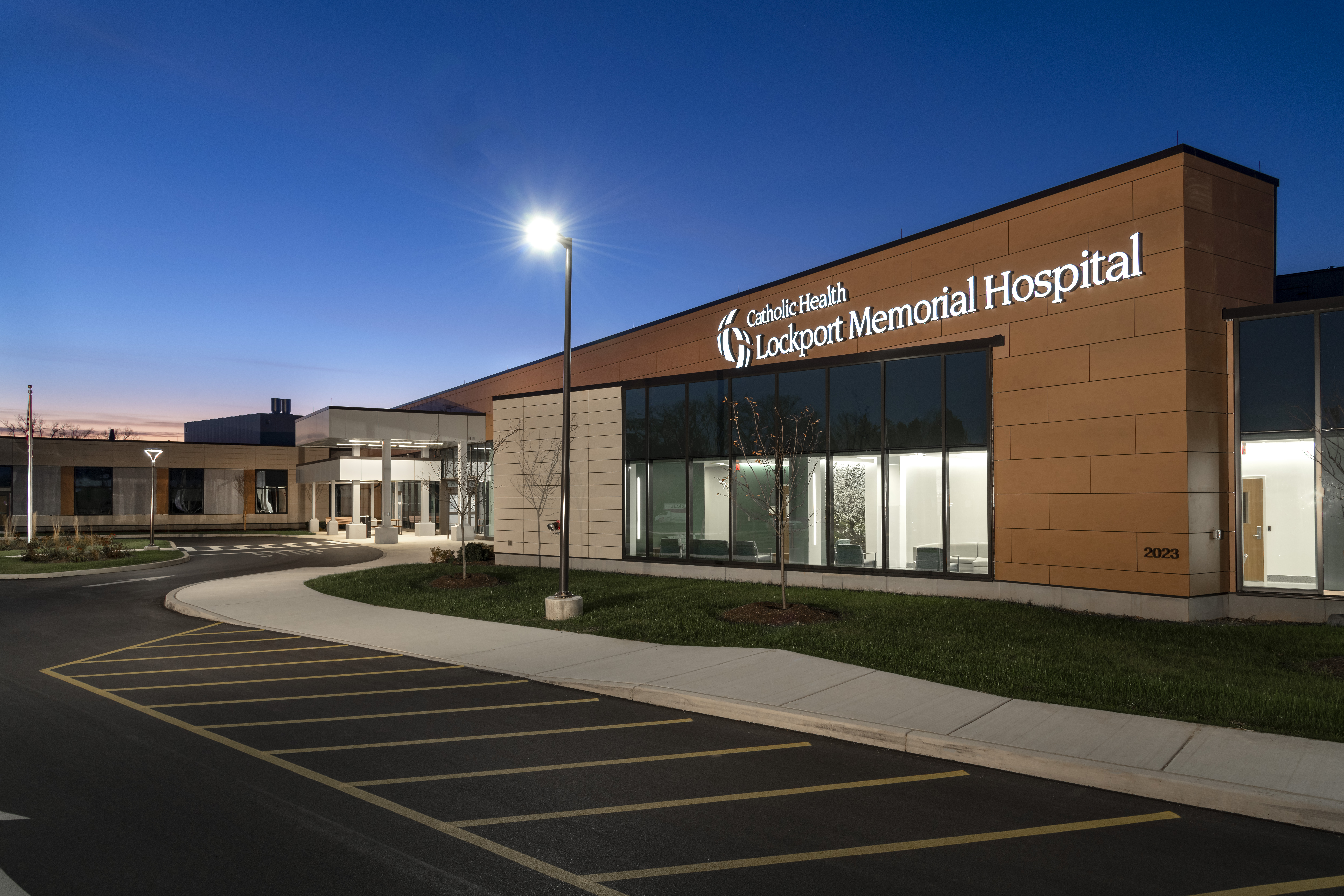
Opened in 2023, the 63,000 sq. ft. facility includes 10 inpatient beds, a full-service emergency department, imaging services and outpatient clinics. Strategically located along major routes and equipped with a helicopter pad, Lockport Memorial is positioned to respond swiftly to emergencies and mass casualty events—an increasingly important capability in the face of climate-related disasters.
The hospital’s design prioritizes operational efficiency. By limiting entry points and streamlining patient flow, it separates emergency services and outpatient care while maintaining flexibility. This approach not only enhances care delivery but also supports cost containment.


For health systems, micro-hospitals like Lockport Memorial Hospital offer a faster path to operational readiness compared to multi-story hospitals, without compromising on technology or patient comfort.
Emergency Response and Community Impact
Micro-hospitals are not intended to replace traditional hospitals but to complement them. They serve as critical access points, especially in regions where larger hospitals have closed or are geographically inaccessible.
These compact, trauma-ready centers serve as vital access points for urgent and emergency care, offering stabilization for high-acuity patients and managing immediate health needs locally.
In communities like Fredonia, where a micro-hospital is replacing a larger institution, this transition reflects a broader shift toward right-sizing healthcare infrastructure. It’s a strategic move that prioritizes accessibility, efficiency, and sustainability.
Micro-hospitals also play a crucial role in emergency preparedness. Their proximity to the populations they serve enables faster response times during natural disasters, public health emergencies, or other crises. By combining clinical capability with operational agility, micro-hospitals strike a necessary balance: they are both centers of care and viable business models. Their responsiveness and community focus make them a smart solution for modern healthcare challenges.
This relatively new model has seen steady growth over the past five years, particularly in underserved areas.
Source: KFF Health News, “Sometimes Tiny Is Just the Right Size” (2024)
Health systems and private operators are accelerating deployment to meet access and cost-efficiency goals.
Source: Erdman, “Micro-Hospitals: Strategic Growth for Health Systems” (2024)
Dignity Health, for example, reports that its Nevada micro-hospitals now manage 21% of emergency volume with minimal transfers.
Source: Advis, “Micro-Hospitals: Improving Access While Reducing Cost” (2023)
Looking Ahead: Flexibility and Strategy
The future of micro-hospitals lies in their adaptability. Designs now incorporate scalable grids and modular spines that allow departments to be reconfigured or expanded as needed. This future proofing ensures that micro-hospitals remain relevant as healthcare demands evolve.
However, successful implementation requires more than smart design. Health systems must understand their market, staffing capabilities, and long-term strategy. Building a micro-hospital is only part of the equation—staffing it and integrating it into a broader care network are equally critical.
As rural healthcare continues to face challenges, micro-hospitals offer a promising path forward. They are not just buildings; they are lifelines—bringing care closer to home, improving outcomes, and restoring trust in the healthcare system.
About the Author: Michelle Trott

