Tasked with reimagining a 150-acre federally protected wetland in Lawrenceville, Georgia, CPL partnered with Tetra Tech to transform Beaver Ruin Park into a model of ecological sensitivity, sustainability and community enrichment.
Client
Gwinnett County
Location
Lawrenceville, Georgia
Total Project Cost
$19.3M
Key Contact
Rebecca Keefer
Completed
2021
Services
Architecture, Mechanical Engineering, Structural Engineering, Civil Engineering, Landscape

From the outset, we approached the site with deep respect for its fragile ecosystems, developing a comprehensive design strategy that balanced accessibility with preservation.
Understanding the delicate nature of the wetlands and the strict limitations imposed by two overlapping conservation easements, our placemaking practice team led with a strategy grounded in environmental stewardship. We conducted extensive environmental assessments, hydrological analyses and feasibility studies to identify the least impactful routes for trails, boardwalks and bridges. Every design move was intentional—crafted to minimize ground disturbance and maximize ecological integrity.
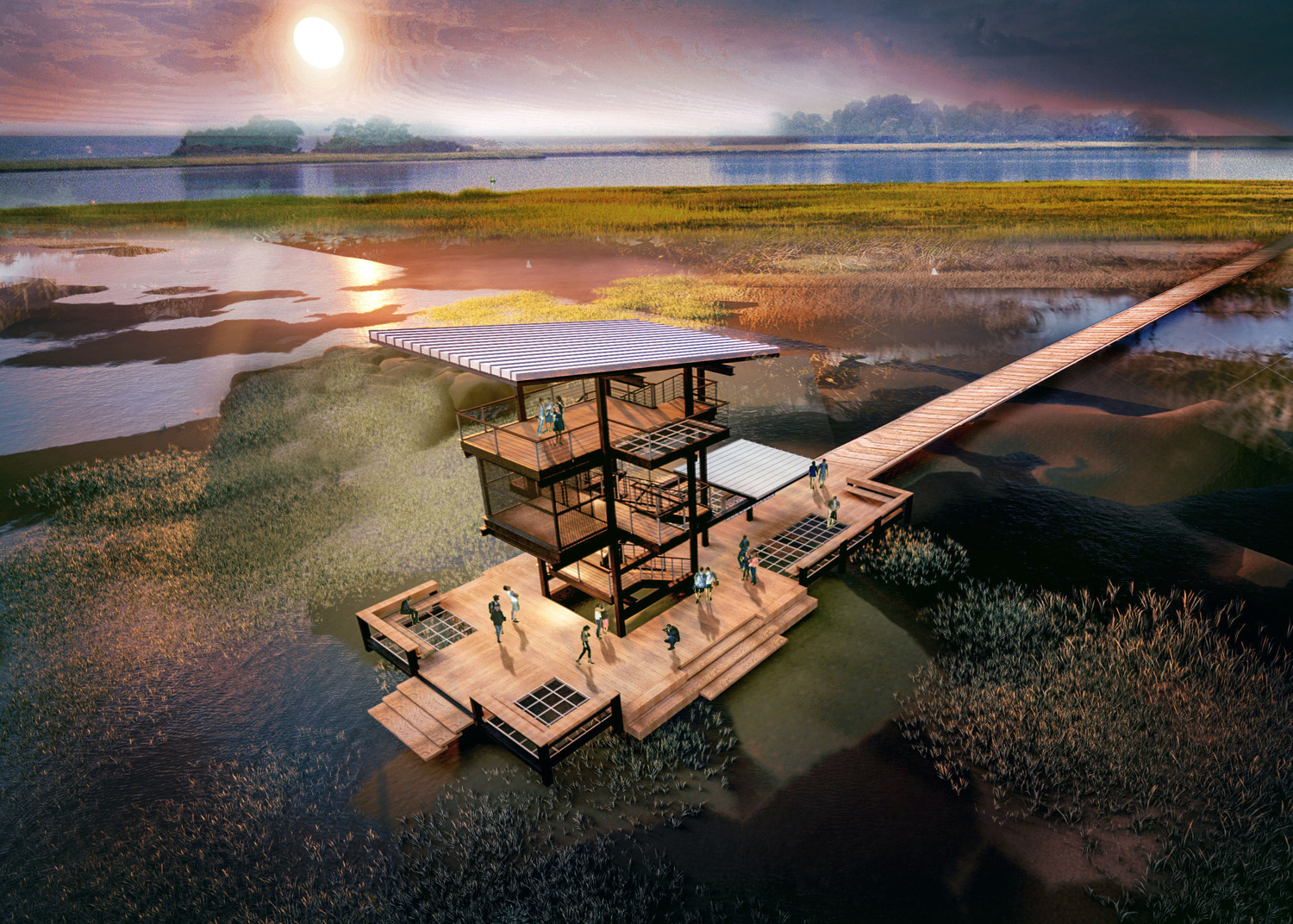
To protect the site during construction, top-down construction techniques were implemented for all boardwalks, ensuring the sensitive ground below remained undisturbed by heavy equipment. Our team also integrated bio-retention systems to manage stormwater runoff from parking areas, filtering pollutants naturally before they reached the watershed.
These solutions, combined with the careful siting of all amenities, supported the park’s successful certification as Georgia’s first LEED SITES® Platinum project—a landmark achievement in sustainable landscape development.
Additionally, a layered trail and loop system was designed to allow visitors to experience the wetland’s diverse ecological systems up close, without compromising their integrity. Strategic features like an elevated viewing tower, educational overlooks and a naturalistic playground extend the park’s value beyond recreation, fostering environmental awareness.
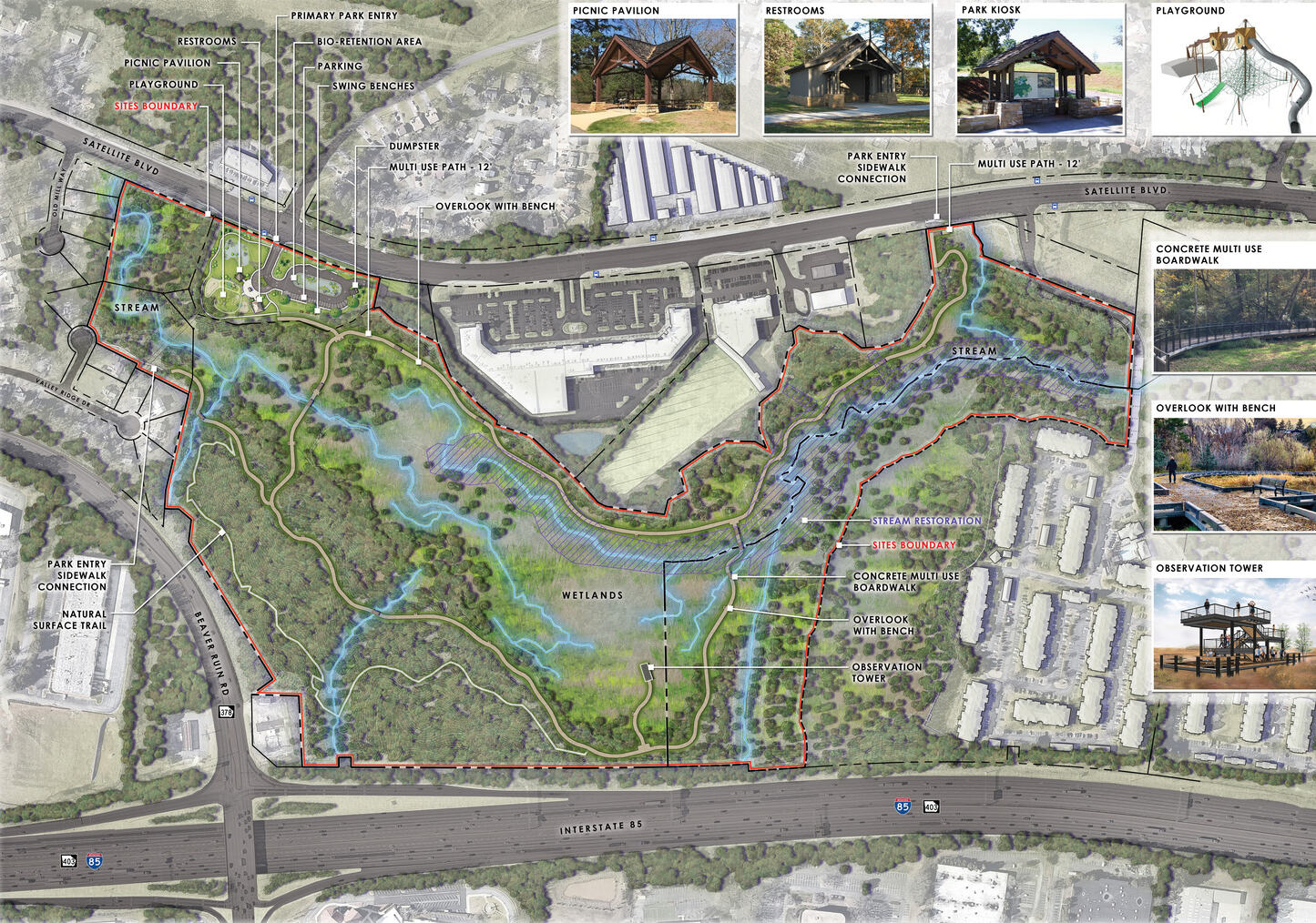
At the park’s entry, we consolidated impact by clustering amenities—including restrooms, a pavilion and orientation elements—into a compact footprint. This decision preserved the site’s openness while improving user experience. We also prioritized connectivity, linking the park directly to the Beaver Ruin Greenway, thereby extending its reach across the region and encouraging non-vehicular access.
The result is a dynamic, low-impact public space that redefines how communities engage with protected environments. Beaver Ruin Park is more than a recreational amenity—it is a demonstration of how thoughtful, strategic design can make fragile landscapes accessible, educational and enduring.