
Share This Story
If it feels like the demands on your district have never been greater, you’re not imagining it.
With more than half of U.S. schools in need of updates, K-12 leaders are being asked to renew decades-old buildings, embrace emerging pedagogies and keep students safe and happy; all while construction costs surge and funding cycles stand still. Meanwhile, communities expect proof that every dollar yields value.
Capital planning is a balancing act between today’s needs and tomorrow’s reality, but five data-backed strategies can help restore stability in unpredictable markets.
1. Lifecycle Costing to Safeguard Long-Term ROI
Lowest bid rarely equals lowest cost, especially when systems must perform reliably for decades. Lifecycle costing reframes capital commitments around total cost of ownership (including maintenance, energy, labor availability and anticipated price increases), allowing districts to compare options based on durability, not just short-term savings.
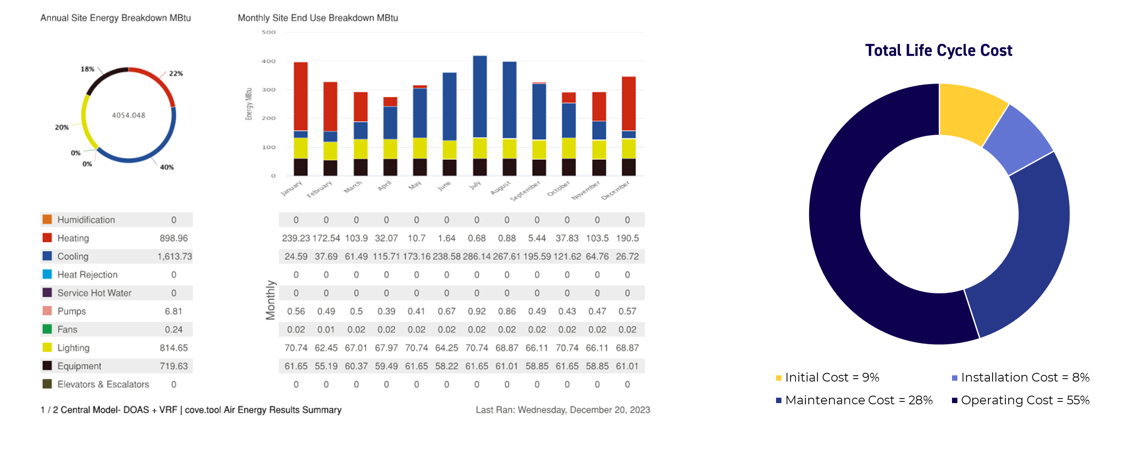
Our K-12 Practice team uses design software to model potential design solutions and variables— such as annual energy consumption—helping stakeholders make informed decisions.
This is critical when funding must support multiple campuses or a single unexpected system failure (think a boiler or roof replacement) can consume an entire year’s capital. Quantifying work upfront helps facilities managers champion outlays that combat reactive spending.
| IN THE NORTH | IN THE SOUTH |
|---|---|
| Lifecycle strategy typically begins with a Building Condition Survey (BCS)—functioning much like an annual financial audit. By identifying aging systems, deferred maintenance and assets nearing end-of-life, districts can prioritize capital needs and align them with a structured five-year plan. | Lifecycle strategy is frequently driven by advanced planning or master planning efforts. Similar to BCS-led approaches, these plans assess long-term facility needs, growth and infrastructure risks, enabling districts to sequence projects, forecast funding requirements and make informed decisions well before procurement begins. |
2. Value Engineering Without Compromising Learning Quality
Value engineering (VE) is frequently misunderstood as a late-stage cost-cutting exercise. In reality, if implemented correctly, it can be a valuable tool early in the design that harmonizes aesthetics, operations and budget so capital is spent where its influence is strongest.
Through VE, teams can:
- Use materials strategically, investing in durable, high-performance finishes where they matter most, enhancing visual quality where it adds value and avoiding unnecessary use of premium materials in low-impact areas.
- Optimize HVAC; these systems often amount to 45% of building costs, so establishing priorities and strategies to match district system types early on can slice expenditures down the road.
- Create a superior thermal building envelope to align initial cost with performance.
- Sequence work when full implementation isn’t feasible to prioritize critical work while planning for the future.
VE is most meaningful during inflationary periods; not to “value down” design, but to recalibrate it. The question shifts from What can we remove? to What delivers academic benefit at the most responsible cost?
3. Overhauling Facilities for Less with Adaptive Reuse
When buildings feel completely outmoded, new construction can seem like the only option. Adaptive reuse offers a more practical path, improving spaces without starting from scratch or pausing progress until the next funding cycle.
Timely planning with a trusted architectural advisor can help district leaders pinpoint buildings or wings with structural integrity, ideal for:
- Converting older spaces into career and technical education (CTE) labs.
- Reconfiguring underutilized areas to support STEAM, special education or flexible learning environments.
- Updating administrative or auxiliary spaces to relieve pressure elsewhere on campus.
With foundations and utilities already in place, districts mitigate costs, sidestep permitting hurdles and make visible progress in communities eager to see results.
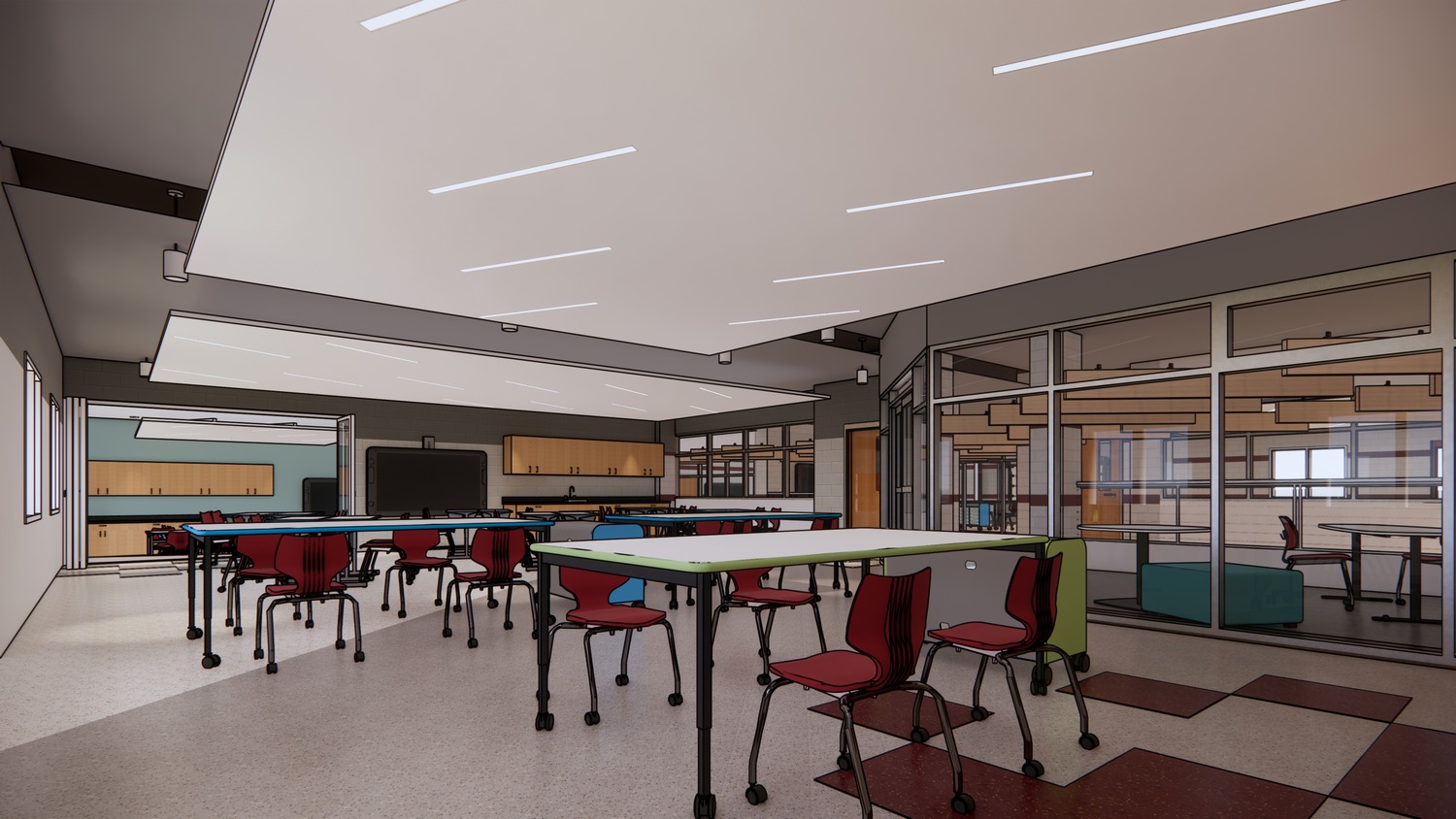
Port Byron CSD transformed four seldom-used first-floor classrooms into a STEAM wing, leveraging existing infrastructure instead of building anew. This not only saved capital but expanded several tech-based curriculums for students.
4. Using Rapid Delivery Models to Avoid Escalating Costs
Traditional project management can’t always keep up with grant deadlines or short summer construction windows. Modern delivery models allow districts to overlap design and construction for quick turnaround—best when funding timelines are tight, markets are volatile or schools must remain open during work.
Designers + contractors are united from day one for fewer change orders & months shaved off.
Early contractor involvement rules out cost & constructability issues before the bid phase.
Offsite fabrication creates capacity fast without disruption or weather-related delays.
Expedited release packages secure materials before prices spike.
5. Bolstering Accountability for Boards & Taxpayers
Leaders must demonstrate that expenditures are grounded in objective need and managed with discipline. Transparent reporting makes this possible, and may look like:
- Dashboards that track budget status, contingencies and change-orders.
- Facility condition benchmarks, perhaps derived from a long-range master plan like a BCS, to establish baseline deficiencies.
- Performance metrics capturing post-occupancy outcomes (such as measurable energy savings).
- Concise board updates linking projects to student experience or program throughput.
When stakeholders can trace each dollar to a tangible outcome, the conversation pivots from expense to value. Boards gain confidence, taxpayers see ROI and administrators build the support necessary for future projects.
Smart Strategy for Smarter Schools
Districts don’t win by funding everything, they win by funding the right things. Effective leaders direct resources where they provide the greatest gains for safety, learning and community well-being. In distinguishing true “must-haves” from “want-to-haves,” they protect what matters most—and avoid spending that dilutes impact.
As a result, public trust rises. Facilities evolve at the pace of education itself. And every school becomes a springboard for the future of K–12, not relics of its past.
About the Author: Graham Boyd

