
Share This Story
From Sacred Space to Center Stage
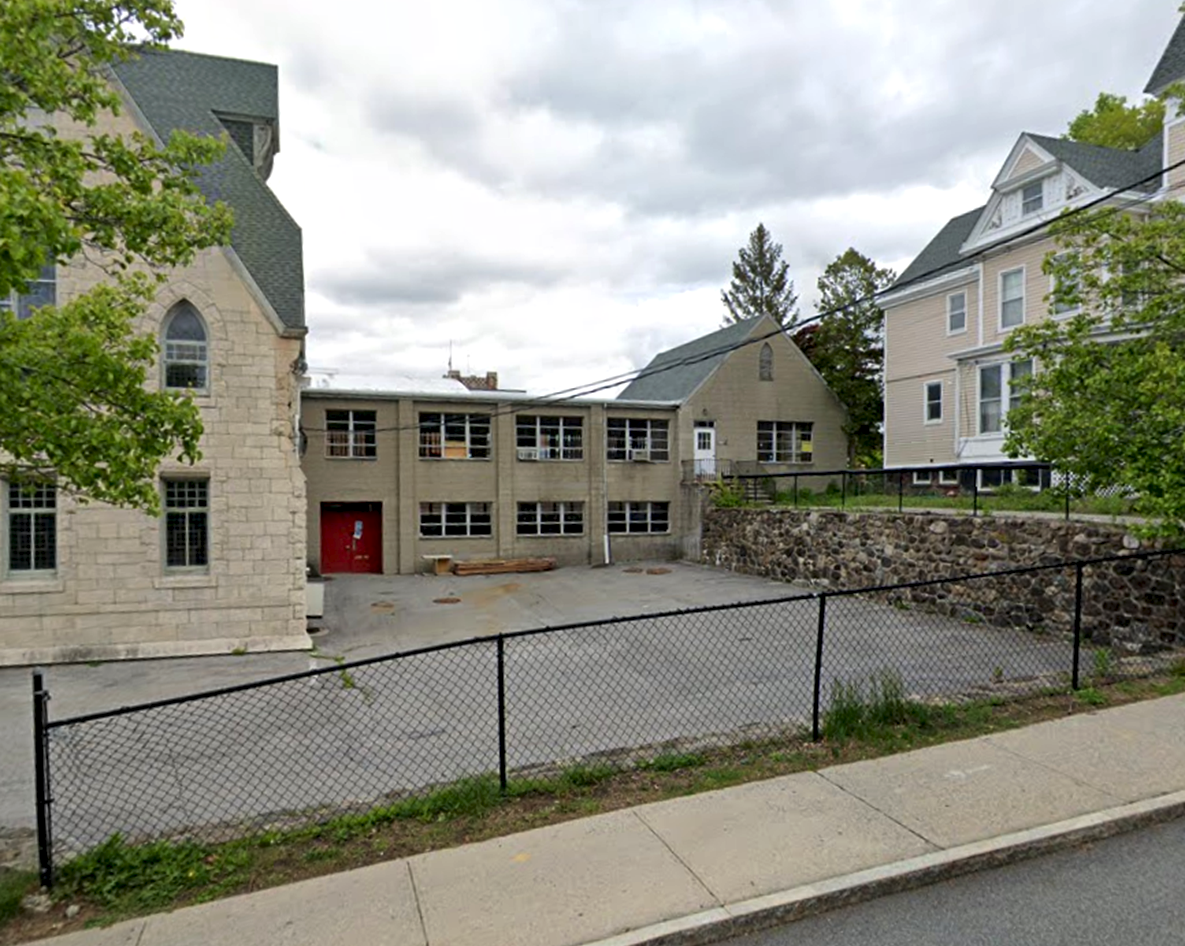
Ossining (UFSD) is transforming an 1884 church into a modern black box theater designed to serve both educational and community needs. As part of the District’s long-range bond program, the project re-envisions the building as a flexible performance and gathering space while honoring its heritage.
The design approach focuses on respecting the original church shell while inserting a new, freestanding structure within it. This building-within-a-building strategy allows the chapel’s defining features—including its volume, ceiling and stained-glass windows—to be preserved, with the interior reimagined to increase safety, accessibility, and functionality. Improvements will include new ramps, wider doorways, and additional railings, ensuring equitable access so everyone can fully enjoy the space.
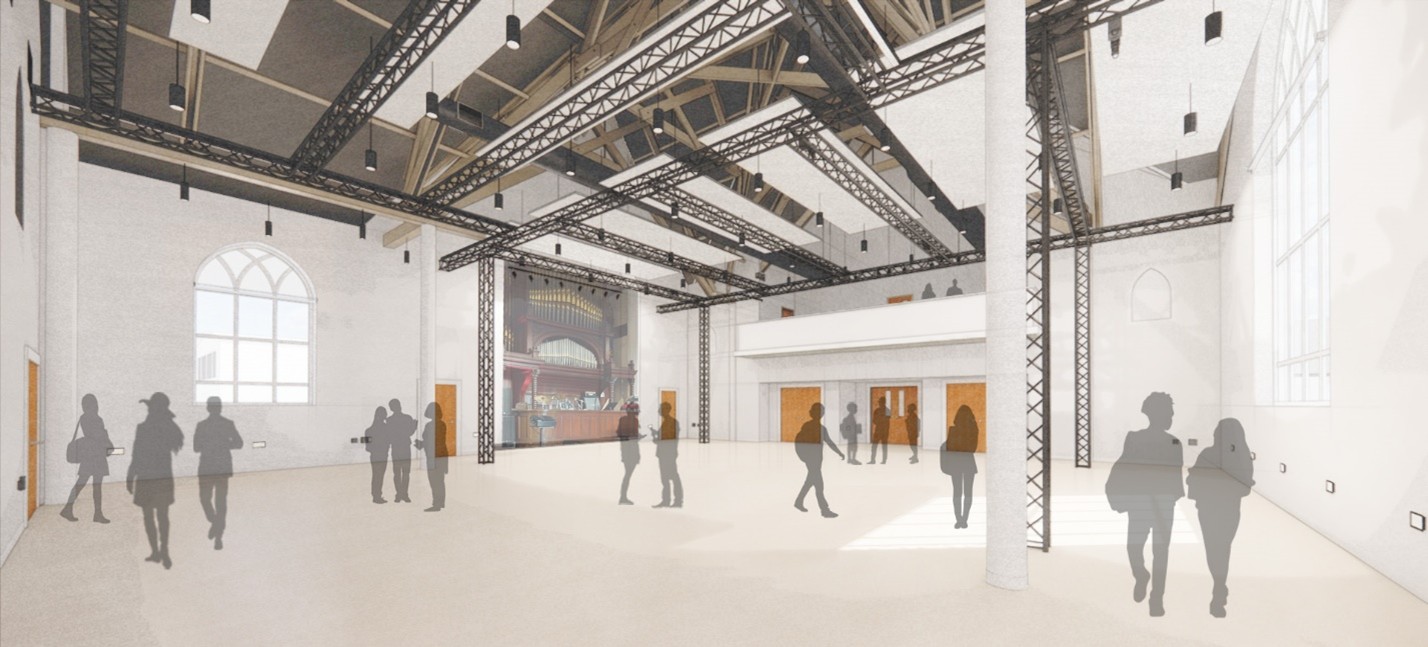
Infrastructure upgrades are also necessary to support the building’s new use, including modern mechanical systems, mechanical, electrical, plumbing upgrades, and sprinkler installation. The existing floor is being replaced to accommodate structural and performance requirements, ensuring the space meets current codes while remaining visually distinct from the historic fabric.
Community input has played a central role in shaping the project. Our K-12 Practice team conducted surveys, public forums, and visioning sessions to ensure the theater reflects the needs and aspirations of Ossining residents. Based on this feedback, the church’s original organ will remain in place, honoring the building’s history as it evolves into a vibrant, multi-use venue.
The space will host a wide range of activities, including student performances, educational lectures, and musical and theatrical events for the community. Thoughtfully designed acoustics and sound-absorbing materials will be incorporated to ensure clear, high-quality audio for all types of entertainment.
Turning Yesterday’s Classrooms into Tomorrow’s Workforce Labs
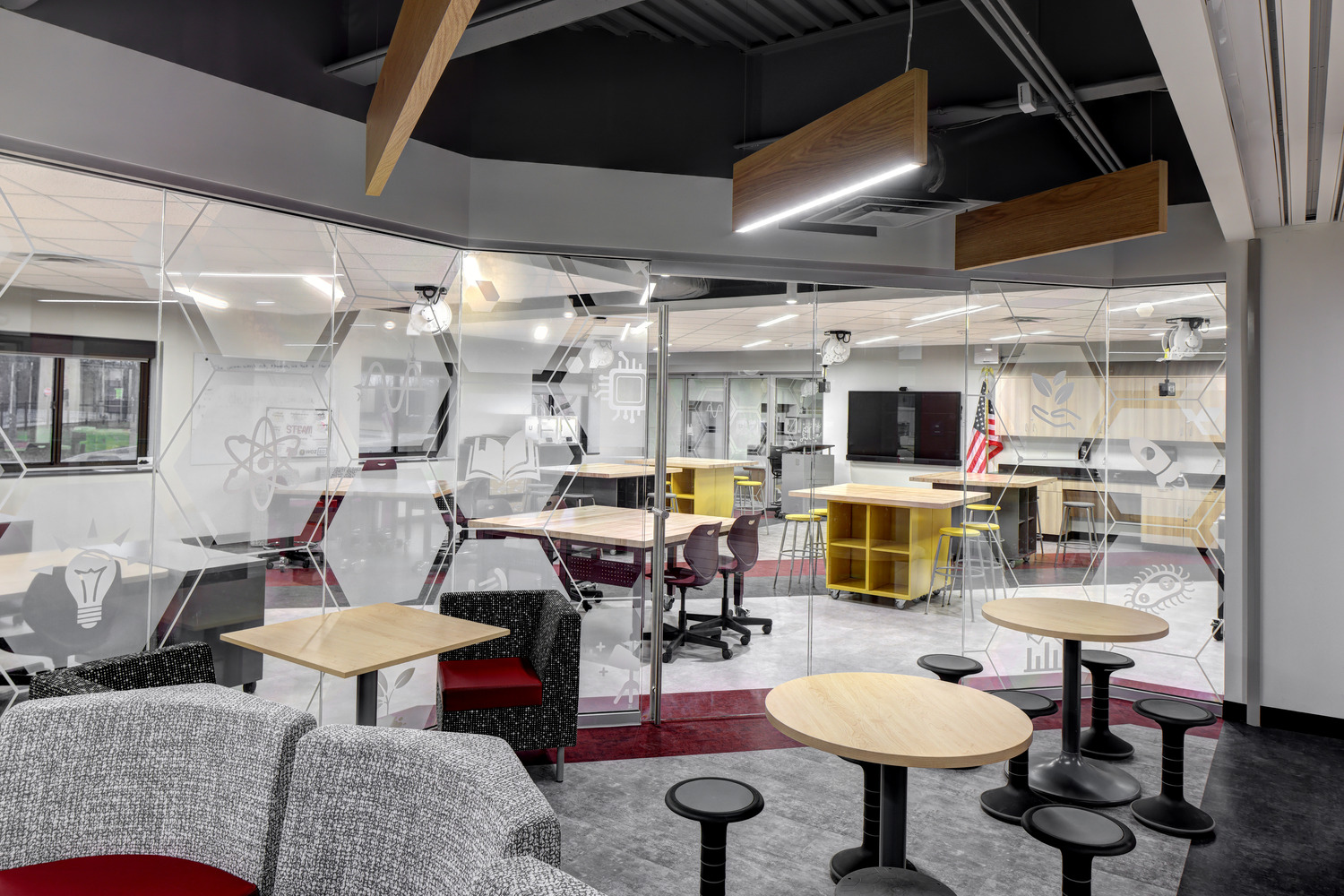
Port Byron CSD’s Capital Improvement Project demonstrates how transformative changes can be achieved without expanding or constructing new buildings. Faced with aging spaces and growing demands for career- and technology-focused learning, the district sought to modernize its campus while making the most of existing buildings. By creatively repurposing existing infrastructure, our team helped administrators create labs, studios, and commons that foster hands-on learning in technology, agriculture, and real-world work environments.
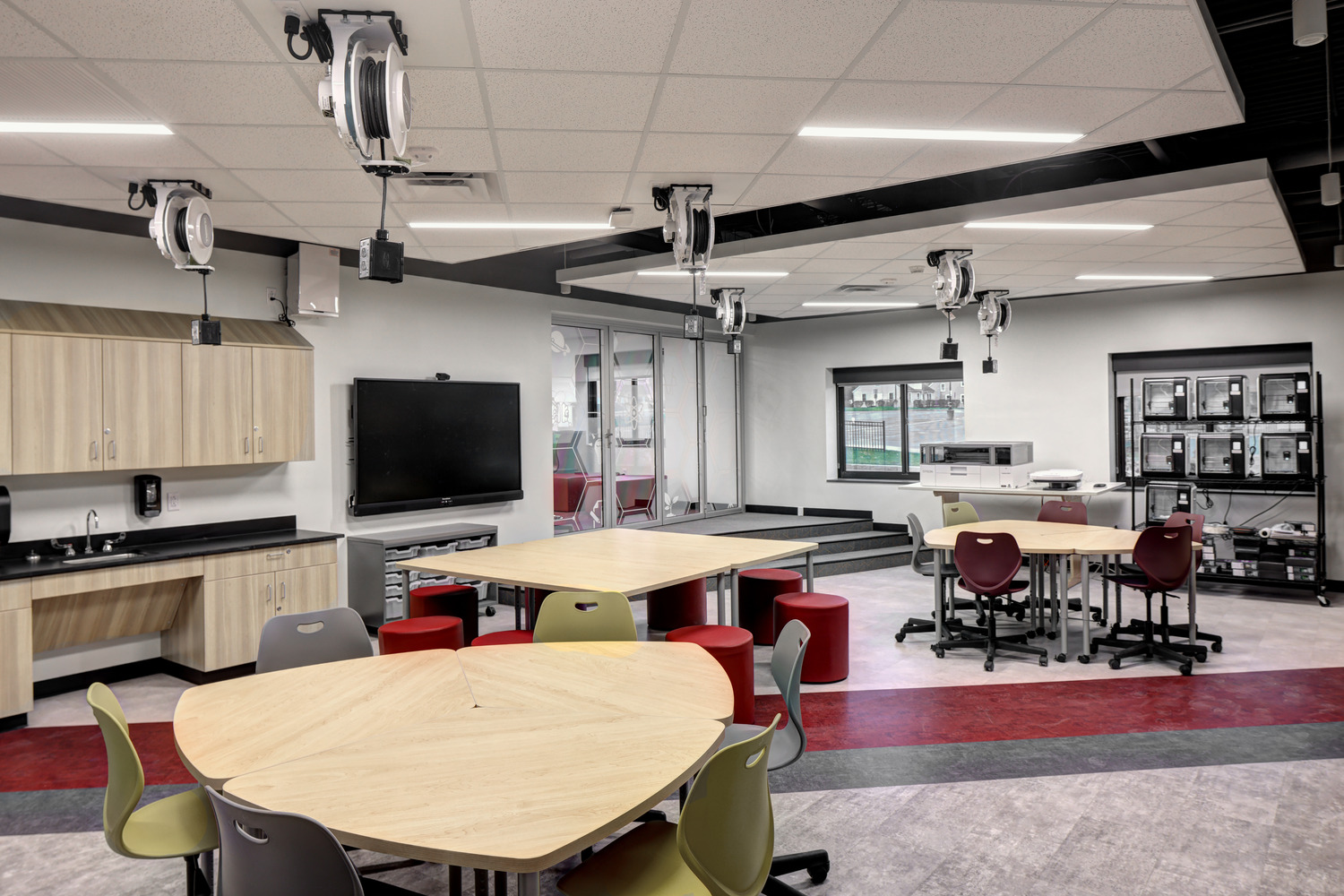
The former high school technology wing has been reimagined as a collegiate-style academic center, featuring a greenhouse and ag-tech lab, updated art and science studios, home economics and woodshop spaces, and a reinvented cafeteria that doubles as a student gathering area. An outdoor classroom connects indoor and exterior learning spaces, allowing students to seamlessly move between settings. With this integration of STEAM, ag-science, technology, and trade-focused environments, students in agrarian communities now have access to educational experiences directly linked to regional industries.
Additional components include auditorium renovations, two weather-protected outdoor classrooms, two new playgrounds, and public fitness facilities accessible both during and after school hours, supporting recreation and community engagement.
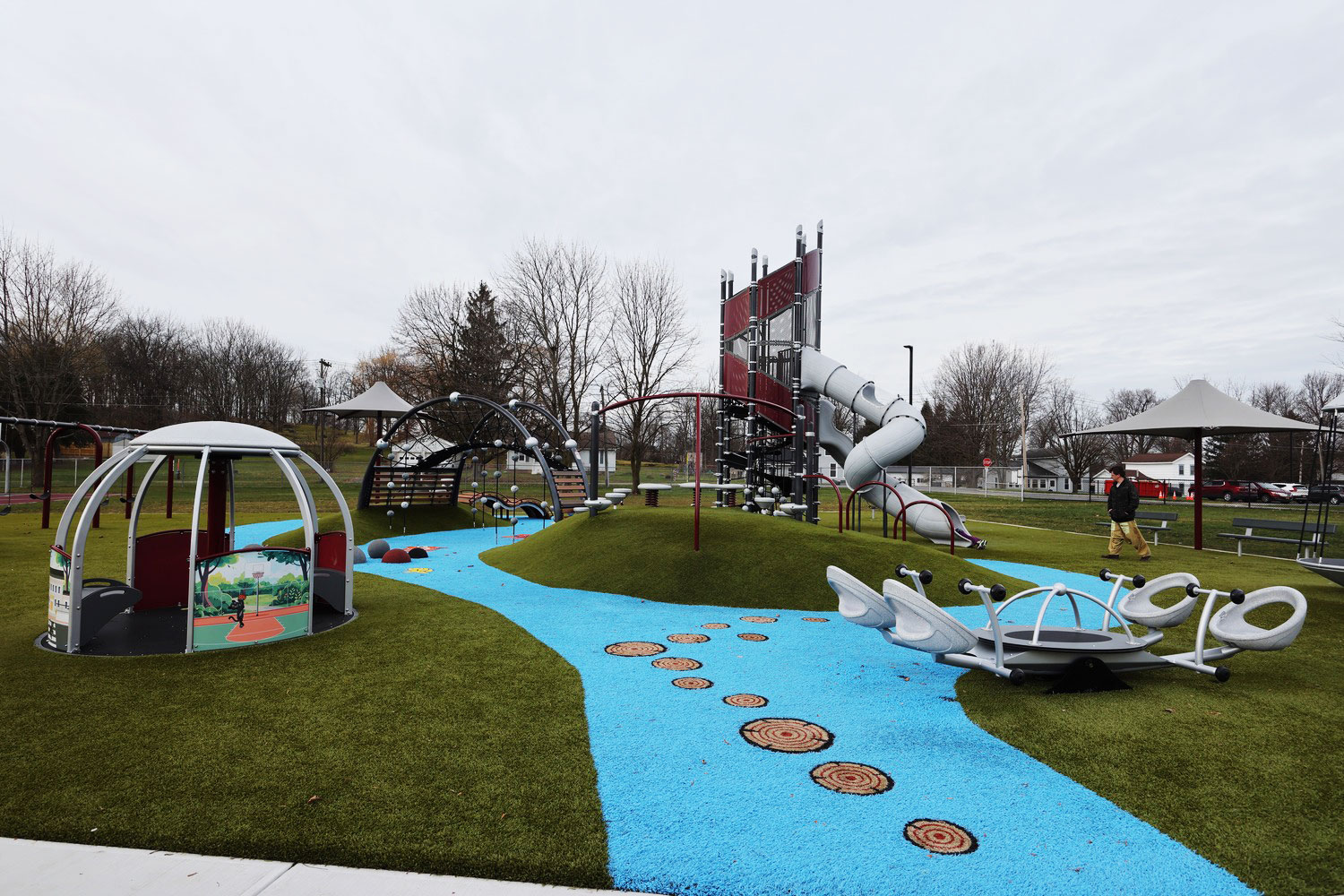
Stakeholder feedback and testing informed decisions on graphics, greenhouse branding, and floor patterns. Durable, long-lasting materials—such as modular furnishings and movable shade structures—were selected to support flexible learning. Daylight, open sightlines, and furniture that can be easily rearranged help support both independent and collaborative work, while environmental graphics visually connect program areas and reinforce curriculum themes.
Learning in the Landscape at Garrison Union Free School District
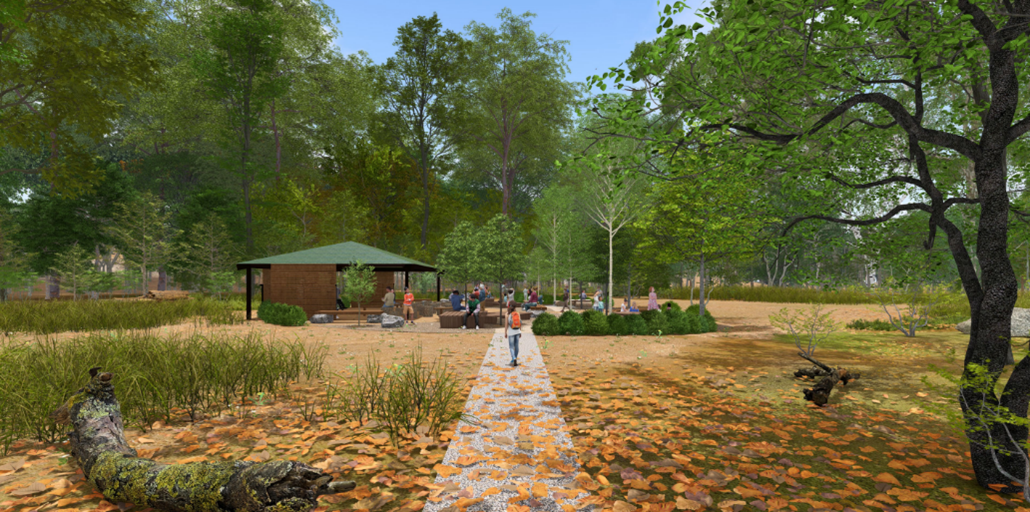
Administrators at Garrison UFSD and CPL are planning an outdoor forest classroom that transforms a donated woodland site into an immersive, long-term learning environment for students within and beyond the district. Located within a district–owned forestland overlooking the Hudson River—near Revolutionary War landmarks and connecting education to history. The design will include an open shelter surrounded by wooden benches on rocks, logs, and tables.
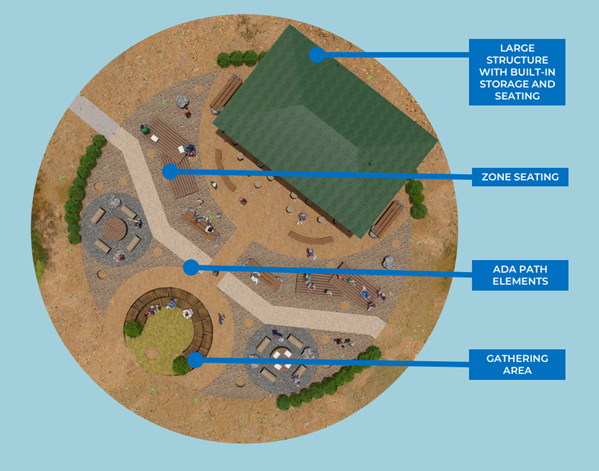
The genesis of the project was a desire to move the student experience beyond short field trips and instead provide a space where entire classes can spend extended periods of learning outdoors.
Through a series of meetings with community members, educators, and stakeholders, the District and CPL explored how the space could best support curriculum, teaching styles, and student comfort while remaining durable and low impact.
Seating areas will accommodate up to two full classrooms (24–48 students), and clearly defined gathering, learning, and lunch areas along accessible forest trails. Materials were selected for longevity and resilience, drawing inspiration from the site itself and incorporating natural rock and wood wherever possible.
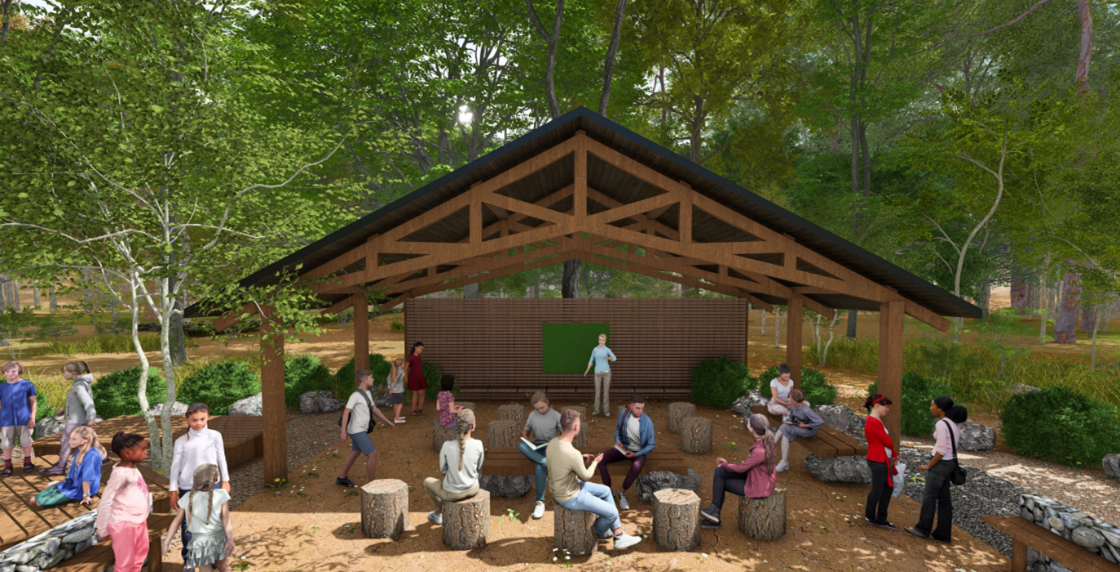
Sustainability is a core component of the project. Features include a solar-powered composting toilet, minimal site disturbance, and a straightforward structural system with a wood roof that blends into the landscape. The goal is to create a space that endures over time with minimal maintenance, reflecting both environmental responsibility and community priorities.
About the Author: Dave Hunsberger

