
Share This Story
Districts across the country are rethinking how school facilities support instruction, adaptability and long-term value. For the Bolivar-Richburg Central School District (CSD), that shift was reflected in a capital improvement project (CIP) focused on updating two schools to better support STEAM learning, flexible instruction and district-wide use.
Through a voter-approved initiative, we partnered with the district to develop and deliver a coordinated renovation plan for both the Elementary School and the Middle/High School.
Aligning Facilities with Modern Learning Goals
The project centered on new STEAM-focused learning environments across both campuses. These spaces support hands-on instruction in science, technology, engineering, arts and math, with layouts that allow easy transitions between instruction, collaboration and presentation.
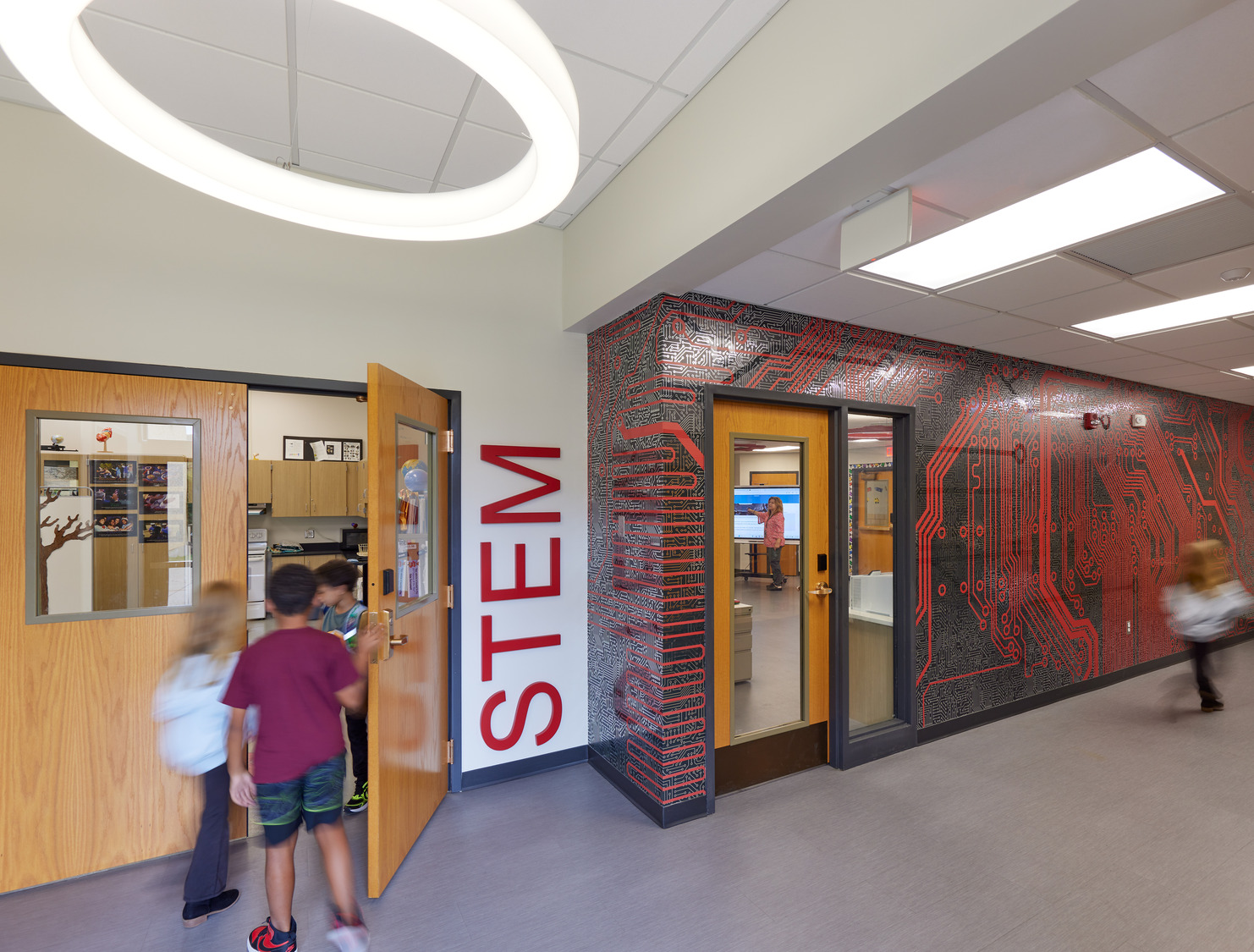
At the elementary school, dedicated STEAM and computer labs introduce students to coding, robotics and engineering concepts early. At the high school, new classrooms and breakout spaces support more advanced, project-based learning.
Key considerations for districts:
- Facility planning is increasingly driven by instructional goals, not room counts or fixed program lists
- Early exposure to STEAM tools at the elementary level supports long-term curriculum continuity
Designing for Flexibility, Not Fixed Use
Across both schools, flexibility was a primary design driver. Spaces are designed to shift between classroom instruction, group work, presentations and community use without requiring major reconfiguration or new construction.
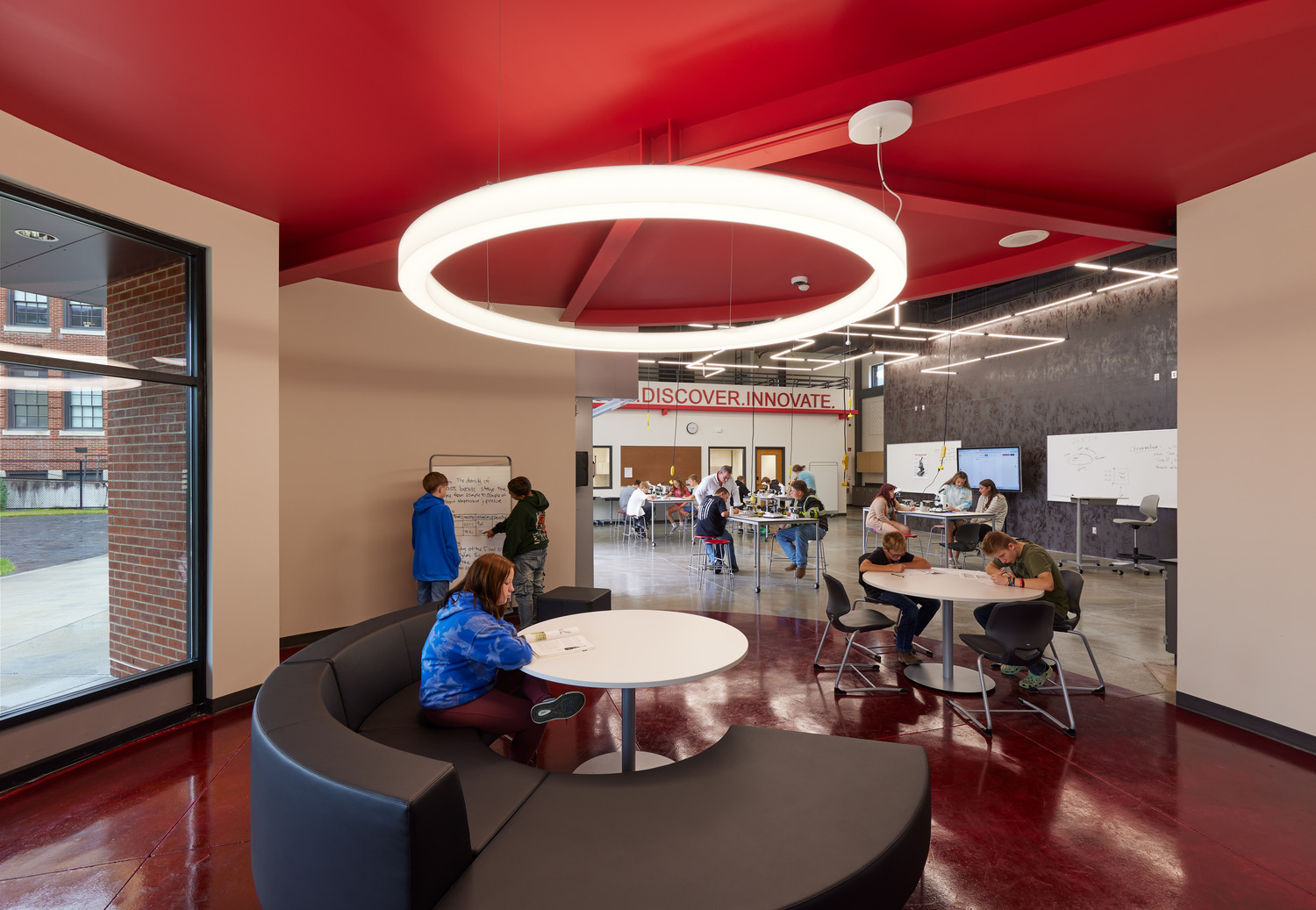
Movable furniture, breakout rooms and adaptable layouts allow educators to respond to these changing instructional needs. Additionally, overhead doors extend learning spaces outdoors during favorable weather, expanding how and where instruction can occur.
Lessons embedded in the design:
- Flexible spaces extend the lifespan of a facility investment
- Multi-use design reduces pressure to build specialized rooms for every program need
- Indoor-outdoor connections can expand usable instructional space without increasing footprint
Integrating New Construction into Existing Campuses
The district’s CIP also included a 5,000 sq. ft. addition at the high school that repurposes underutilized tennis courts and complements the existing campus architecture, including a previous cafeteria addition with a rotunda feature.
The result is a more cohesive campus identity while still signaling a clear evolution in design.
Facility planning insights:
- Strategic reuse of underutilized site areas can unlock expansion opportunities
- New facilities can reinforce, rather than replace, existing campus identity
Supporting Instruction with Modern Systems and Technology
Large-format displays, 3D printers and collaborative learning setups can support multiple teaching styles, from direct instruction to independent work.
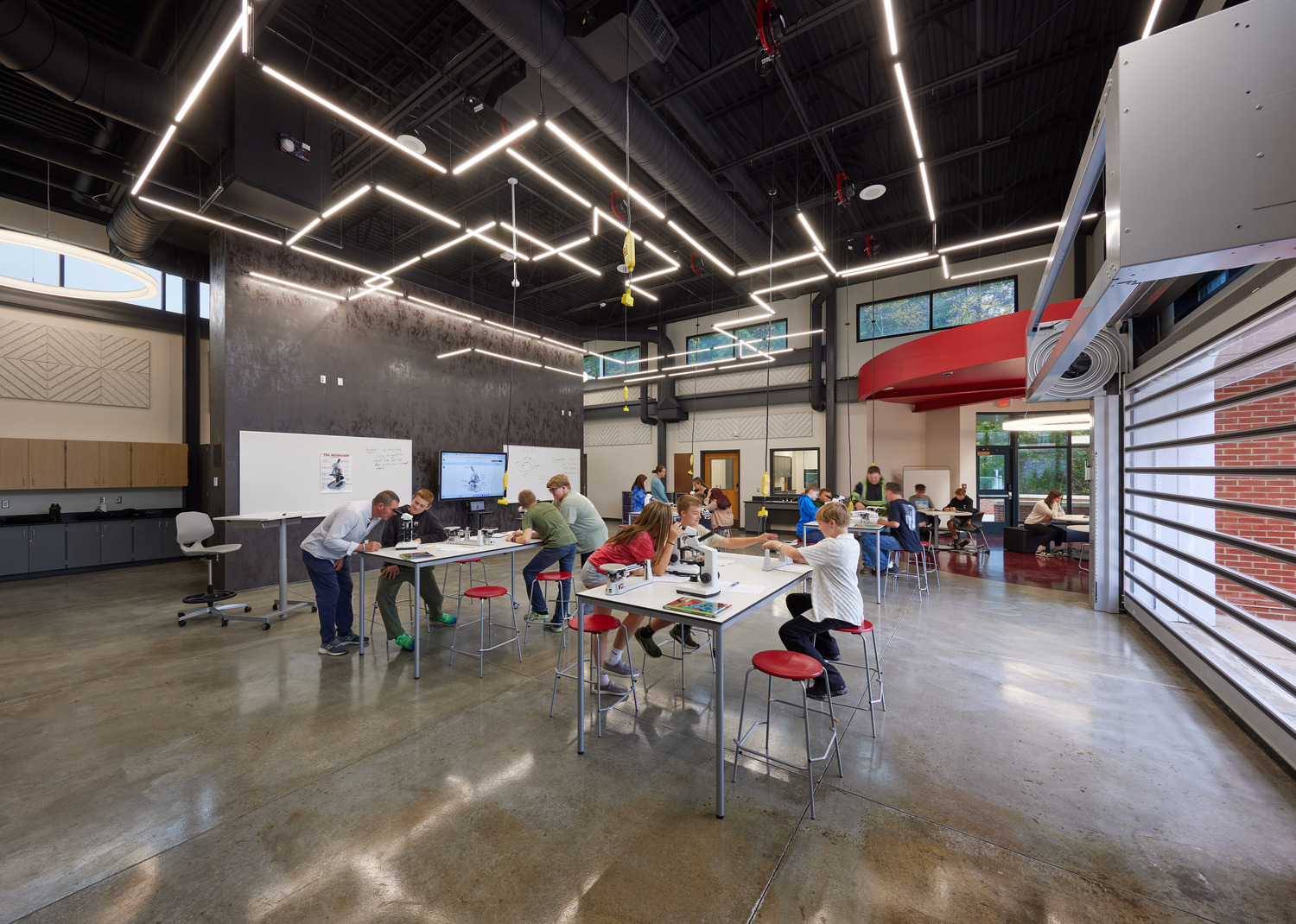
Bolivar-Richburg students experience continuity in technology exposure as they progress through the district, creating familiarity with tools and methods before reaching more advanced coursework.
Key considerations for districts:
- Technology integration is most effective when it is consistent across grade levels
- Shared instructional tools help align elementary and secondary learning experiences
Upgrading the Full Learning Environment
Beyond new instructional spaces, the project included HVAC upgrades and improvements to classrooms, shared spaces, athletic facilities and support areas across the district.
These updates strengthen overall building performance and ensure that learning environments function reliably across daily use.
Why it matters:
- Facility modernization must include both instructional and support spaces
- System upgrades are essential to sustaining long-term building performance
- Comprehensive upgrades improve equity across all student spaces
A District-Wide Commitment to Future Learning
Throughout this project, design decisions were guided by a single priority: supporting student learning today while preparing for future needs that continue to evolve.
The result is a set of learning environments that support flexible instruction, expand access to technology and strengthen connections across grade levels.
Ready to Transform Your District’s Learning Environments?
Modernizing K–12 facilities requires more than just updated finishes; it demands a strategic alignment between physical space and instructional vision. Whether you are looking to integrate STEAM-focused labs, enhance campus-wide flexibility, or maximize the value of a voter-approved capital project, our team is ready to help you navigate the process.
Let’s discuss how we can partner with your district to create high-performance spaces that support your educators and inspire your students for decades to come.
About the Author: Ryne Wight

