
Share This Story
A student choosing a college may understand the subjects they will study and still struggle to picture what those studies will let them do. A course catalog can describe a nursing program, for example, but it cannot show how students practice making decisions with a care team or how that experience prepares them for clinical work.
For institutions making the case for enrollment and investment, that gap matters. Career-connected learning gives students a clearer view of a program’s value, while giving colleges and universities a way to build relationships with employers and respond to regional needs. But the connection has to be built into the program itself because a new lab cannot create it on its own.
The strategic opportunity is to plan the pathway, the partnerships and the places where learning happens as one undertaking. That approach can guide where an institution grows, how it uses existing assets and what a proposed facility needs to accomplish.
Build the Pathways Students Can See
Internships, co-ops, clinical placements and applied coursework are familiar parts of higher education. Their value is strongest when they form a sequence students can follow. An engineering student might test a concept in a campus lab, apply it during a co-op and return better equipped to examine the limits of the original design. Each setting contributes something the others cannot. That thinking reaches well beyond traditional workforce programs.
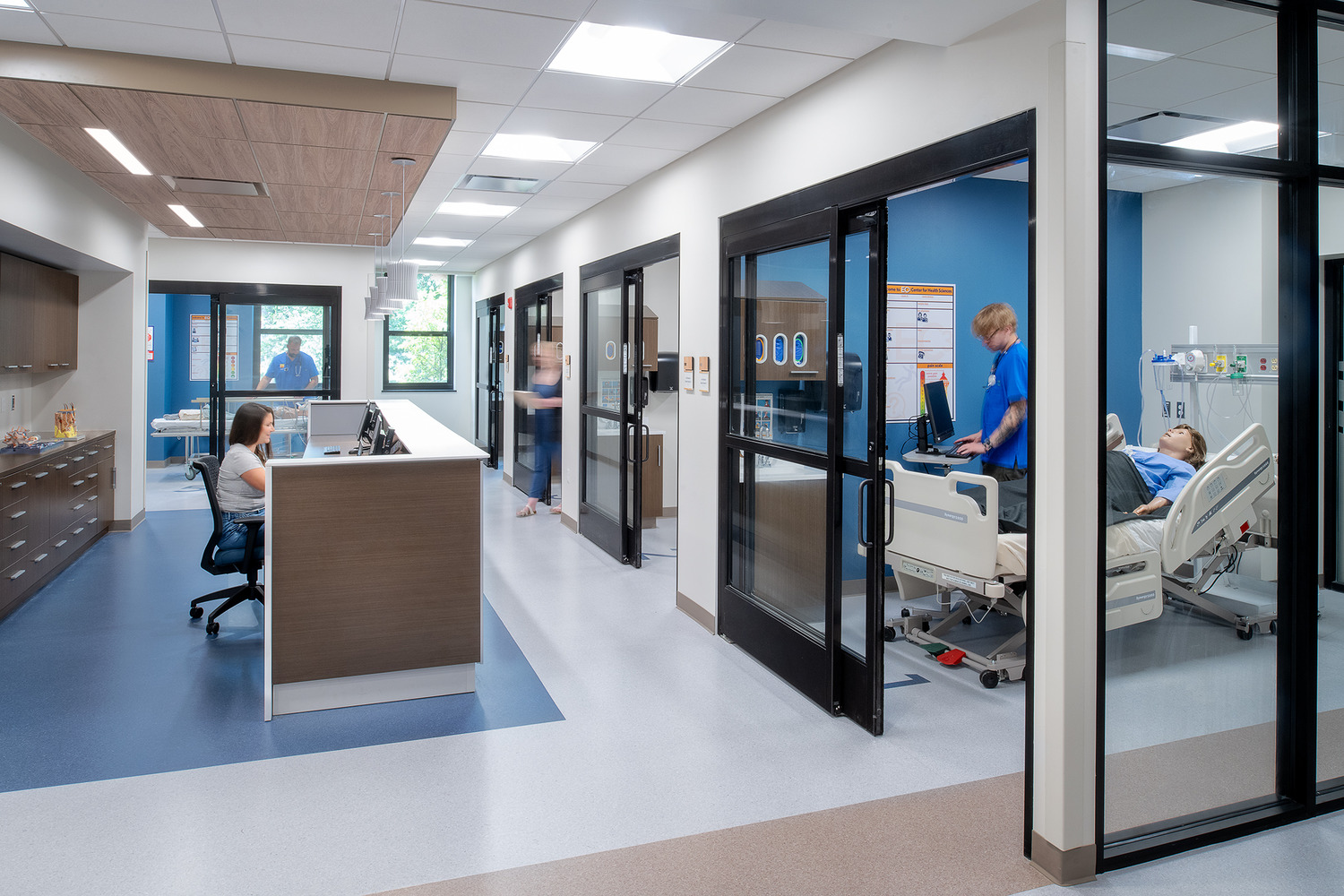
At the University of North Georgia’s Blue Ridge Campus, CPL helped plan an expansion serving nursing, teacher preparation and dual enrollment. Its three healthcare simulation labs give nursing students a place to practice, while flexible classrooms support additional academic pathways. A conference center brings civic, business and cultural groups onto campus. The project illustrates how career preparation can be part of a broader strategy to expand access and strengthen an institution’s place in its region.

For leaders considering a similar investment, the first decision is academic: What should a student be able to do at each stage of the program, and where can they best learn it? Some experiences belong on campus, where faculty can pause, repeat and assess them. Others depend on the pace, relationships and unpredictability of a workplace. Defining that difference helps institutions design a stronger learning sequence before deciding how much space to build.
Bring Employers Into the Planning
An employer partnership can provide placements or equipment. It can also reveal how a field is changing, which routines matter most and which technologies students are likely to encounter. Faculty bring an equally important perspective: They know how to turn those demands into education that remains useful beyond one company’s current practices. At Guilford Technical Community College, that relationship took physical form in a renovation for the North Carolina Federation for Advanced Manufacturing Education’s First in Flight chapter. Developed with FAME USA and local industry leaders, the program uses a lab with hydraulic, electrical and automation systems that simulate plant operations and troubleshooting. The equipment package, at approximately $4 million, exceeded the $2.5 million construction budget. Its infrastructure and layout therefore had to be planned around the learning equipment, while allowing the space to adapt as needs change. CPL renovated an existing facility to support the program.

The lesson extends beyond manufacturing: A partnership becomes more useful when it informs what students practice and how the environment supports that practice. Planning around a single machine or a single employer’s present workflow may limit a space’s life. Planning without enough knowledge of the workplace may leave students with an exercise that feels authentic but misses essential conditions. Institutions need to decide with their partners what must be realistic and what must remain flexible.
Design for the Work of Learning
CPL brings a particular perspective to that decision because we design both educational environments and the professional spaces students may eventually enter. We also see employers creating training areas within their own operations. Across those settings, similar questions arise about equipment, movement, communication and change, even though a campus and a workplace serve different purposes.
A healthcare simulation suite, for instance, needs more than an operating room that just looks like the real thing. Students need space to move equipment, coordinate across roles and respond to changing conditions while faculty observe and guide them. The layout should support those interactions, not simply replicate the appearance of a clinical setting.
The same discipline applies to existing campus buildings. Reuse can bring a program together or give it a more visible home, but power, ventilation, acoustics and circulation may constrain what the space can support. Testing those conditions against the teaching plan early helps an institution decide whether renovation is practical and which trade-offs would affect learning.
Visibility has a role, too. A student touring a campus can better understand a program when they can see learning underway. An employer can more readily recognize where its expertise might contribute. That visibility has value because it reveals a substantive program; it cannot substitute for one.

Let Outcomes Guide the Next Investment
Workforce alignment can support enrollment, but a facility cannot guarantee it. Nor can it guarantee a job for every graduate. Institutions need faculty capacity, sustained partnerships and opportunities for students to participate in the experiences a program promises. They also need to know whether those experiences are working.
Before committing capital, leaders can define what success would look like for their institution: more students reaching an applied-learning experience, stronger placement opportunities, better progression through a program or deeper employer engagement. Those measures will differ by discipline and region. Their purpose is to make the investment accountable to the academic and institutional goals behind it.
The strongest campus projects begin with a clear understanding of the route from learning to professional practice. Partnerships help institutions keep that route relevant; facilities make crucial parts of it possible. When all three develop together, a college or university can show students what lies ahead while building programs it has the capacity to sustain.
Get Started with Workforce Alignment
Facilities, programs, and understanding a college or university’s needs are critical in shaping student outcomes.
With expertise in both educational environments and the professional spaces students are preparing to enter, CPL partners with institutions to align academic goals with campus needs. Connect with our Higher Education team to strategically position your school for success.
About the Author: Josh Wheeler

