
Share This Story
Creating a One-Stop Shop for A&T’s Next Generation
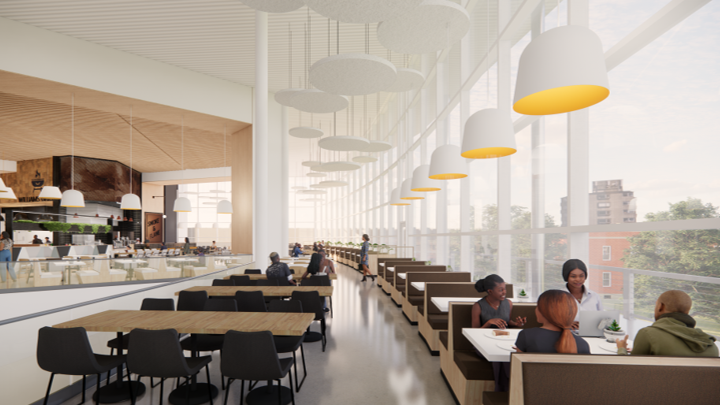
What began as a kitchen renovation project has evolved into a $20 million reimagining of Williams Dining Hall, the primary food service venue on North Carolina A&T State University’s campus. As demand surged—now estimated to exceed 9,000 daily meals plus robust catering services—the University saw an opportunity to do more than expand infrastructure, engaging our Higher Education practice team to establish a dynamic hub that augments operational efficiency and the student journey.
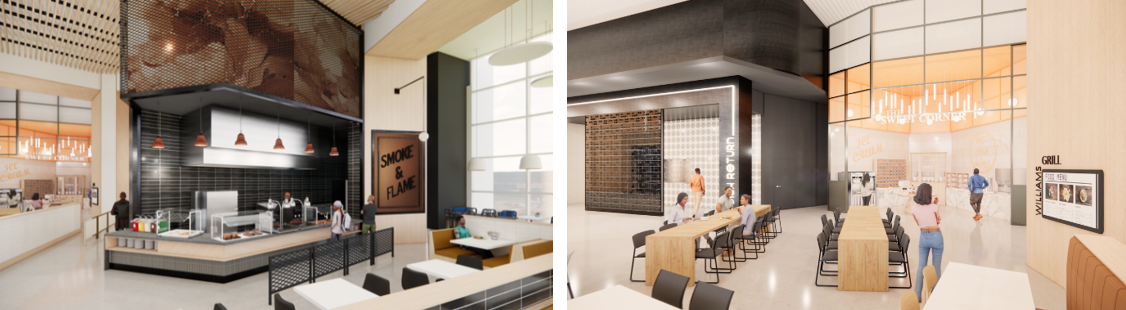
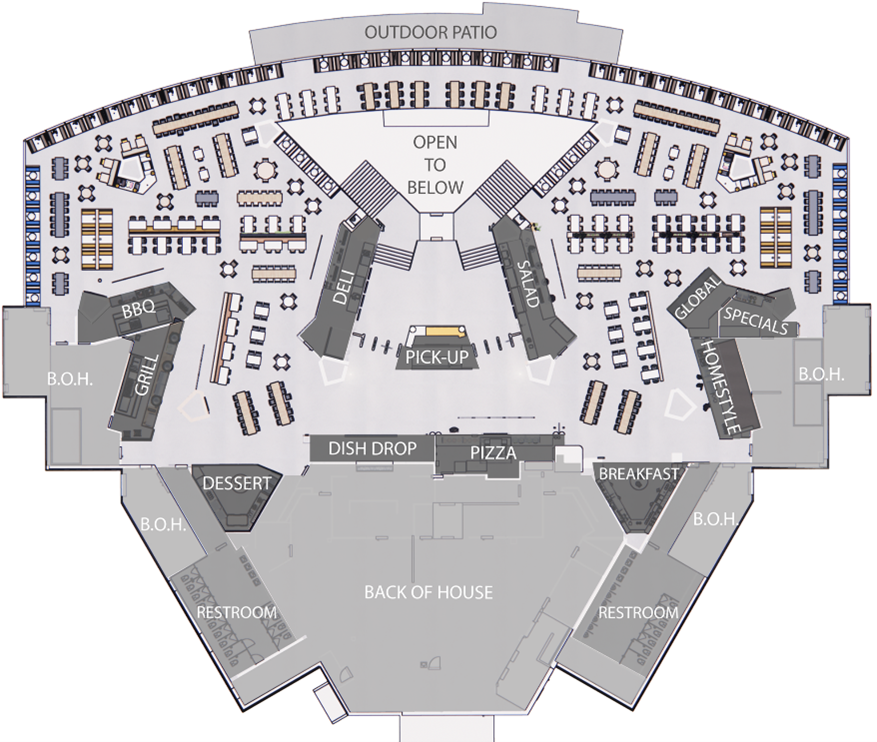
A new experience will take the place of a more central servery with seven diverse stations—ranging from pizza and barbecue to deli favorites, fresh salads, global cuisine, southwest flavors and desserts. An open layout spreading into the seating areas with clear sightlines invites movement, while contemporary finishes and natural light through floor-to-ceiling windows reframe the hall as a bright environment, bringing greater energy to campus life.
Behind the scenes, two-thirds of the kitchen equipment will be replaced to increase resiliency and capacity, alongside critical HVAC and lighting modifications to boost sustainability and overall air quality. Phased construction means Williams will never go dark, ensuring athletes, students and summer program attendees are always fed—even as the hall evolves into a true campus one-stop.
Preserving Family-Style Connection at Mercersburg Academy
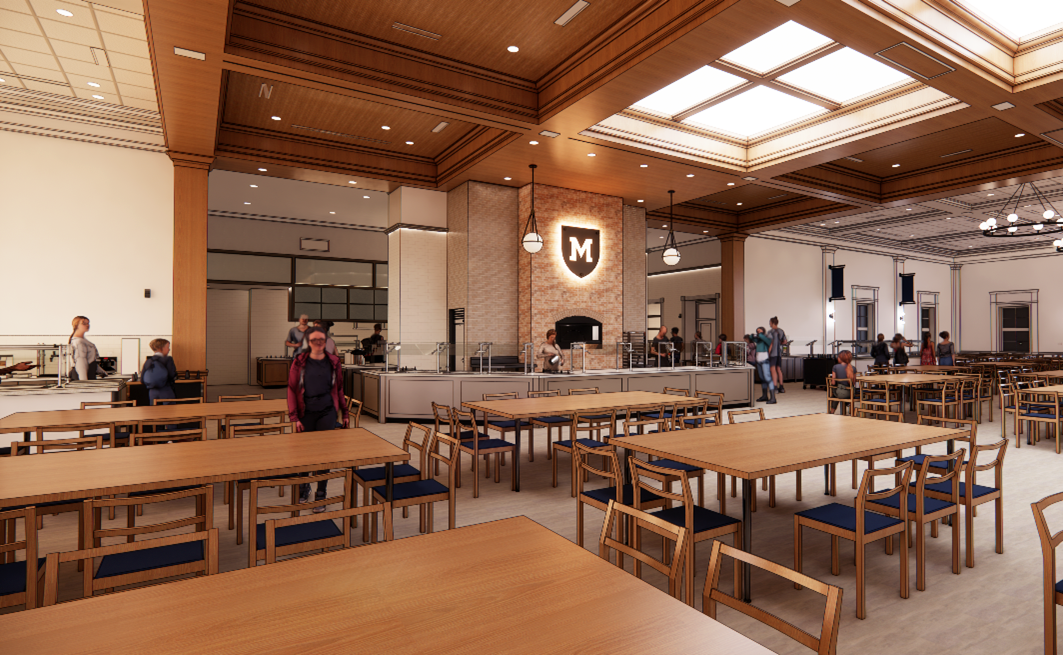
Since 1965, Ford Hall has been the backdrop of Mercersburg Academy’s most memorable moments—spanning “family” meals, semiformal dinners, alumni reunions and other celebrations. When the college prep school embarked on a master planning initiative, the goal was twofold: reinvigorate dining without compromising the building’s facade.
The vestibule addition frames the existing masonry without altering it, while warmth is introduced through wood treatments, soft ambient fixtures and dramatic faux skylights that flood the interior with daylight. Two private dining rooms, linked by sliding glass walls, can open to one another for flexible use—hosting intimate gatherings or serving as overflow space. Larger communal tables uphold the academy’s time-honored tradition of treating lunch as if one were welcoming guests at home, with room for students to serve one another from a shared tray.
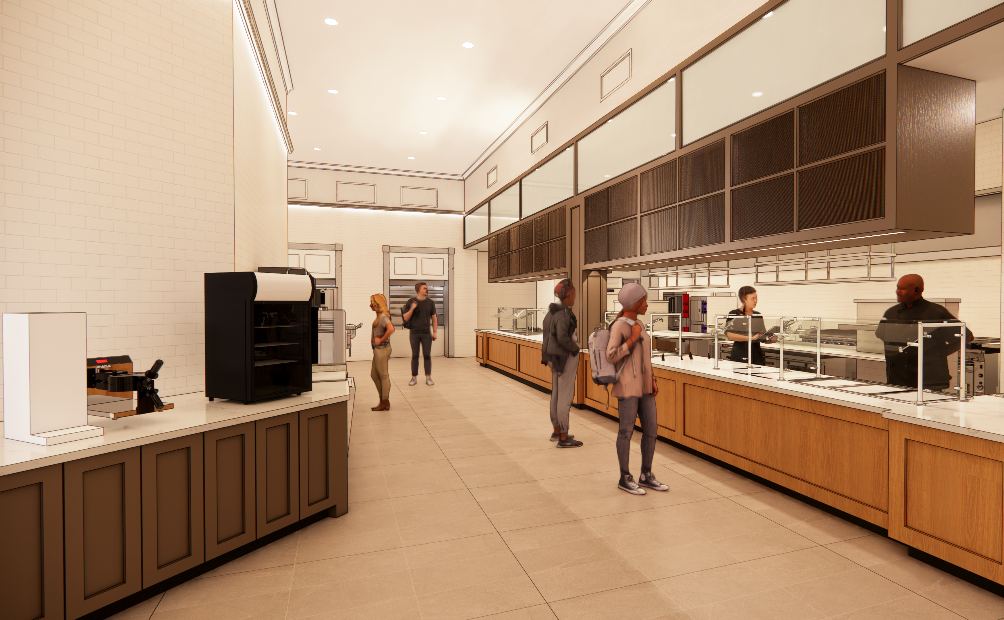
Functionality has also been enhanced with open views into the kitchen—turning meal prep into part of the experience for transparency—and a modern accumulator dish return system, set to streamline workflows.
Beyond its historic walls, the plan reclaims underused planting beds as shaded pavilions; outdoor rooms that reflect the school’s culture of trust by providing backpack storage and flexible space for impromptu hangouts or special events that extend the dining hall experience.
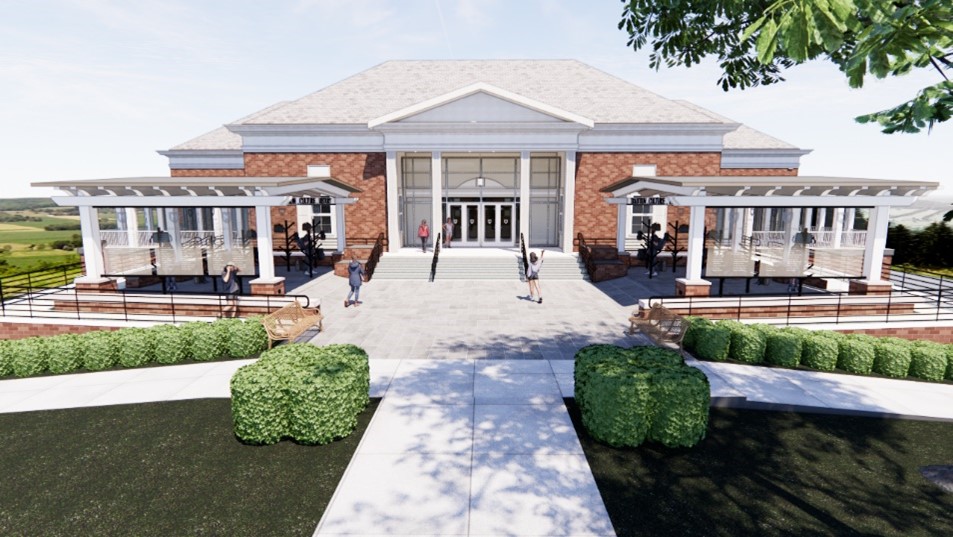
With its re-envisioned design, Ford Hall will extend Mercersburg’s spirit of hospitality into the future, offering students a dining program that is enduring and distinctly their own.
Industrialism Meets Campus Spirit at the University of Pittsburgh
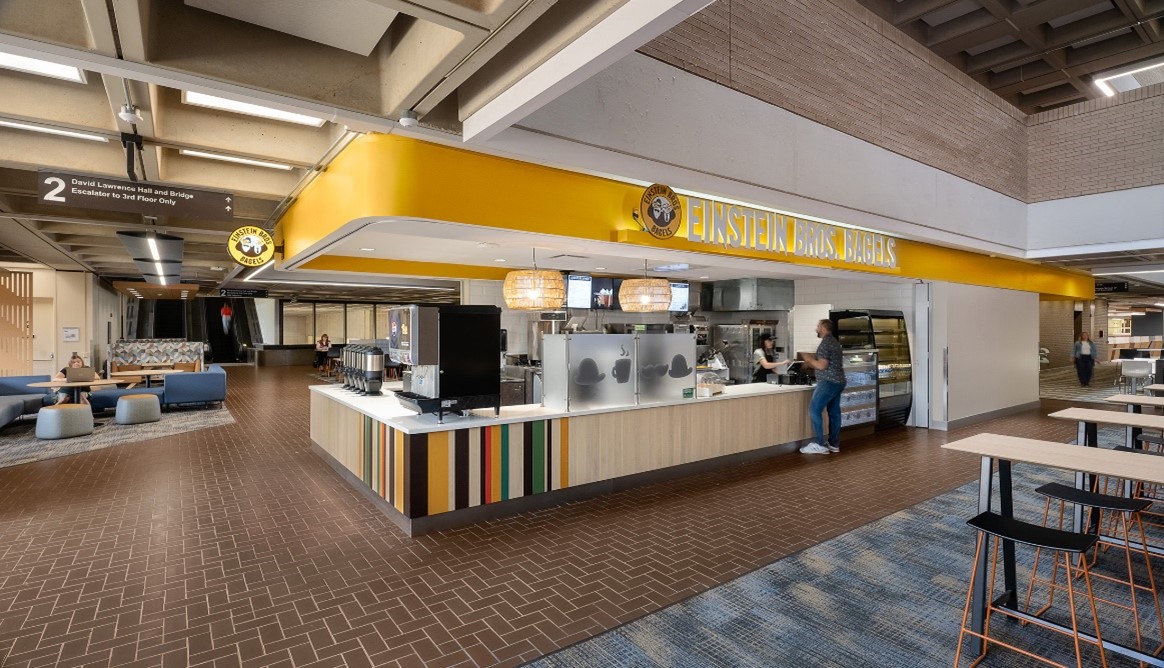
As part of a wider push to improve quality of life, the University of Pittsburgh has overhauled two existing cafés—one in Benedum Hall and the other in Posvar Hall—into social touchpoints where students can comfortably refuel and regroup. Though both cafés had long carried the Einstein Bros. Bagels name, the project weaved in the brand’s refreshed look while incorporating a palette that complements the character of the surrounding spaces.
In Benedum Hall, our team embraced the below-grade location by leaning into an urban aesthetic. A new curved baffle system both conceals previously exposed utilities and maintains necessary access, while simultaneously elevating the visual experience. This element, paired with open shelving, acoustic treatments and updated furniture, transformed what had once been a utilitarian space into a more inviting environment.
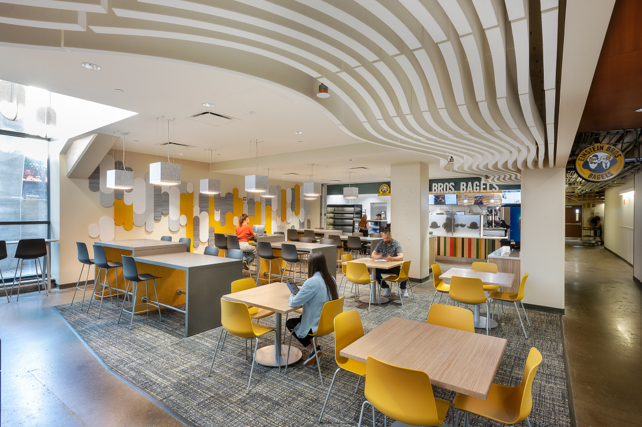
In contrast, Posvar Hall’s Brutalist shell of heavy concrete required human scale. The design responds with gentler accents, illumination and blended options that accommodate diverse preferences and ways of coming together—creating an approachable setting where students can stop in for a quick bite or settle in with friends for lengthier stretches.
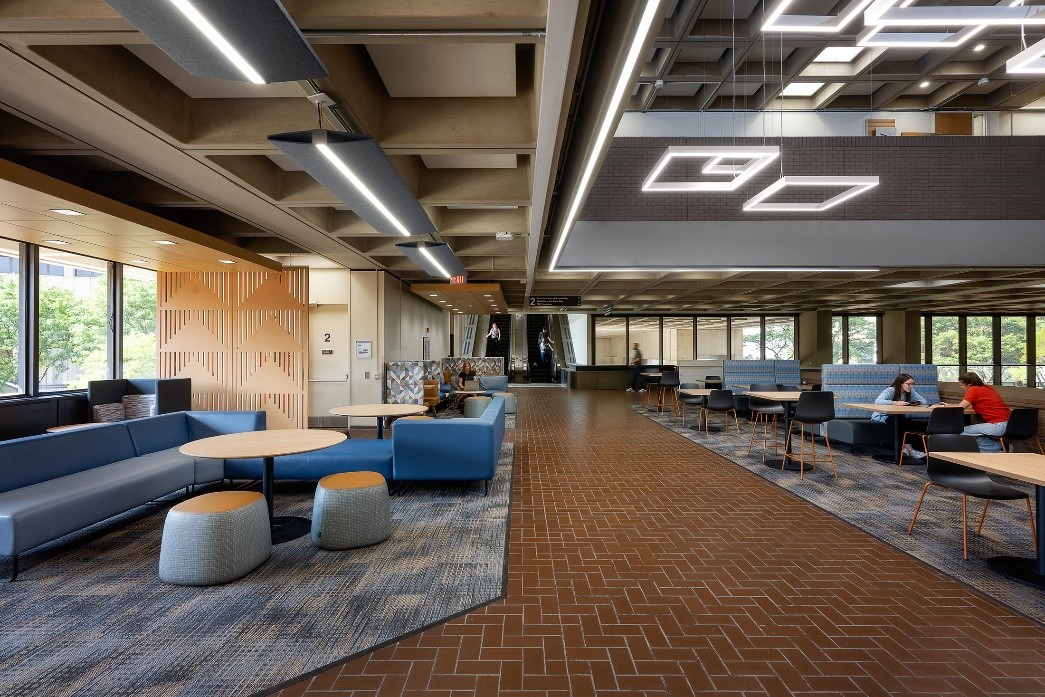
Recast from mere service spots, these cafés have since emerged as lively crossroads that fuse brand identity with the rhythms of student life.
A New Heart for Community Life at Brenau University
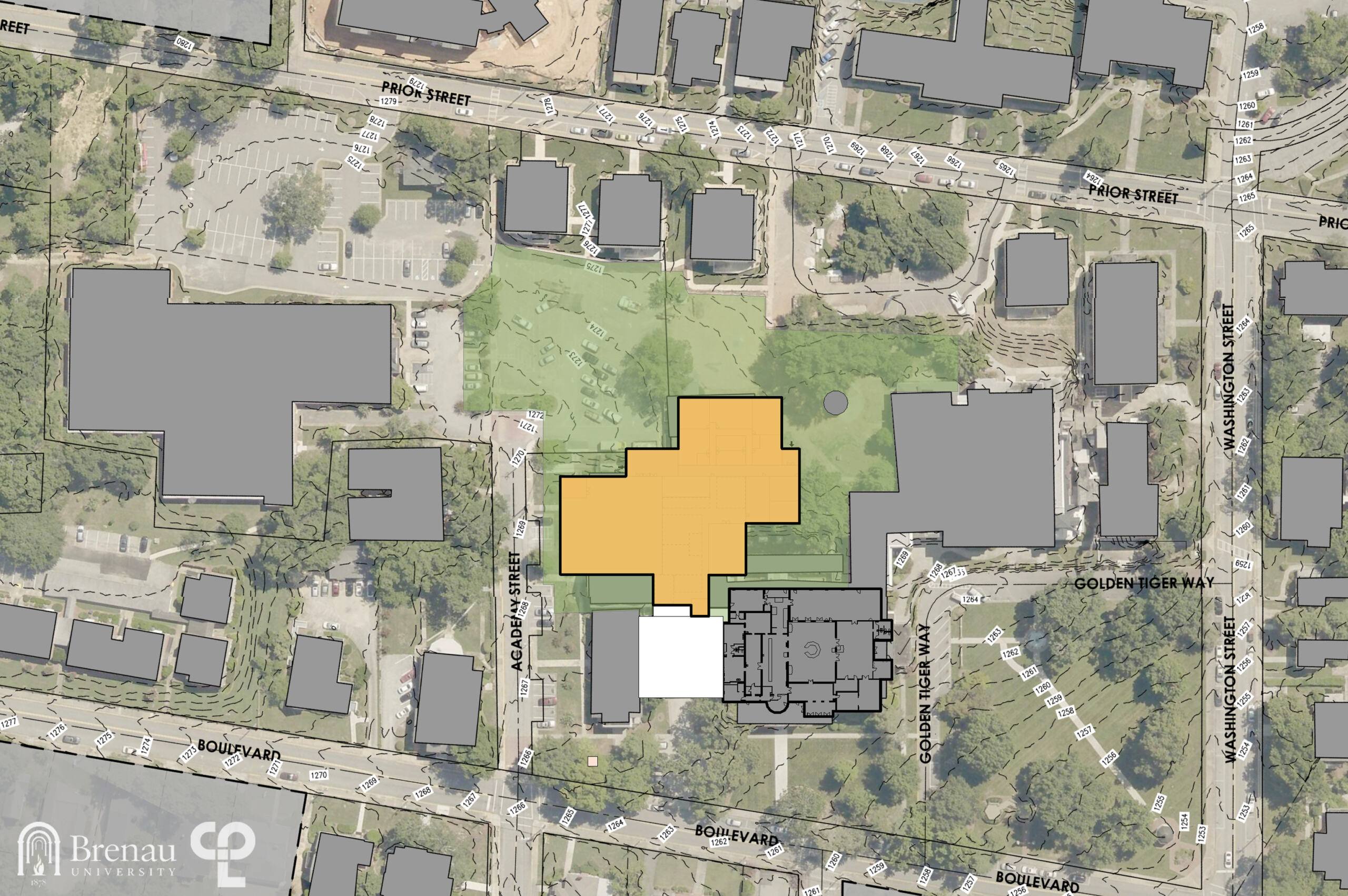
A comprehensive master plan and feasibility study are shaping an ambitious vision for life at Brenau University.
Central to these efforts is an intentional student center—a new facility that will relocate dining into one accessible location that also houses student services. This transition not only creates a vital operations nexus, but also safeguards important campus resources by shifting dining functions into a purpose-built environment. Flexible lounges and informal spaces throughout the new center will offer students places to study and collaborate, reinforcing Brenau’s strong sense of belonging.
Moreover, a dedicated quad—created by removing aging buildings and reclaiming green space—will serve as a commons and shaded spot for campus events, summer programs and neighborhood visitors, backed by increased parking availability. Together, these elements position the university as a community cornerstone, honoring its heritage and laying the groundwork for more meaningful experiences.
About the Author: Alan Cox

