
Share This Story
Fleet maintenance facilities are undergoing a quiet revolution. What were once utilitarian, back-of-house buildings are reemerging as essential assets—improving performance, attracting and retaining skilled employees and operating with environmental intent.
Guided by four key design principles, this new wave reflects a shift towards reliable public works infrastructure built to serve the next generation and beyond.
1. Optimizing Circulation for Efficiency
Fleet maintenance depends on movement—and when that movement is deliberate, everything works faster and smarter. Effective design starts with observing how work actually happens; designers map the daily rhythm of staff and vehicles through layout planning to eliminate bottlenecks and cross-traffic and uphold safety.
Fueling, washing and service zones must connect logically, keeping workflows intuitive and safe. Other purposeful adjacencies—tool rooms near bays, storage close to work areas—minimize walking distances and friction. Moreover, forward-only vehicle paths prevent collisions, and clustered support spaces like restrooms and training rooms reduce downtime throughout the day.

The site plan for the City of Durham’s Public Works Operations Center streamlines movement to prevent hazards, with separated high-traffic zones.
2. Planning for Expansion & Adaptability
As vehicle technologies advance and service demands grow, and with over 350 U.S. mayors pledging to electrify at least 50% of municipal fleets by 2030, facilities must evolve—future-ready by design.
Early space needs assessments embed capacity for higher power loads, alternative fueling and new equipment long before construction begins. Smart systems and digital infrastructure like IoT sensors, predictive maintenance software and energy controls guarantee these facilities can keep pace with demand.
At the structural level, allowances like increased ceiling heights accommodate lifts, charging stations or taller vehicles later. On space-constrained sites, this can take creative forms, such as aligning warehouse and fleet garage heights to allow extra mezzanine levels or additional bays.
Even staffing changes can be absorbed through modular and shared offices that adapt to changing operations. This planning protects public investment and allows organizations to grow proactively rather than reactively.
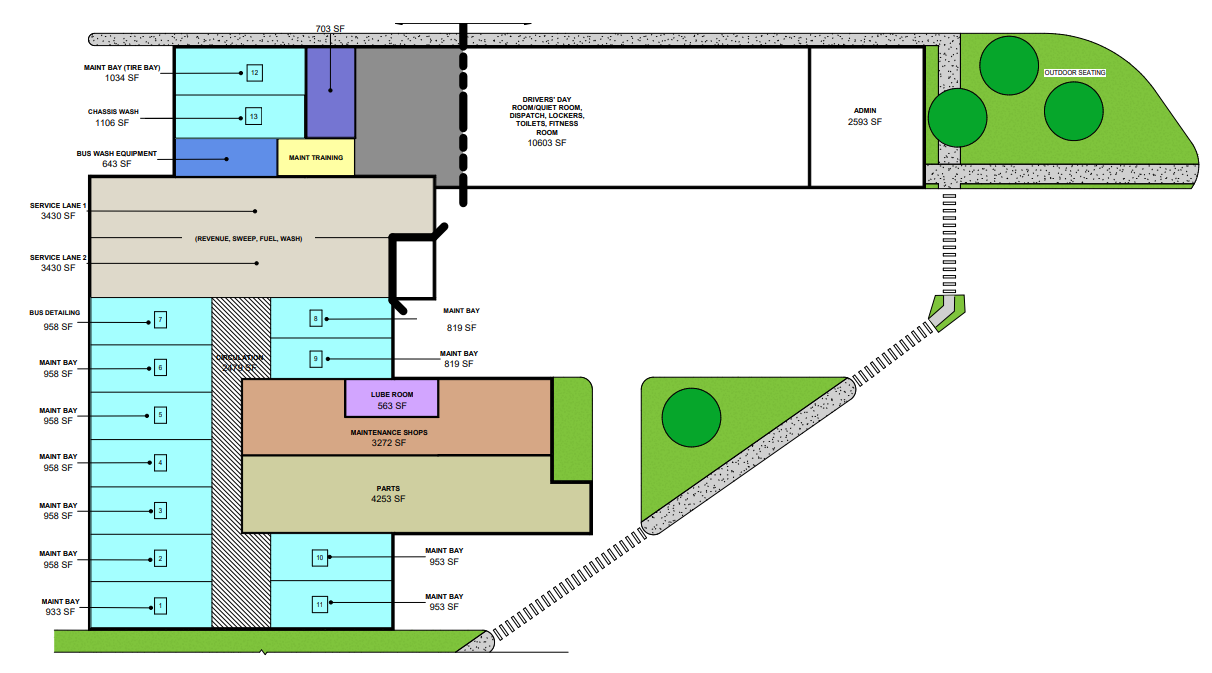
A 1990s fleet master plan for GoTriangle anticipated growth, reserving space that enabled a nearly 10,000 sq. ft. expansion decades after, adding maintenance and administrative areas.
3. Supporting the Workforce Behind the Wheels
For municipal leaders, retaining technicians is as critical as maintaining the fleet itself. Applying WELL Building and Fitwel standards has become a tangible strategy for keeping talent, cultivating environments that foster health, focus and engagement.
High-efficiency ventilation, radiant heating and integrated cooling systems stabilize air quality and temperature—an important step forward for vehicle-heavy maintenance bays that have historically lacked climate control—and natural materials in offices, like wood accents and low-VOC coatings, add warmth and durability.
Spatial analysis should prioritize human movement, with locker rooms that link directly to work bays for quicker, more hygienic transitions. Acoustic treatments and staggered sightlines dampen the noise and visual clutter that define busy shops, upholding concentration during peak activity.
Additionally, amenities once considered optional—fitness rooms, shaded outdoor seating and walking trails—directly influence recruitment. Wellness zones and breakrooms underscore that investment in the facility is an investment in the people who keep the community running.
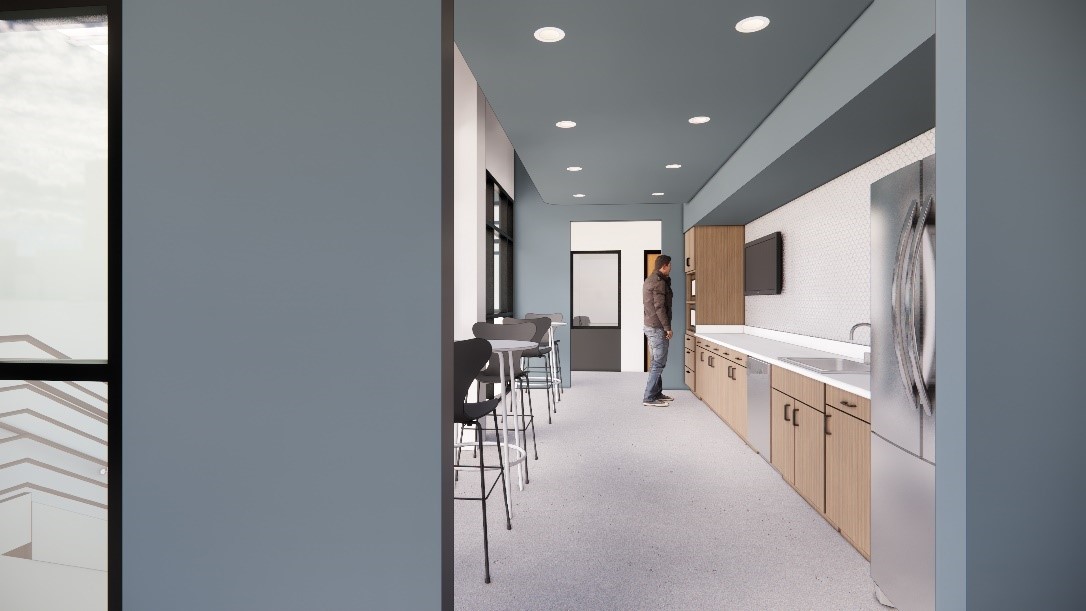
The City of Greensboro Equipment Services Garage will feature bright but durable spaces designed as social anchors where crews can unwind between shifts.
4. Building for Environmental Performance & Longevity
The Electrification Era
With plug-in EVs representing more than 10% of new U.S. vehicle sales, facilities must be ready for increased power demands and charging infrastructure. Fortunately, lifecycle cost analyses reveal that upfront investments in electrified buildings yield long-term savings through lower energy use and simplified repairs.
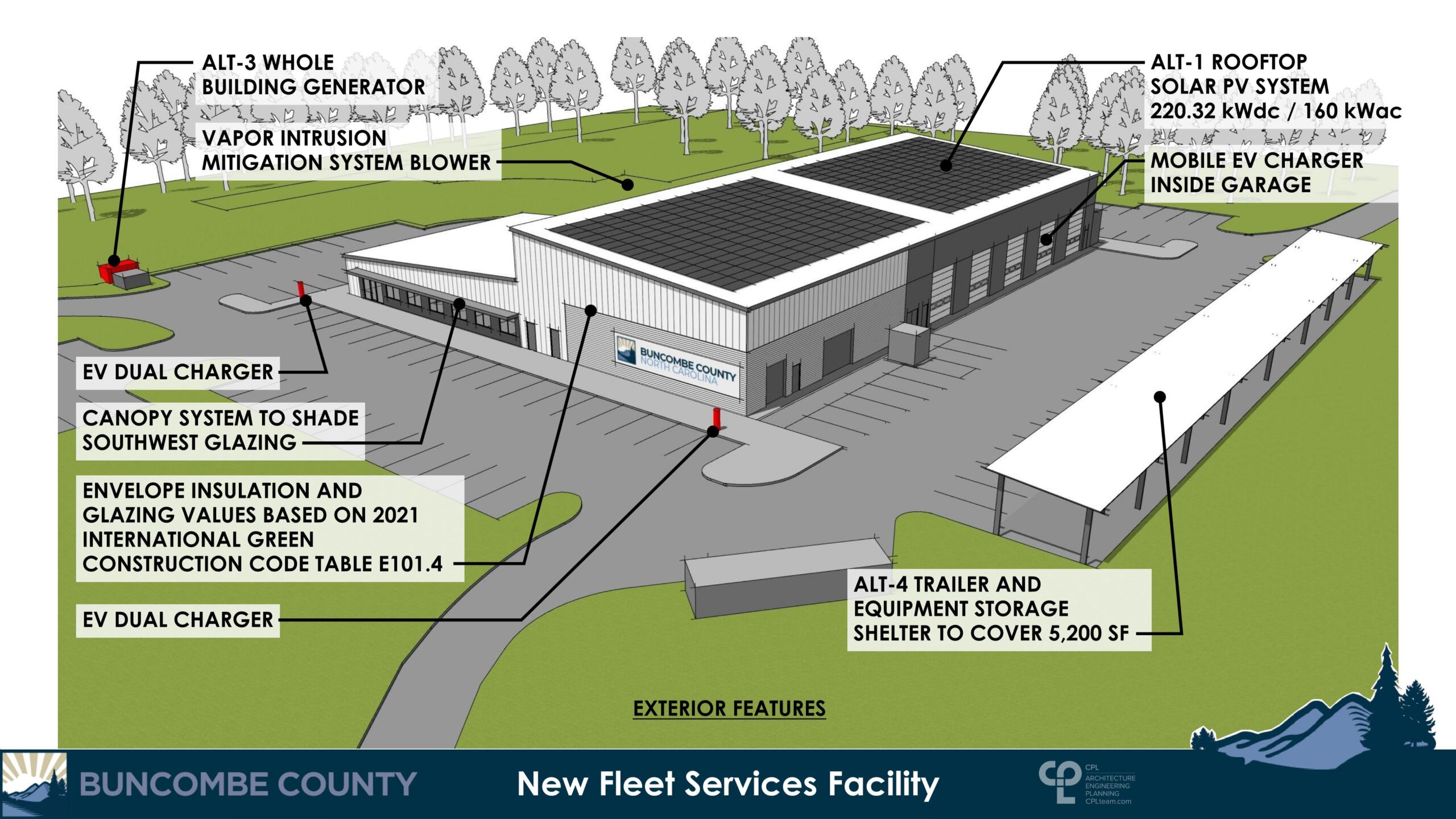
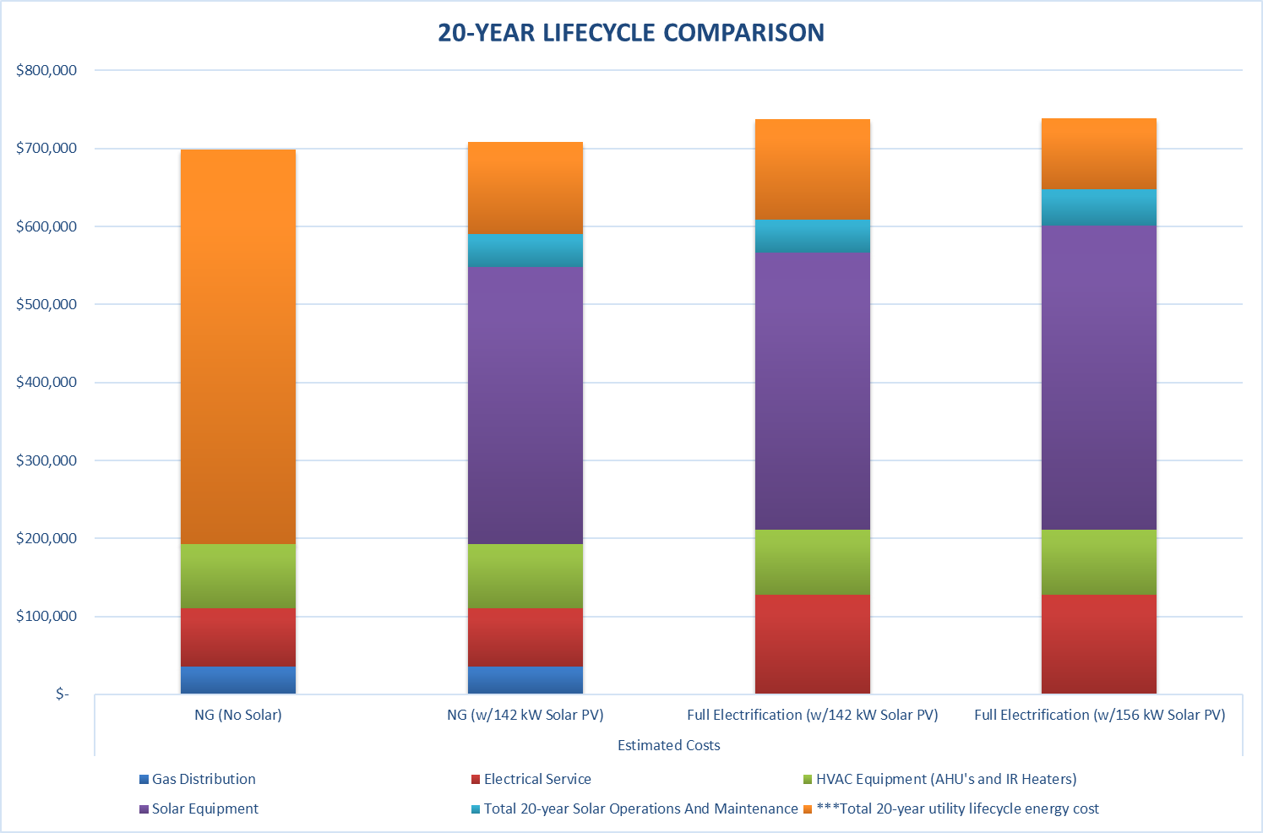
For Buncombe County’s fleet maintenance facility, we leveraged energy cost modeling to justify a fully electrified mechanical system complemented by solar energy.
Managing Multi-Fuel Fleets
Each fuel type adds complexity. Compressed natural gas (CNG) vehicles require open ceilings, specialized sprinklers and robust ventilation for gas dissipation. Maintenance bays with high-capacity air handling units—often 100% outdoor air—are prepped to meet the appropriate codes, supplemented by radiant heat and destratification fans for comfort.
Sealed concrete and composite panels resist corrosion and wear, boosting lifecycle performance, and automated sensors monitoring diesel exhaust, carbon monoxide and methane enable demand-controlled ventilation, adjusting airflow only when needed to protect occupants and slice expenditures.
For EV fleets, battery-safe suppression systems, wider vehicle spacing and bulkier lifts address fire safety and weight, and building management systems monitor and adjust modes remotely.
A Holistic Approach
Considering Energy, Water, Materials and Social Responsibility in tandem keeps sustainability practical and scalable. Solar-ready roofs, high-performance envelopes and low-maintenance finishes extend building life. Automated LED lighting with daylight sensors further decreases consumption, while stormwater systems—bioswales, permeable paving and underground retention—stop runoff, strengthen flood protection and promote stability.
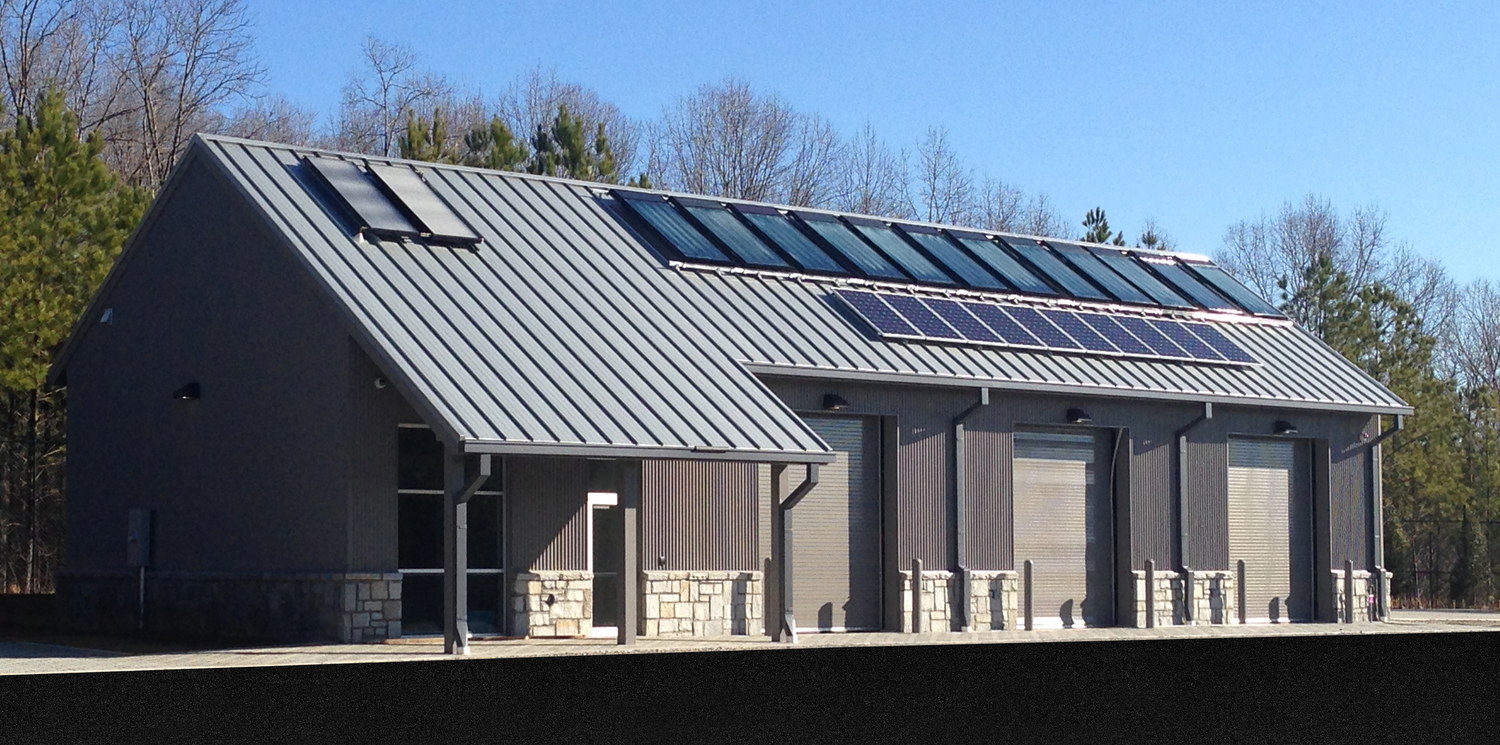
The Gwinnett County Environmental & Heritage Center was designed with LEED Gold certification in mind, featuring solar panels, rain harvesting, greywater reuse and a composting toilet system.
The Road Ahead
Fleet maintenance may happen behind the scenes, but its effect is felt citywide. The facilities shaping tomorrow’s operations are those envisioned with foresight, where flow, flexibility, people and green design intersect for enduring taxpayer value.
As municipalities modernize, these environments have become the blueprint for what’s possible when planning aligns with mission: responsible systems, empowered employees and infrastructure built to last.
About the Author: Mike Pena

